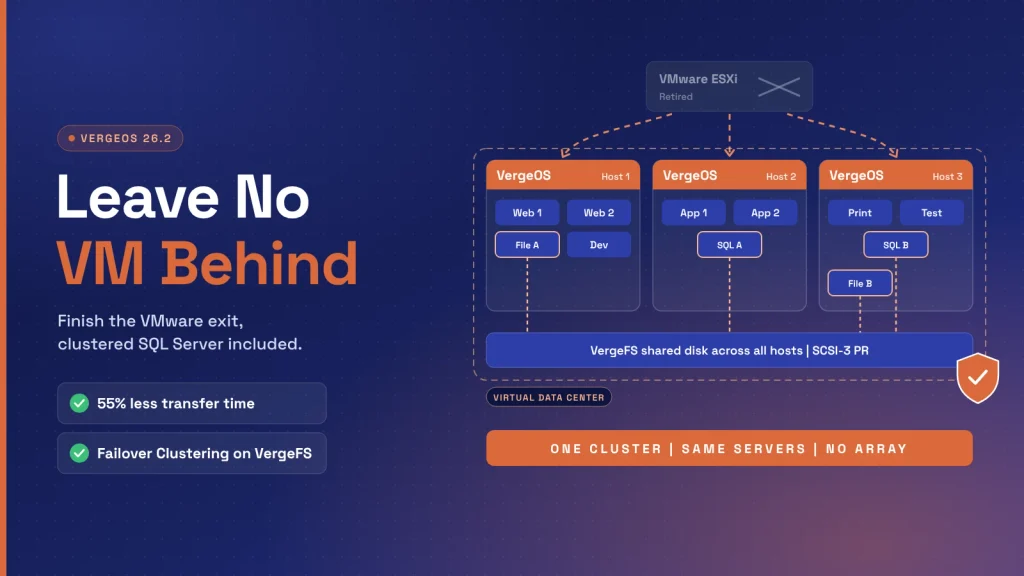
Leave No VM Behind
A complete VMware migration includes clustered SQL Server. VergeOS 26.2 shortens cutover and protects critical workloads inside isolated VDCs.
A complete VMware migration includes clustered SQL Server. VergeOS 26.2 shortens cutover and protects critical workloads inside isolated VDCs.
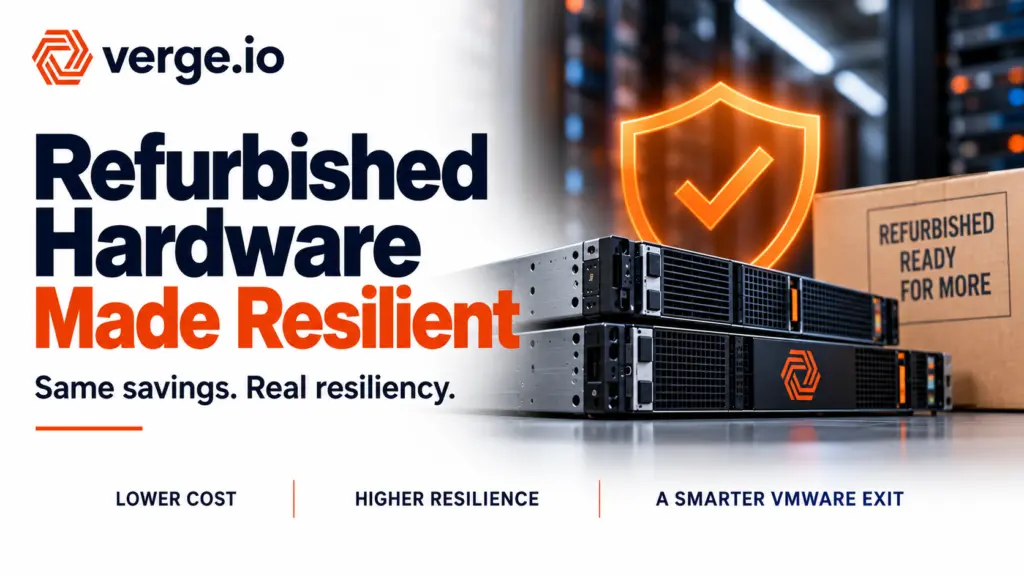
Refurbished hardware funds your VMware exit. VergeOS keeps it running through drive and server failures with RF2, RF3, and ioGuardian.
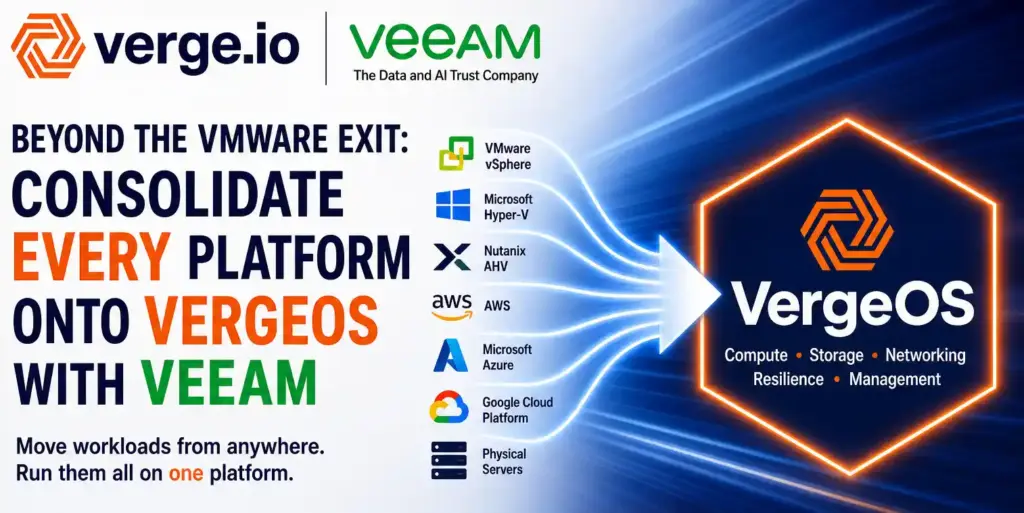
Most VMware alternatives only promise a home for vSphere workloads. With official VergeOS support in Veeam Backup & Replication 13.1, one restore job moves workloads from vSphere, Hyper-V, Nutanix AHV, AWS, Azure, GCP, and physical servers onto VergeOS. Consolidate onto VergeOS from every platform you run, and retire the rest.
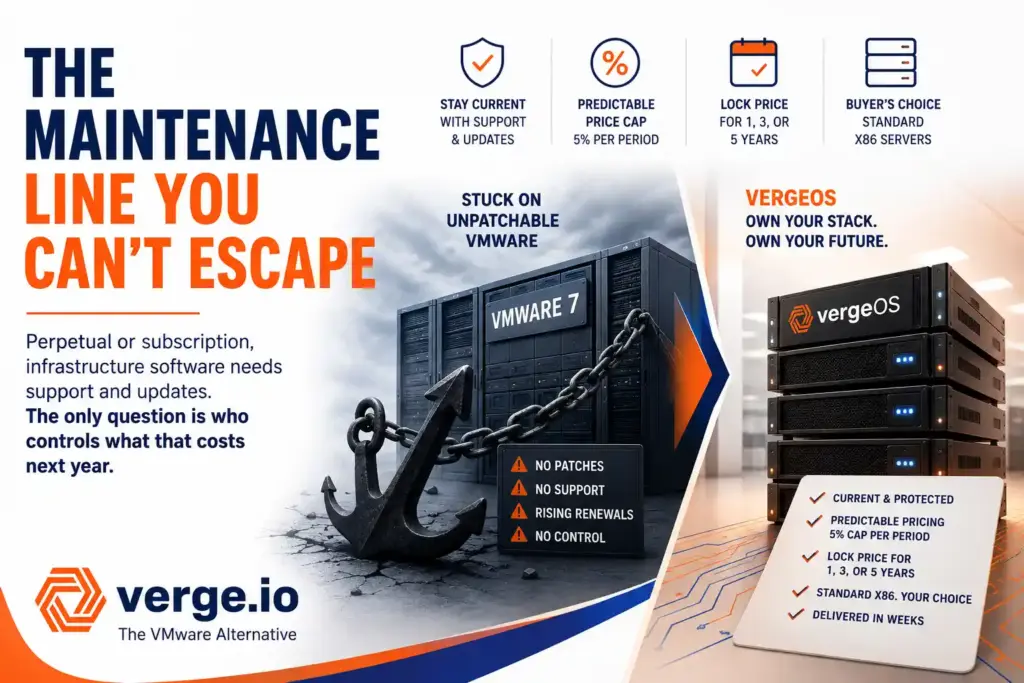
Scott Bartgis stopped paying VMware maintenance and froze Saratoga Casino Holdings at version 7. The license type was never the problem. The renewal curve was. Here is what a VMware perpetual license buys you, what it costs to hold one unsupported in a regulated environment, and the terms that got him back under support.
Zia Yusuf, VMware’s former ecosystem chief, invested in VergeIO and joined its board, the second VMware leader in weeks after CTO Kit Colbert. One built the partner engine, the other set the technology. Both reached the same verdict: leaving VMware means moving to a private cloud operating system.
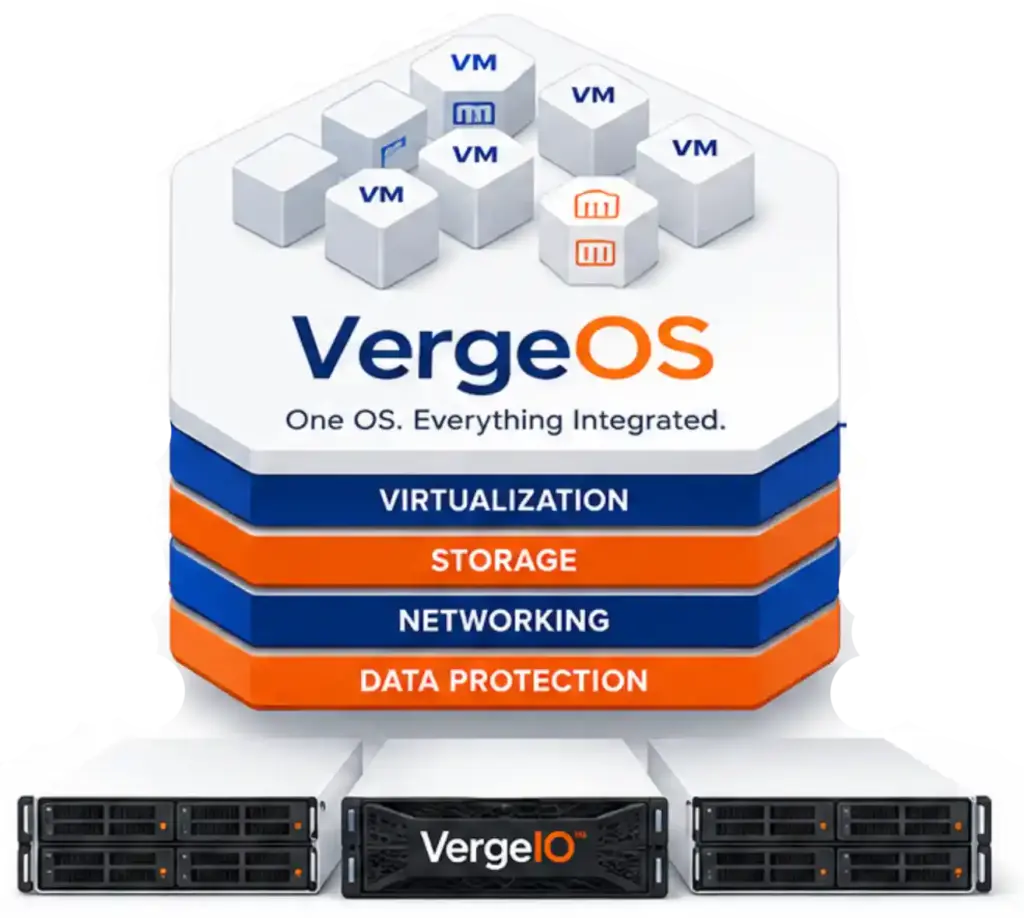
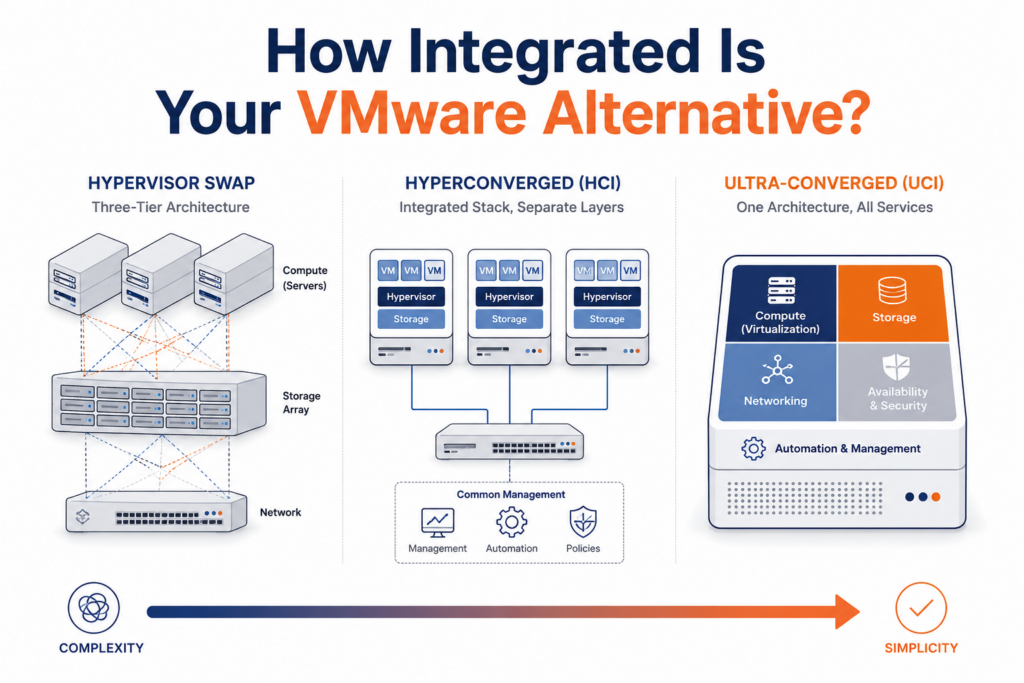
Nearly every VMware alternative claims to be integrated, but three very different architectures hide behind that word. A hypervisor swap, hyperconverged infrastructure, and ultra-converged infrastructure each carry different costs and operational consequences. The value of an integrated VMware alternative comes down to one question most buyers never ask: how integrated is the code itself?