• Skip to main content
  • Architecture
    • Overview
      Learn about VergeOS’ unique unfied architecture that integrates virtualization, storage, networking, AI, backup and DR into a single data center operating system
    • Infrastructure Wide Deduplication
      VergeOS transforms deduplication from a storage-only commodity into a native, infrastructure-wide capability that spans storage, virtualization, and networking, eliminating hidden resource taxes
    • VergeFS
      VergeFS is a distributed, high-performance global file system integrated into VergeOS, unifying storage across nodes, tiers, and workloads while eliminating the need for external SANs
    • VergeFabric
      VergeFabric is VergeOS’s integrated virtual networking layer, delivering high-speed, low-latency communication across nodes while eliminating the complexity of traditional network configurations.
    • Infrastructure Automation
      VergeOS integrates Packer, Terraform, and Ansible to deliver an end-to-end automation pipeline that eliminates infrastructure drift and enables predictable, scalable deployments.
    • VergeIQ
      Unlock secure, on-premises generative AI—natively integrated into VergeOS. With VergeIQ, your enterprise gains private AI capabilities without the complexity, cloud dependency, or token-based pricing.
  • Features
    • Virtual Data Centers
      A VergeOS Virtual Data Center (VDC) is a fully isolated, self-contained environment within a single VergeOS instance that includes its own compute, storage, networking, and management controls
    • High Availability
      VergeOS provides a unified, easy-to-manage infrastructure that ensures continuous high availability through automated failover, storage efficiency, clone-like snapshots, and simplified disaster recovery
    • ioClone
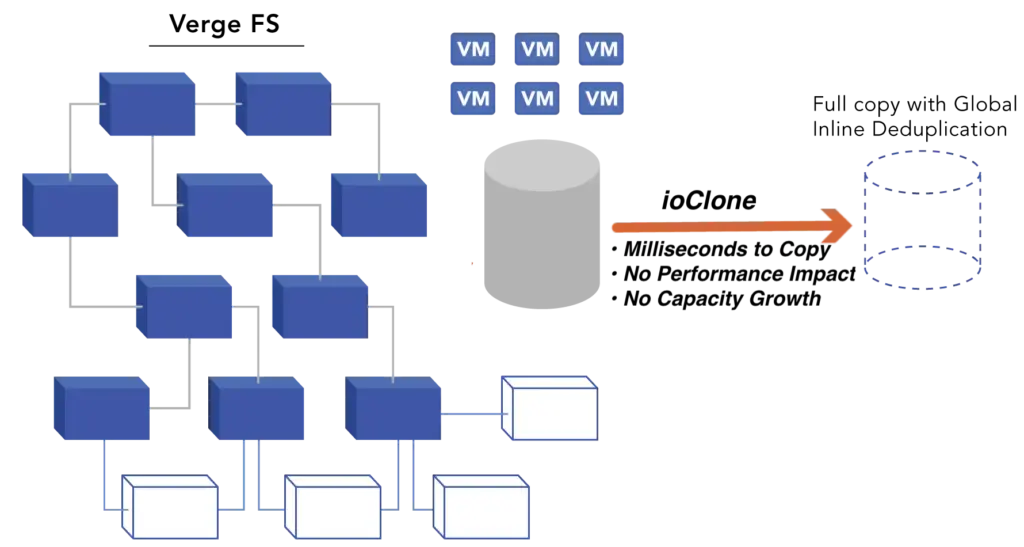
      ioClone utilizes global inline deduplication and a blockchain-inspired file system within VergeFS to create instant, independent, space-efficient, and immutable snapshots of individual VMs, volumes, or entire virtual data centers.
    • ioReplicate
      ioReplicate is a unified disaster-recovery solution that enables simple, cost-efficient DR testing and failover via three‑click recovery of entire Virtual Data Centers—including VMs, networking, and storage.
    • ioFortify
      ioFortify creates immutable, restorable VDC checkpoints and provides proactive ransomware detection with instant alerts for rapid recovery and response.
    • ioMigrate
      ioMigrate enables large-scale VMware migrations, automating the rehosting of hundreds of VMs (including networking settings) in seconds with minimal downtime by seamlessly transitioning entire VMware environments onto existing hardware stacks.
    • ioProtect
      ioProtect offers near-real-time replication of VMware VMs—including data, network, and compute configurations—to a remote disaster‑recovery site on existing hardware, slashing DR costs by over 60% while supporting seamless failover and testing in an efficient, turnkey VergeOS Infrastructure.
    • ioOptimize
      ioOptimize leverages AI and machine learning to seamlessly integrate new and old hardware and automatically migrate workloads from aging or failing servers.
    • ioGuardian
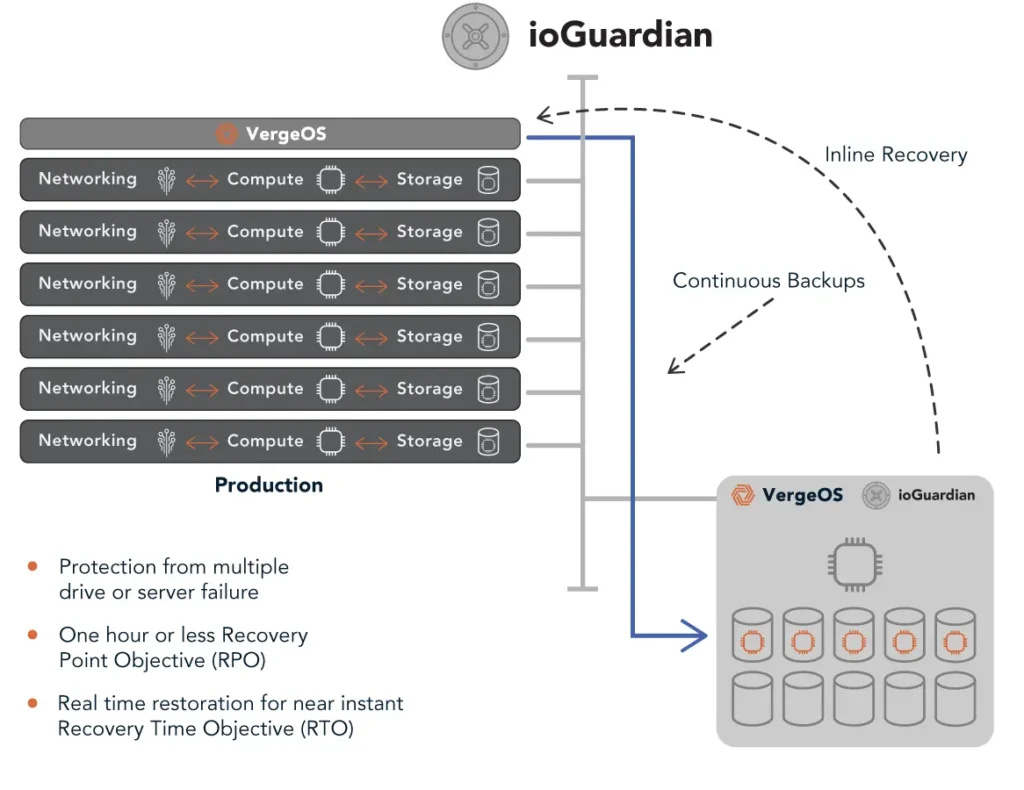
      ioGuardian is VergeIO’s built-in data protection and recovery capability, providing near-continuous backup and rapid VM recovery during multiple simultaneous drive or server failures.
  • IT Initiatives
    • VMware Alternative
      VergeOS offers seamless migration from VMware, enhancing performance and scalability by consolidating virtualization, storage, and networking into a single, efficient platform.
    • Hyperconverged Alternative
      VergeIO’s page introduces ultraconverged infrastructure (UCI) via VergeOS, which overcomes HCI limitations by supporting external storage, scaling compute and storage independently, using existing hardware, simplifying provisioning, boosting resiliency, and cutting licensing costs.
    • SAN Replacement / Storage Refresh
      VergeIO’s storage by replacing aging SAN/NAS systems within its ultraconverged infrastructure, enhancing security, scalability, and affordability.
    • Infrastructure Modernization
      Legacy infrastructure is fragmented, complex, and costly, built from disconnected components. VergeOS unifies virtualization, storage, networking, data protection, and AI into one platform, simplifying operations and reducing expenses.
    • Virtual Desktop Infrastructure (VDI)
      VergeOS for VDI delivers a faster, more affordable, and easier-to-manage alternative to traditional VDI setups—offering organizations the ability to scale securely with reduced overhead
    • Secure Research Computing
      VergeIO's Secure Research Computing solution combines speed, isolation, compliance, scalability, and resilience in a cohesive platform. It’s ideal for institutions needing segmented, compliant compute environments that are easy to deploy, manage, and recover.
    • Venues, Remote Offices, and Edge
      VergeOS delivers resiliency and centralized management across Edge, ROBO, and Venue environments. With one platform, IT can keep remote sites independent while managing them all from a single pane of glass.
  • Blog
      • The Hidden Risk of VM Density: The Blast RadiusIncreasing VM density cuts hardware costs and shrinks the data center footprint. The tradeoff is a larger blast radius when a server fails. VergeOS addresses the blast radius concern with layered protection from ioOptimize, RF2, ioGuardian, and RF3 that scales with density.
      • ROI from Disaster RecoveryOrganizations can generate ROI from disaster recovery by putting DR infrastructure to active use. VergeOS turns idle standby capacity into an asset for testing, peak load management, and workload recovery while improving recovery readiness.
      • VMware Alternative That’s Easy to Install and OperateVergeOS is a VMware alternative that installs in a single sitting and operates through one UI. Watch an independent walkthrough, complete hands-on labs, explore AI-assisted documentation, or schedule a technical overview. No hardware or commitment required.
    • View All Posts
  • Resources
    • Become a Partner
      Get repeatable sales and a platform built to simplify your customers’ infrastructure.
    • Technology Partners
      Learn about our technology and service partners who deliver VergeOS-powered solutions for cloud, VDI, and modern IT workloads.
    • White Papers
      Explore VergeIO’s white papers for practical insights on modernizing infrastructure. Each paper is written for IT pros who value clarity, performance, and ROI.
    • In The News
      See how VergeIO is making headlines as the leading VMware alternative. Industry analysts, press, and partners highlight our impact on modern infrastructure.
    • Press Releases
      Get the latest VergeOS press releases for news on product updates, customer wins, and strategic partnerships.
    • Case Studies
      See how organizations like yours replaced VMware, cut costs, and simplified IT with VergeOS. Real results, real environments—no fluff.
    • Webinars
      Explore VergeIO’s on-demand webinars to get straight-to-the-point demos and real-world infrastructure insights.
    • Documents
      Get quick, no-nonsense overviews of VergeOS capabilities with our datasheets—covering features, benefits, and technical specs in one place.
    • Videos
      Watch VergeIO videos for fast, focused walkthroughs of VergeOS features, customer success, and VMware migration strategies.
    • Technical Documentation
      Access in-depth VergeOS technical guides, configuration details, and step-by-step instructions for IT pros.
  • How to Buy
    • Schedule a Demo
      Seeing is believing, set up a call with one of our technical architects and see VergeOS in action.
    • Versions
      Discover VergeOS’s streamlined pricing and flexible deployment options—whether you bring your own hardware, choose a certified appliance, or run it on bare metal in the cloud.
    • Test Drive – No Hardware Required
      Explore VergeOS with VergeIO’s hands-on labs and gain real-world experience in VMware migration and data center resiliency—no hardware required
  • Company
    • About VergeIO
      Learn who we are, what drives us, and why IT leaders trust VergeIO to modernize and simplify infrastructure.
    • Support
      Get fast, expert help from VergeIO’s support team—focused on keeping your infrastructure running smoothly.
    • Careers
      Join VergeIO and help reshape the future of IT infrastructure. Explore open roles and growth opportunities.
  • 855-855-8300
  • Contact
  • Search
  • 855-855-8300
  • Contact
  • Search
  • Architecture
    • Overview
    • VergeFS
    • VergeFabric
    • Infrastructure Automation
    • VergeIQ
  • Features
    • Virtual Data Centers
    • High Availability
    • ioClone
    • ioReplicate
    • ioFortify
    • ioMigrate
    • ioProtect
    • ioOptimize
    • ioGuardian
  • IT Initiatives
    • VMware Alternative
    • Hyperconverged Alternative
    • SAN Replacement / Storage Refresh
    • Infrastructure Modernization
    • Virtual Desktop Infrastructure (VDI)
    • Secure Research Computing
    • Venues, Remote Offices, and Edge
  • Blog
  • Resources
    • Become a Partner
    • Technology Partners
    • White Papers
    • In The News
    • Press Releases
    • Case Studies
    • Webinars
    • Documents
    • Videos
    • Technical Documentation
  • How to Buy
    • Schedule a Demo
    • Versions
    • Test Drive – No Hardware Required
  • Company
    • About VergeIO
    • Support
    • Careers
×
  • Architecture
    • Overview
    • VergeFS
    • VergeFabric
    • Infrastructure Automation
    • VergeIQ
  • Features
    • Virtual Data Centers
    • High Availability
    • ioClone
    • ioReplicate
    • ioFortify
    • ioMigrate
    • ioProtect
    • ioOptimize
    • ioGuardian
  • IT Initiatives
    • VMware Alternative
    • Hyperconverged Alternative
    • SAN Replacement / Storage Refresh
    • Infrastructure Modernization
    • Virtual Desktop Infrastructure (VDI)
    • Secure Research Computing
    • Venues, Remote Offices, and Edge
  • Blog
  • Resources
    • Become a Partner
    • Technology Partners
    • White Papers
    • In The News
    • Press Releases
    • Case Studies
    • Webinars
    • Documents
    • Videos
    • Technical Documentation
  • How to Buy
    • Schedule a Demo
    • Versions
    • Test Drive – No Hardware Required
  • Company
    • About VergeIO
    • Support
    • Careers

dataprotection

March 2, 2026 by George Crump

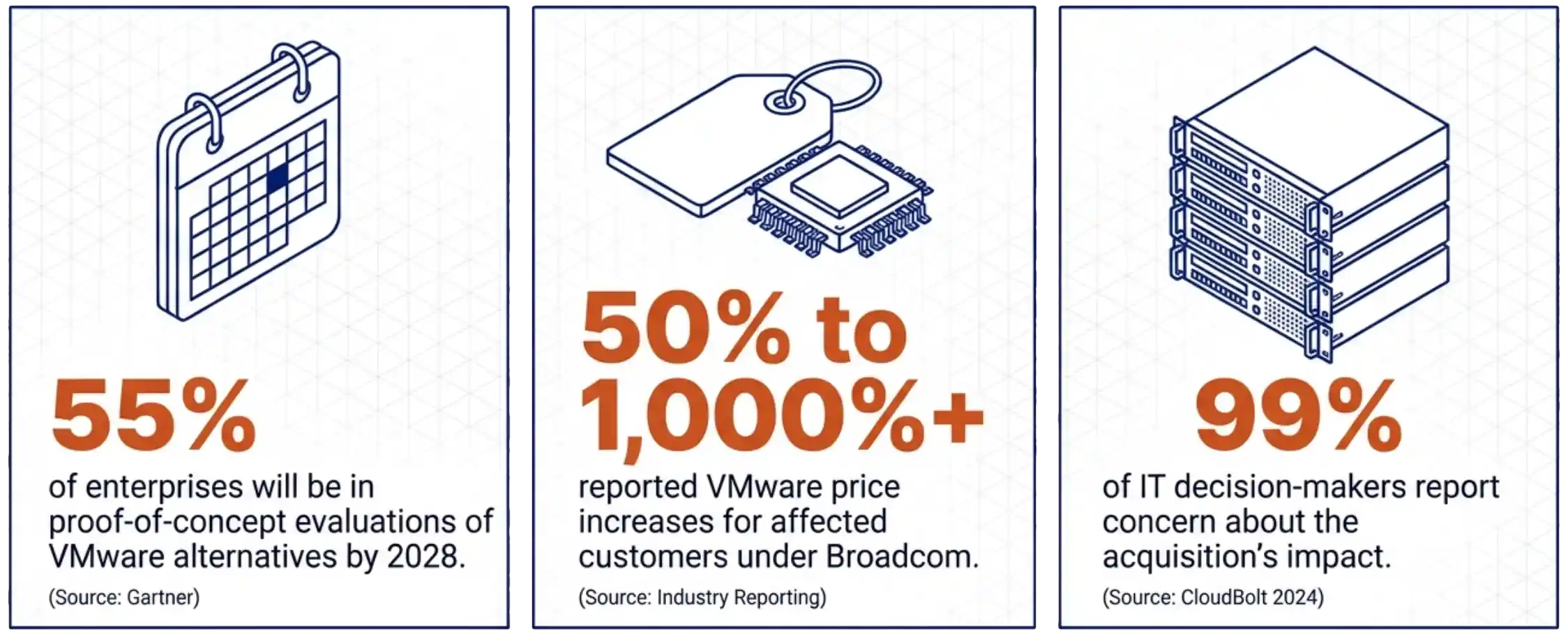
The supply of RAM and flash storage is not keeping up with demand. The shortage is driving prices higher and pushing delivery times out by months. According to an SK Hynix internal analysis, high prices and constrained supply are expected to continue through at least 2028. For IT planners already facing the rising cost of VMware licensing and looking for a VMware alternative, the timing is brutal. The solution is to consolidate VMs onto fewer hosts, but then IT needs to account for the hidden risk of VM Density, the blast radius.

Key Takeaways
  • RAM and flash supply constraints are expected to last through at least 2028. Reducing protection levels to offset rising prices puts data at risk during the period when that data is most valuable.
  • VM consolidation saves money but increases blast radius. When a dense host fails, it takes more VMs, more CPU, more memory, and more storage offline simultaneously than a traditional environment.
  • ioOptimize uses AI to proactively migrate workloads off degrading servers before failure and intelligently redistribute displaced VMs across surviving hosts based on actual resource demands.
  • RF2 mirrored redundancy and ioGuardian work together to extend protection from N+1 to N+2 without the performance overhead of RAID 6 or erasure coding.
  • Integrated replication and virtual data centers turn the DR site into an active protection layer, with cross-site ioGuardian recovery and full application stack failover in minutes.
  • RF3 triple mirroring, new in VergeOS 26.1, combined with ioGuardian delivers N+X availability where data remains accessible as long as one production server and the repair server are running.
  • VergeOS’s layered protection architecture scales with density, letting organizations capture the full cost savings of VM consolidation without accepting the availability risk that density traditionally creates.

If the risks of VM density can be contained or eliminated, the return on investment from increasing VM density is significant under normal market conditions. During a memory and flash supercycle, it becomes a strategic imperative.

Key Terms
  • Blast Radius — The scope of operational impact caused by a single failure event. In dense environments, one server going offline removes more VMs, CPU, memory, and storage from the cluster simultaneously.
  • VM Consolidation — The practice of running more virtual machines per physical host to reduce hardware costs, power, cooling, and data center footprint.
  • ioOptimize — VergeOS technology that uses AI and machine learning to balance workloads across mixed-generation servers, proactively migrate VMs off degrading hardware, and intelligently redistribute displaced VMs during failures.
  • RF2 Mirrored Redundancy — N+1 data protection that maintains two copies of every data block on separate fault domains. Provides fast rebuilds through direct block copies rather than parity reconstruction.
  • ioGuardian — A dedicated VergeOS instance that holds a protected third copy of data and provides inline VM recovery during failures. Extends protection from N+1 to N+2 without hosting production workloads.
  • RF3 Triple Mirroring — N+2 data protection new in VergeOS 26.1 that maintains three complete copies of every data block. Combined with ioGuardian, it delivers N+X availability.
  • N+X Availability — Protection level achieved by combining mirroring with an ioGuardian repair server. Data remains accessible as long as one production server and the repair server are running, without reaching for backups.
  • Virtual Data Centers — VergeOS technology that encapsulates entire application stacks for rapid failover to a remote site in minutes, without VM-by-VM configuration at the DR site.
  • Granular Replication — New in VergeOS 26.1, the ability to replicate specific workloads or data sets rather than replicating everything, reducing WAN bandwidth consumption and giving finer control over cross-site protection.

The ROI of VM Density

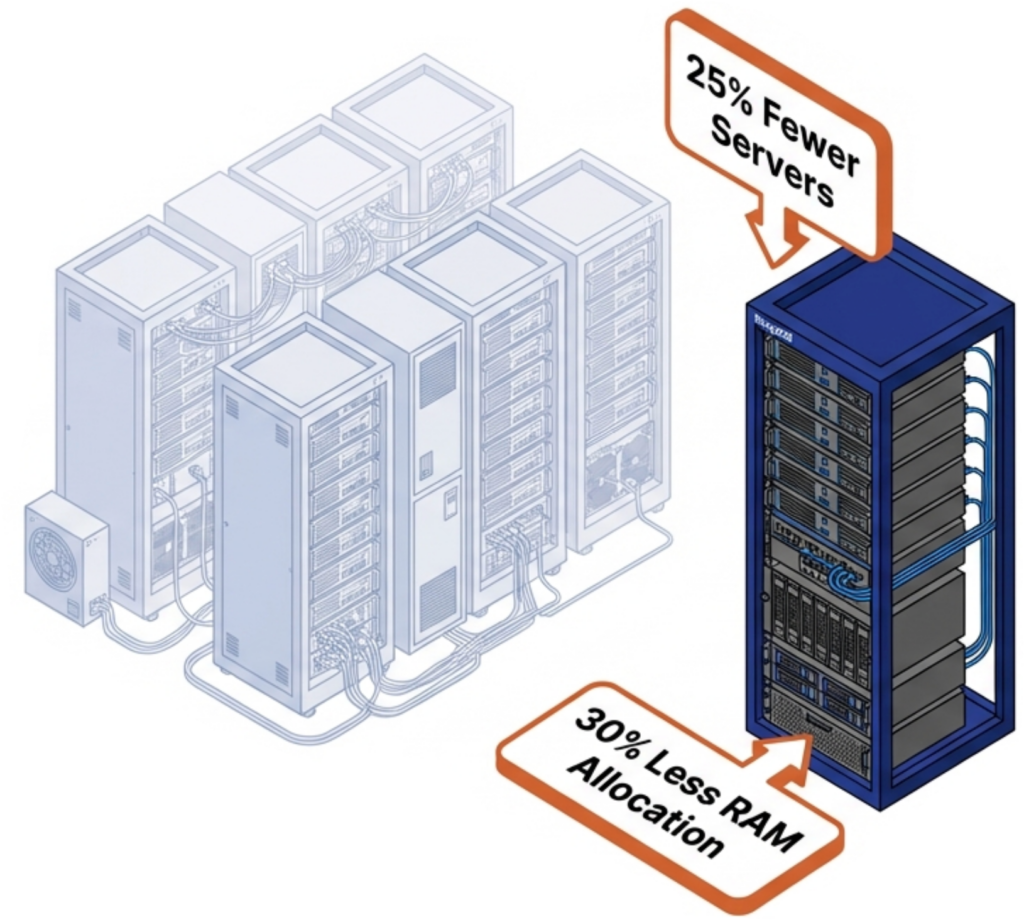
Every server removed from the environment eliminates its share of RAM, flash, power, cooling, licensing, and rack space costs. VergeOS customers who reduce server count by 25% do not just save on the servers themselves. They avoid purchasing RAM and NVMe drives for those servers at supercycle pricing. A four-server reduction in a 16-server cluster removes roughly 25% of the organization’s exposure to price increases in memory and flash in a single move.

VM density blast radius

The 30% reduction in per-VM memory allotment compounds the savings. A VM that required 16GB of RAM under VMware runs on 11GB under VergeOS. Multiply that savings across hundreds of VMs, and the organization reclaims terabytes of RAM capacity that it no longer needs to purchase, license, or replace at inflated prices. That reclaimed capacity either extends the life of existing hardware or reduces the bill of materials on the next refresh.

The combined effect is fewer servers, less memory per VM, and commodity drives instead of vendor-priced components. Organizations that achieve this level of consolidation spend less on infrastructure during the supercycle while maintaining or increasing their total workload capacity. The ROI is clear. The question is whether the protection architecture can keep pace with the density. That is the blast radius problem.

The VM Density Blast Radius Problem

Higher VM density means more VMs per host and more storage capacity inside each host. With modern hardware, the odds of a server or SSD drive failure are low. The odds of a second or third simultaneous failure are even lower. The real concern is the blast radius, meaning how much of the operation a single failure impacts.

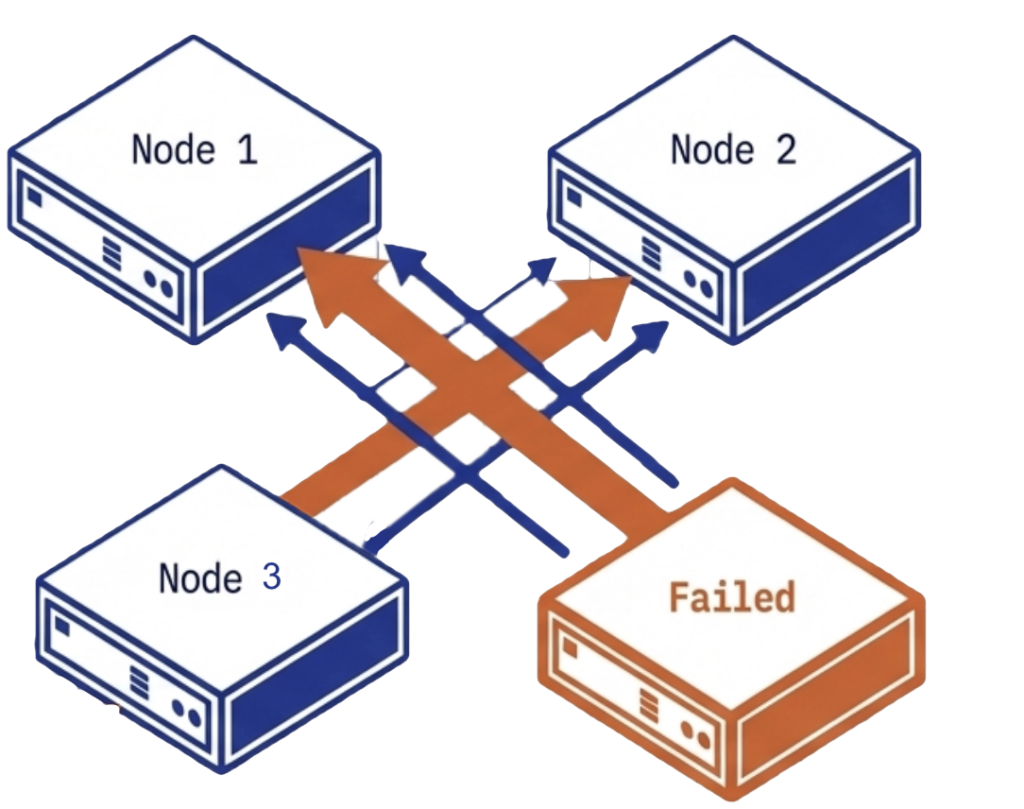
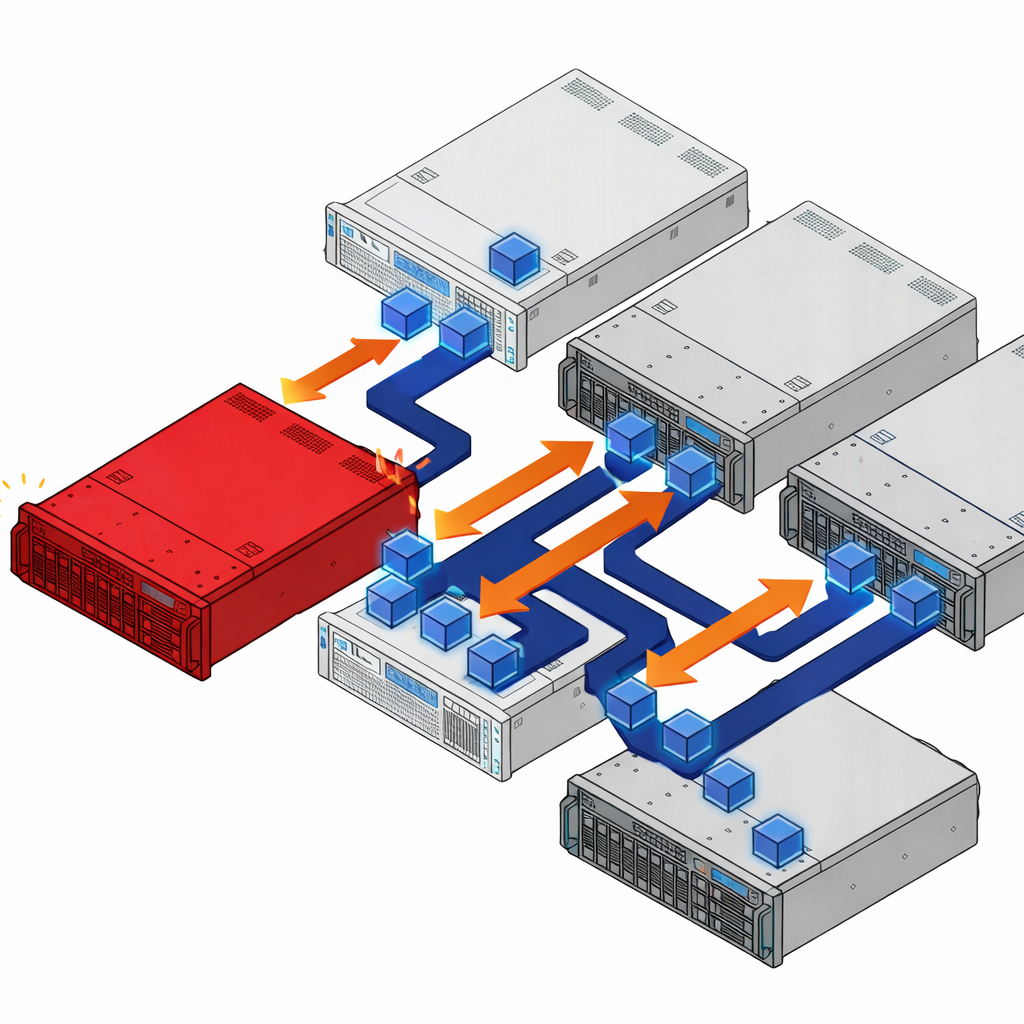
When a host running 40 VMs goes offline, it does not just remove drives from the storage pool. It removes 40 running workloads, along with their CPU, memory, and network connections. The surviving hosts absorb the displaced VMs on top of their existing workloads and any storage rebuild I/O. A workload spike on a dense host creates a ripple effect, forcing resource contention across the cluster and degrading performance for every VM, not just the one experiencing the spike.

Traditional infrastructure spreads this risk across more physical servers, with fewer VMs per server. VM density concentrates it. The savings from higher density are real, but only if the protection architecture accounts for the larger blast radius.

How VergeOS Protects VM Dense Environments

VergeOS addresses the VM density blast radius with a layered protection architecture. Each layer targets a different failure scenario, from early degradation warnings to complete site loss.

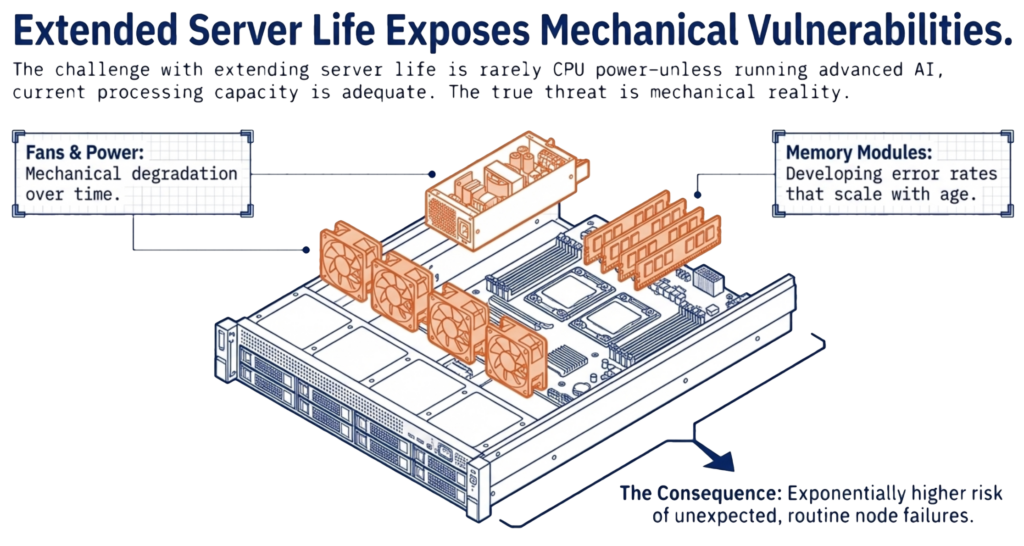
ioOptimize uses AI and machine learning to continuously monitor the health, performance, and capacity of every server in the environment. Its algorithms distribute workloads based on each server’s actual capabilities, assigning lighter tasks to aging hardware and directing demanding workloads to newer servers. This intelligent placement lets organizations run mixed-generation environments without prematurely retiring older servers. The scale-down capability goes further, consolidating VMs and storage onto denser configurations to reduce power, cooling, and physical footprint. The result is fewer servers doing more work, which directly reduces the hardware exposed to the memory and flash supercycle pricing.

VM density blast radius

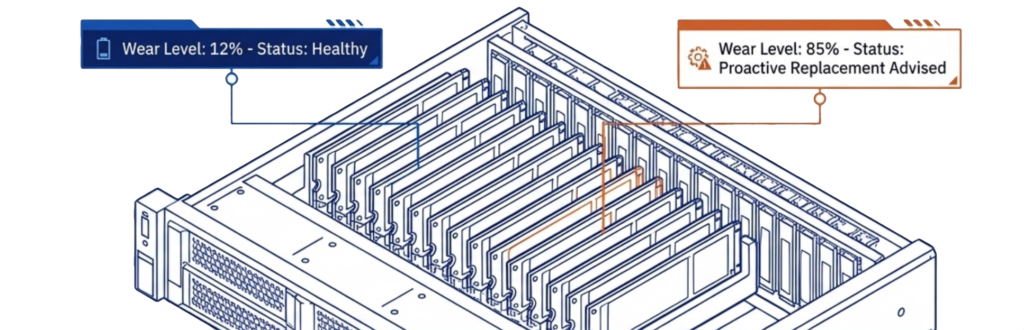
ioOptimize also changes how the cluster responds to server failures. It monitors for early indicators of degradation and proactively migrates workloads off at-risk servers before a hard failure occurs. When a server does fail unexpectedly, ioOptimize evaluates the resource demands of each displaced VM and matches them against available capacity on the surviving hosts. Instead of dumping 40 VMs onto the nearest available server and creating a new hotspot, it distributes them based on actual CPU, memory, and I/O requirements. That intelligent redistribution keeps the blast radius contained and prevents a single failure from cascading into a cluster-wide performance problem.

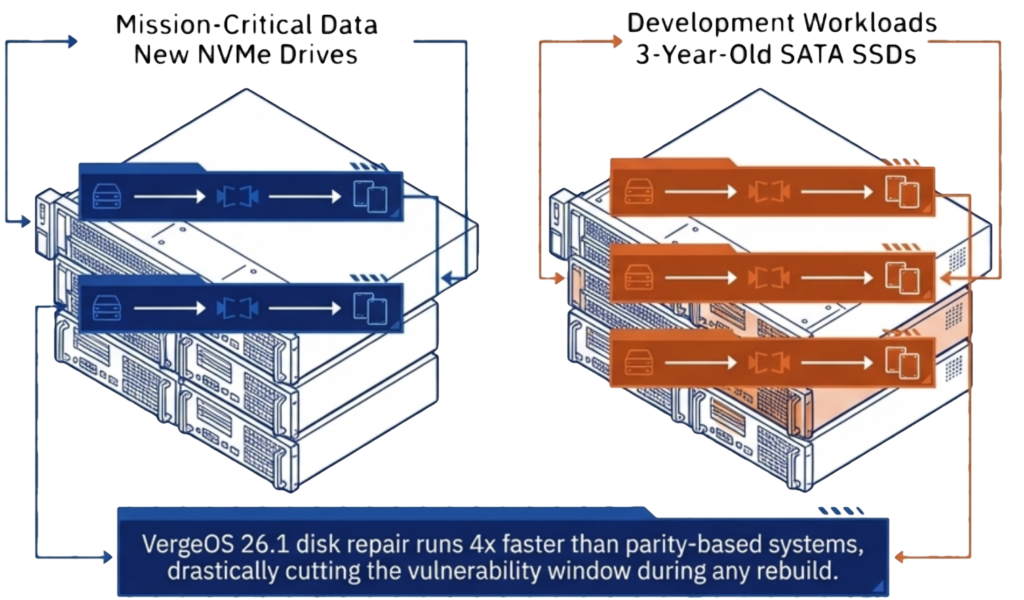
RF2 Mirrored Redundancy keeps two copies of every data block on separate fault domains. When a drive or server fails, the surviving copy handles all requests without degrading performance. Rebuilds are fast because the process copies intact blocks directly from the surviving mirror rather than reconstructing data from parity calculations.

VM density blast radius

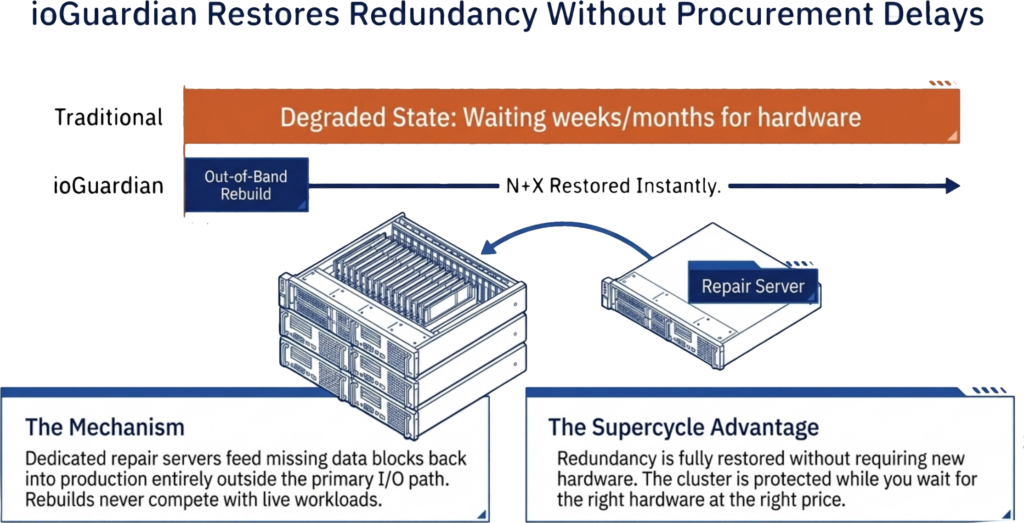
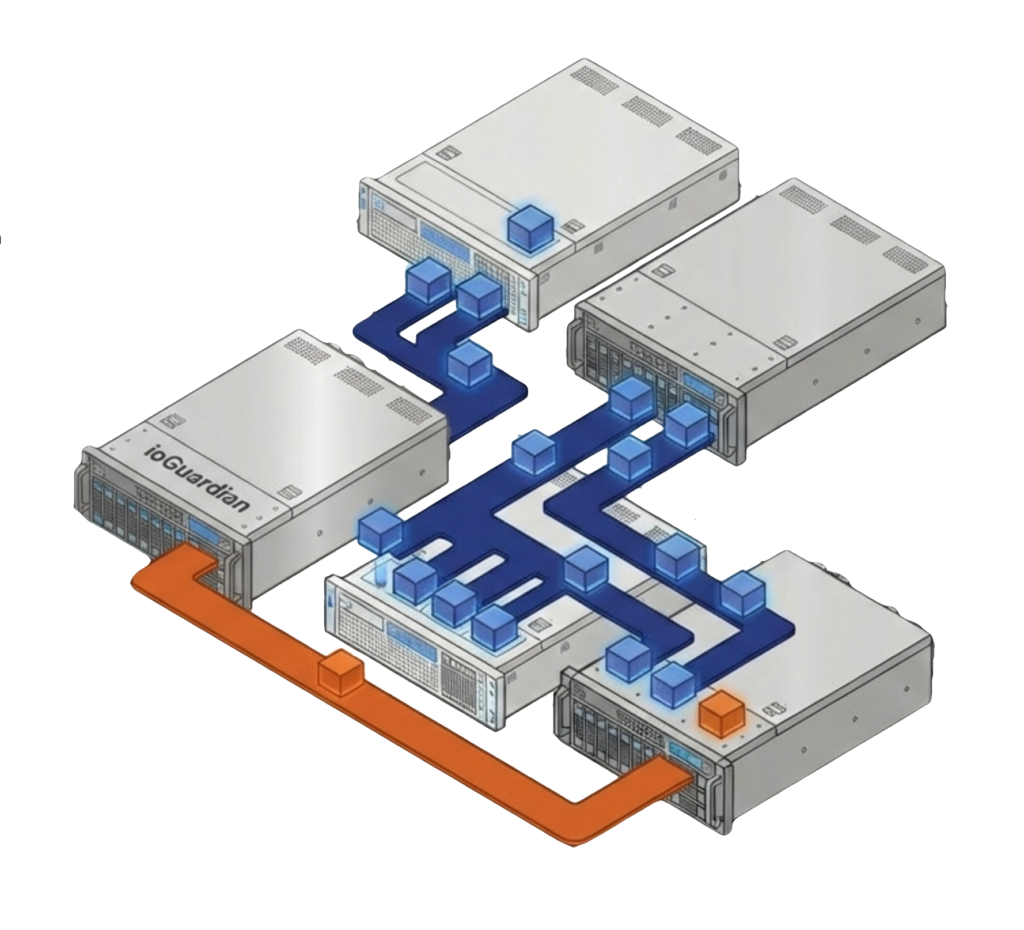
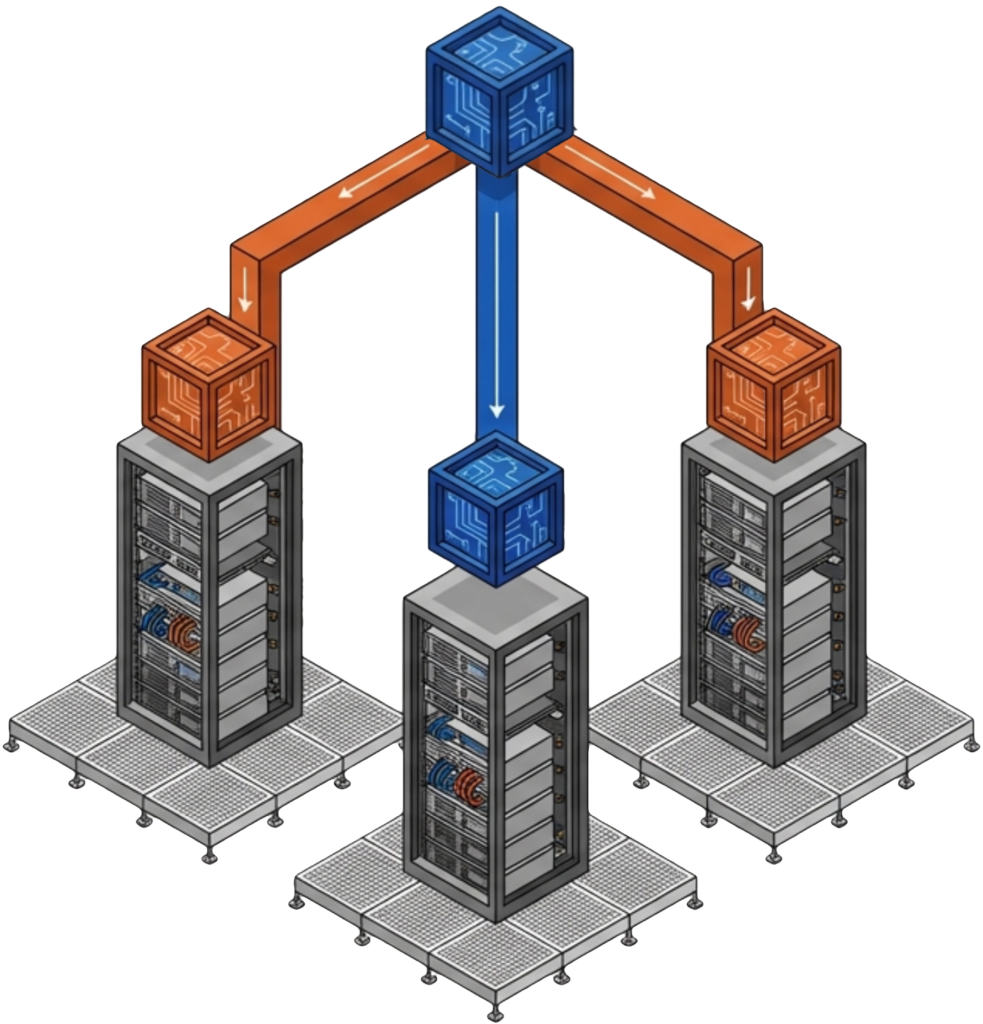
ioGuardian maintains a protected third copy of data on a separate VergeOS instance that can provide inline recovery of VMs. The ioGuardian server does not host production workloads. Its dedicated role is to feed missing data blocks back to the production environment during failures, keeping production hosts focused on running VMs rather than diverting resources to data reconstruction. This extends protection from N+1 to N+2 without adding the performance overhead of RAID 6 or erasure coding.

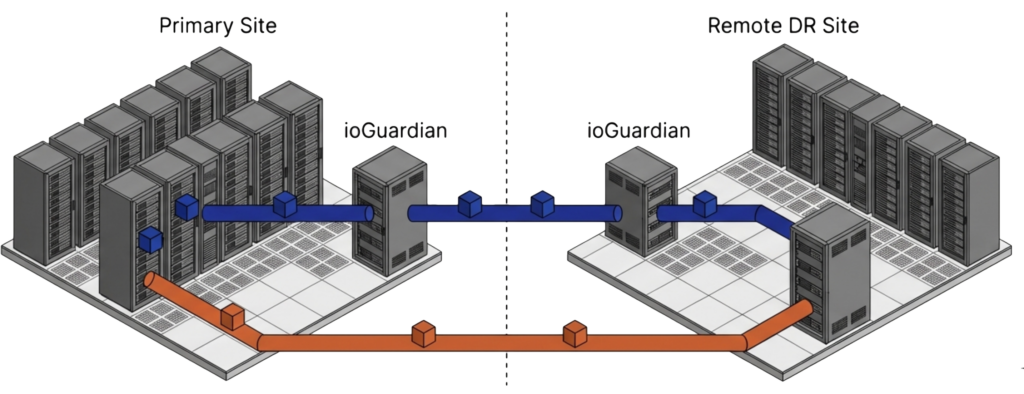
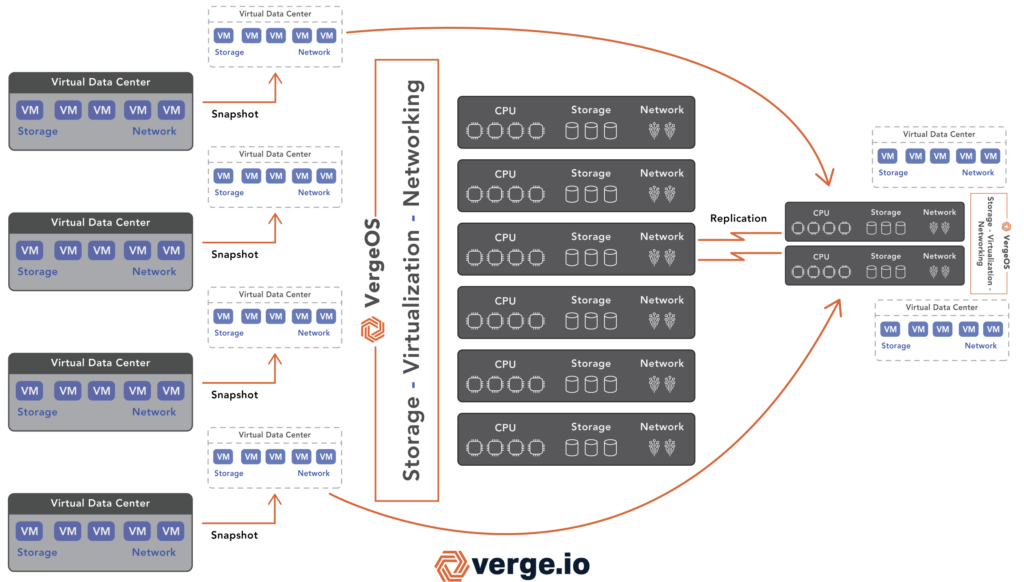
ioReplicate sends both production data and ioGuardian data to a remote site. If the primary site’s ioGuardian instance fails at the same time as a production failure, the ioGuardian at the DR site can still perform inline recovery to the production cluster at the primary site. This cross-site protection layer covers failure scenarios that no single-site architecture can address.

Virtual Data Centers make recovery at the remote site straightforward when the primary site fails completely. Entire application stacks restart at the DR site in minutes, not hours. The encapsulation of full workload environments means the DR site does not need to be configured VM by VM.

VergeOS 26.1 Strengthens the Protection Stack

RF3 Triple Mirroring, new in VergeOS 26.1, provides N+2 availability for organizations that demand maximum protection. Three complete copies of every data block mean two simultaneous failures cause zero data loss and near-zero performance impact. When combined with ioGuardian, RF3 enables the environment to reach N+X availability, where data remains accessible as long as one production server and the repair server are running.

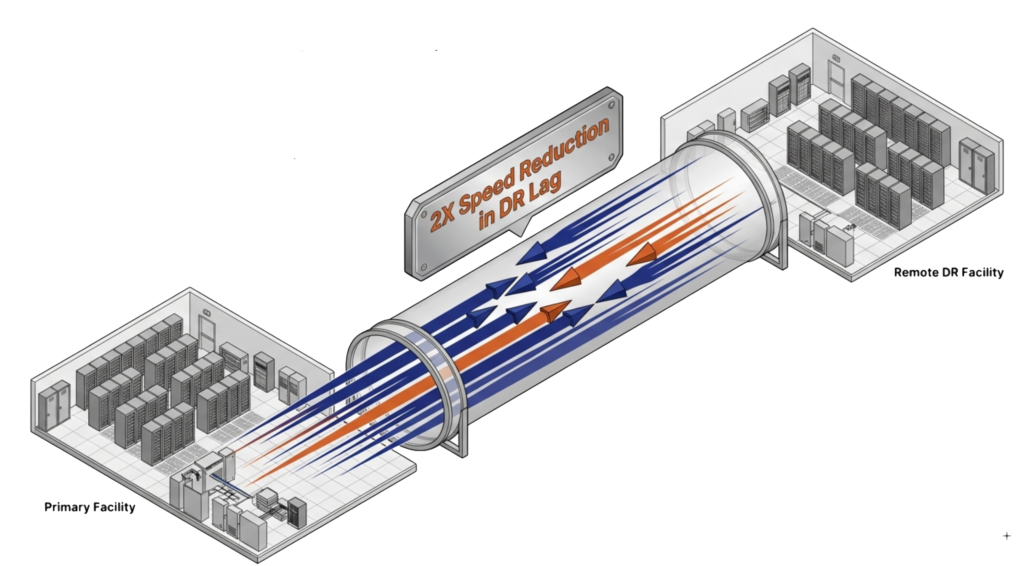
VergeOS 26.1 increases replication performance by 2x, cutting the time required to synchronize data between sites. Faster replication narrows the window where the DR site lags behind the primary, reducing the amount of data at risk during a site-level failure.

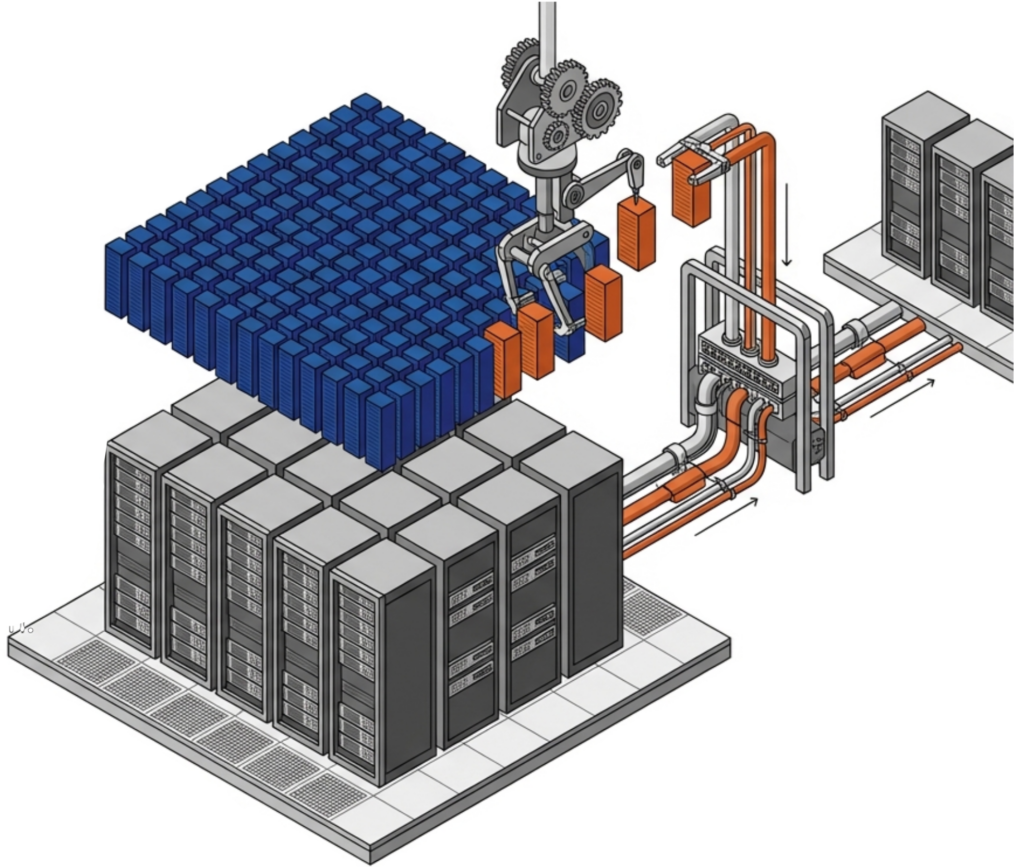
Version 26.1 also introduces granular replication, allowing IT planners to replicate specific workloads or data sets rather than replicating everything. This precision reduces bandwidth consumption on the WAN link and gives organizations finer control over which data gets the highest level of cross-site protection.

Density Without the Risk

VM density reduces hardware costs, shrinks the data center footprint, and frees budget for strategic initiatives. The risk is that traditional protection methods were designed for environments with fewer VMs per host and less data per server. As density increases, the blast radius of each failure grows.

VergeOS addresses this with a layered protection architecture that scales with density. ioOptimize keeps workloads balanced and migrates VMs off failing servers before they crash. RF2 handles single failures with no performance impact. ioGuardian extends protection to N+2 with a dedicated repair path that does not compete with production workloads. Integrated replication and virtual data centers add cross-site recovery that activates in minutes. Now with 26.1, RF3 combined with ioGuardian delivers N+X availability for environments where any downtime is unacceptable.

The result is an infrastructure that captures the full cost savings of VM density without accepting the availability risk that density traditionally creates.

Why does VM consolidation increase risk?

Packing more VMs onto fewer hosts means each server failure takes more workloads offline at once. The surviving hosts absorb those displaced VMs on top of their existing workloads and any storage rebuild I/O, creating resource contention that can degrade performance across the entire cluster.

How does ioOptimize prevent failures from cascading?

ioOptimize monitors every server for early signs of degradation and proactively migrates workloads before a hard failure occurs. When a server does fail, it evaluates the resource demands of each displaced VM and distributes them across surviving hosts based on actual CPU, memory, and I/O capacity rather than dumping them onto the nearest available server.

What is the difference between RF2 and RF3?

RF2 keeps two copies of every data block and provides N+1 protection, sustaining one device failure without data loss. RF3 keeps three copies and provides N+2 protection, sustaining two simultaneous failures. RF3 is new in VergeOS 26.1 and is designed for organizations that demand maximum availability.

How does ioGuardian extend protection beyond RF2 or RF3?

ioGuardian maintains a protected copy of data on a separate VergeOS instance that does not host production workloads. During failures, it feeds missing data blocks back to the production environment in real time. Combined with RF2 it delivers N+2 protection. Combined with RF3 it delivers N+X availability, where data stays accessible as long as one production server and the repair server are running.

Can ioGuardian work across sites?

Yes. Integrated replication sends both production data and ioGuardian data to a remote site. If the primary site’s ioGuardian fails at the same time as a production failure, the ioGuardian at the DR site can still perform inline recovery to the primary production cluster over the WAN.

What happens if the primary site fails completely?

Virtual data centers encapsulate entire application stacks for failover at the remote site. The DR site does not need VM-by-VM configuration. Full workload environments restart in minutes, not hours.

How long will RAM and flash prices stay elevated?

According to SK Hynix internal analysis, commodity DRAM supply is projected to remain constrained through at least 2028. Multiple industry analysts expect high prices and tight supply to persist until new fabrication facilities reach volume production.

How does VergeOS reduce exposure to the memory supercycle?

VergeOS’s single-codebase architecture reduces physical server count by up to 25% and per-VM memory allotment by 30%. Its ultraconverged design supports commodity NVMe drives and standard memory instead of vendor-specific components with inflated pricing. Fewer servers consuming less memory per VM means less hardware exposed to supercycle pricing.

What is granular replication?

New in VergeOS 26.1, granular replication lets IT planners replicate specific workloads or data sets to a remote site rather than replicating everything. This reduces WAN bandwidth consumption and gives organizations finer control over which data receives the highest level of cross-site protection.

Frequently Asked Questions
  • Why does VM consolidation increase risk? — Packing more VMs onto fewer hosts means each server failure takes more workloads offline at once. The surviving hosts absorb those displaced VMs on top of their existing workloads and any storage rebuild I/O, creating resource contention that can degrade performance across the entire cluster.
  • How does ioOptimize prevent failures from cascading? — ioOptimize monitors every server for early signs of degradation and proactively migrates workloads before a hard failure occurs. When a server does fail, it evaluates the resource demands of each displaced VM and distributes them across surviving hosts based on actual CPU, memory, and I/O capacity rather than dumping them onto the nearest available server.
  • What is the difference between RF2 and RF3? — RF2 keeps two copies of every data block and provides N+1 protection, sustaining one device failure without data loss. RF3 keeps three copies and provides N+2 protection, sustaining two simultaneous failures. RF3 is new in VergeOS 26.1 and is designed for organizations that demand maximum availability.
  • How does ioGuardian extend protection beyond RF2 or RF3? — ioGuardian maintains a protected copy of data on a separate VergeOS instance that does not host production workloads. During failures, it feeds missing data blocks back to the production environment in real time. Combined with RF2 it delivers N+2 protection. Combined with RF3 it delivers N+X availability, where data stays accessible as long as one production server and the repair server are running.
  • Can ioGuardian work across sites? — Yes. Integrated replication sends both production data and ioGuardian data to a remote site. If the primary site’s ioGuardian fails at the same time as a production failure, the ioGuardian at the DR site can still perform inline recovery to the primary production cluster over the WAN.
  • What happens if the primary site fails completely? — Virtual data centers encapsulate entire application stacks for failover at the remote site. The DR site does not need VM-by-VM configuration. Full workload environments restart in minutes, not hours.
  • How long will RAM and flash prices stay elevated? — According to SK Hynix internal analysis, commodity DRAM supply is projected to remain constrained through at least 2028. Multiple industry analysts expect high prices and tight supply to persist until new fabrication facilities reach volume production.
  • How does VergeOS reduce exposure to the memory supercycle? — VergeOS’s single-codebase architecture reduces physical server count by up to 25% and per-VM memory allotment by 30%. Its ultraconverged design supports commodity NVMe drives and standard memory instead of vendor-specific components with inflated pricing. Fewer servers consuming less memory per VM means less hardware exposed to supercycle pricing.
  • What is granular replication? — New in VergeOS 26.1, granular replication lets IT planners replicate specific workloads or data sets to a remote site rather than replicating everything. This reduces WAN bandwidth consumption and gives organizations finer control over which data receives the highest level of cross-site protection.

Filed Under: Protection Tagged With: dataprotection, Disaster Recovery, IT infrastructure

July 8, 2025 by George Crump

For Immediate Release

Ann Arbor, MI – July 8th, 2025 – St. Clair County Regional Educational Service Agency (RESA), which provides centralized IT services for five school districts, a local community college, and seven municipalities in Michigan, has successfully modernized its infrastructure by replacing VMware and Veeam with VergeIO’s software-defined infrastructure platform, VergeOS.

Faced with mounting costs, hardware limitations, and industry disruptions, RESA initiated a complete reevaluation of its IT environment. “We were hit with a one-two-three punch,” said James Marsack, Senior Network Engineer at RESA. “First, NetApp announced the end-of-life for our SolidFire array. Then Broadcom acquired VMware and froze all updates while raising prices. Finally, our Cisco UCS environment brought supply chain delays and massive hardware maintenance costs. We needed more than a patch—we needed an infrastructure rethink.”

RESA found its answer in VergeOS, a single software platform that combines virtualization, storage, and networking with built-in backup and disaster recovery. Introduced to VergeIO through Cambridge Computer, Marsack said, “VergeOS didn’t just preserve what we relied on—it expanded it. It allowed us to simplify management, reduce licensing costs, and improve performance. And it just works.”

Key Results:

  • High-Efficiency Storage: VergeOS’ VSAN with global inline deduplication achieved a 16:1 efficiency ratio, compared to 3.7:1 with SolidFire.
  • Backup and DR Simplified: Replaced a half-rack QNAP array and Veeam with VergeOS’ integrated snapshot and replication system.
  • Hourly Snapshots: Eliminated daily backup windows and increased resiliency with hourly, space-efficient snapshots and transparent recovery via ioGuardian.
  • Secure Self-Service: VergeOS’ secure, multi-tenant architecture empowered districts and municipalities with self-service capabilities, dramatically lowering operational overhead.

“Veeam jobs failed regularly. With VergeOS, we get hourly snapshots, instant rollback, and reliable replication—no third-party dependencies,” said Marsack.

RESA also improved security and control. “VergeOS’ tenanting system is elegant—brilliant, even. With SSO and two-factor authentication, it’s vastly more secure than VMware,” Marsack added. “Now, our customers can manage their own VMs, which reduces our management burden and increases their satisfaction.”

Marsack credited Cambridge Computer for facilitating the transformation. “We wouldn’t be having this conversation if it wasn’t for Cambridge. They introduced us to VergeIO, and it changed everything.”

Click here to read the in-depth Case Study about St. Clair RESA’s journey to VergeOS.

VergeIO will be hosting a webinar on July 17th at 1:00 PM ET, featuring RESA.  Click here to register.

About VergeIO

VergeIO is the leading VMware alternative, providing a unified data center operating system that converges virtualization, storage, networking, and backup into a single piece of software. VergeOS simplifies IT operations, reduces costs, and enables rapid infrastructure deployment on new or repurposed hardware. For more information, visit www.verge.io.

About St. Clair County RESA

St. Clair County Regional Educational Service Agency (RESA) is one of Michigan’s 56 intermediate school districts. It provides centralized IT, administrative, and instructional services to five local K-12 school districts, a community college, and multiple municipal entities across the region. RESA’s mission is to deliver cost-effective, high-quality solutions that empower its educational and civic partners to serve their communities more effectively.

Media Contact:
Judy Smith
JPR for VergeIO
[email protected]
(818) 522-9673

Filed Under: Press Release Tagged With: Alternative, dataprotection, IT infrastructure, VMware

April 11, 2025 by George Crump

Why Your Infrastructure Must Be More Reliable Than a Laptop

Virtual Desktop Infrastructure (VDI) promises centralized management, enhanced security, and simplified desktop provisioning, but ensuring VDI resilience ultimately determines its success. Users expect their virtual desktops to be available whenever needed, and IT administrators can’t afford downtime. The last thing an IT team wants to hear is that a user’s personal laptop is more reliable than the VDI environment!

📺 Want to see how a resilient VDI infrastructure works in the real world? Watch our on-demand webinar featuring VergeIO, Inuvika, and Kelley Allen from CCSI demonstrating the solution in his production environment.
Register here.

To prevent this, organizations must deploy a highly resilient VDI architecture that can withstand hardware failures, ensure uninterrupted access, and protect against data loss. While solving performance issues like boot storms is essential, its potential performance doesn’t matter if the infrastructure is down. Ensuring VDI Resilience means choosing an infrastructure that can handle node failures, multiple simultaneous drive failures, and even full-site disruptions without impacting end-user availability.

The Cost of Downtime in VDI

When a user’s local laptop fails, one user is down. However, if a VDI system fails, hundreds or thousands of users can be left without access to their desktops and applications, bringing productivity to a standstill.

Downtime in a VDI environment results in:

  • Lost productivity – Employees, students, or healthcare professionals can’t access their critical applications.
  • IT scrambling to recover – Administrators are forced into emergency troubleshooting and system restores.
  • Potential data loss – Critical work may be lost if desktops or application servers aren’t adequately protected.
  • User frustration and resistance – If VDI is unreliable, users may abandon it in favor of personal devices, undermining IT security and control.

To prevent these issues, a truly resilient VDI platform must deliver continuous availability and data protection.

The Challenges Ensuring VDI Resilience

Traditional virtualization platforms often rely on RAID-based storage protection and compute clustering to maintain uptime. While these methods provide some level of redundancy, they have critical weaknesses:

  • RAID can’t handle multiple simultaneous drive failures – If two or more drives fail simultaneously in a RAID 5 or RAID 6 array, data loss occurs, leading to a time-consuming and costly recovery process.
  • Compute clustering requires rebalancing workloads – In a node failure, traditional clusters must migrate VDI sessions to remaining nodes, often causing performance degradation or session disconnects.
  • Long rebuild times and performance loss – If a RAID array or vSAN-based storage system loses a drive, the rebuild process can take hours or even days, significantly slowing performance during that time.

For a VDI environment to be considered truly resilient, it must go beyond these traditional methods and offer:

  • Self-healing storage that can survive multiple drive failures.
  • Multi-node redundancy that intelligently shifts workloads without performance loss.
  • Built-in high availability that prevents downtime without complex manual intervention.

Ensuring VDI Resilience with a Distributed, Resilient Architecture

Ensuring VDI Resilience

A highly resilient VDI infrastructure must eliminate single points of failure and distribute resources across nodes to ensure seamless operation even during hardware failures.

A next-generation VDI platform should incorporate:

  • Distributed storage mirroring: Instead of relying on RAID, data should be mirrored across multiple nodes, allowing desktops and applications to remain accessible without the prolonged performance impact of a RAID rebuild.
  • Automated failover: If a compute node fails, virtual desktops should intelligently shift to another node, which is most qualified to host them, without user disruption or IT intervention.
  • Per-VM and per-disk fault tolerance: Protecting individual VDI sessions and applications at a granular level ensures that even partial infrastructure failures don’t impact the entire environment.
  • Self-healing capabilities: The system should automatically rebalance data and workloads in the background, reducing IT workload and recovery times.

VergeOS: Ensuring VDI Resilience Without Complexity

VergeOS is designed to deliver a highly resilient VDI infrastructure by integrating virtualization, storage, and networking into a single, fault-tolerant platform. Unlike traditional virtualization platforms that rely on RAID-based storage or software-defined storage layers that introduce bottlenecks, VergeOS provides:

  • Multi-node fault tolerance: If a node fails, workloads are intelligently transferred to another node without performance degradation.
  • Distributed mirroring instead of RAID: Data is mirrored across multiple storage devices, ensuring production performance without RAID-rebuild overhead.
  • Cluster Hot Spare: VergeOS’ ioGuardian protects from multiple simultaneous drive or server failures, providing data to impacted virtual desktops inline without interruption.
  • No dependency on external storage: Traditional SAN or NAS solutions introduce single points of failure. VergeOS eliminates this risk by making storage an integrated, distributed component of the virtualization platform while providing superior performance.
  • Automatic recovery and rebalancing: The system self-heals by redistributing workloads, reducing administrative overhead.

With VergeOS, IT teams can ensure that VDI infrastructure is always more reliable than a user’s laptop, providing uninterrupted access even in the face of hardware failures.

Ensuring VDI Resilience from Data Center Disaster

Beyond local resilience, organizations must also prepare for full-site outages caused by natural disasters, power failures, or regional disruptions. A robust VDI strategy includes protecting users from node and drive failures and ensuring that the entire desktop environment can fail over to a secondary location with minimal disruption.

VergeOS addresses this challenge by integrating VergeFabric, a built-in software-defined networking layer that supports advanced routing protocols such as BGP (Border Gateway Protocol). When combined with VergeOS’s native replication capabilities, this allows organizations to replicate virtual desktops and application workloads between primary and secondary sites securely and efficiently. Routing can automatically shift users to the secondary location in a disaster without requiring manual reconfiguration.

This level of integration ensures that VDI environments are protected at the hardware and cluster level and resilient across geographic regions. Users can continue accessing their virtual desktops from anywhere, even if the primary site becomes unavailable—delivering true business continuity for the virtual desktop infrastructure.

📺 Learn More About Ensuring VDI Resilience.
Watch our detailed on-demand webinar with VergeIO, Inuvika, and Kelley Allen from CCSI demonstrating their resilient VDI solution.
Register here.

Conclusion

VDI success depends on reliability. Organizations investing in virtual desktops must ensure their infrastructure is built for resilience, not just performance. Traditional RAID-based storage and clustered compute architectures introduce points of failure that can disrupt users and drive up IT support costs.

A resilient VDI platform must:

  • Protect against node and drive failures without downtime.
  • Eliminate RAID limitations with a more flexible, distributed storage approach.
  • Automate recovery and rebalancing to minimize IT intervention.
  • Ensure uninterrupted user access, no matter what happens at the hardware level.

By choosing an integrated, efficient, fault-tolerant architecture, IT leaders can provide a seamless, always-on VDI experience that outperforms the reliability of any physical laptop or desktop.

Filed Under: VDI Tagged With: Alternative, dataprotection, VDI

February 3, 2025 by George Crump

A double-protected VMware alternative allows organizations to lower licensing expenses and enhance their data resilience. With the rise of infrastructure threats and the need for continuity of operations, IT should leverage this infrastructure shift to boost its recovery capabilities from accidental file deletions, server or drive failures, site disasters, and long-term data retention needs.

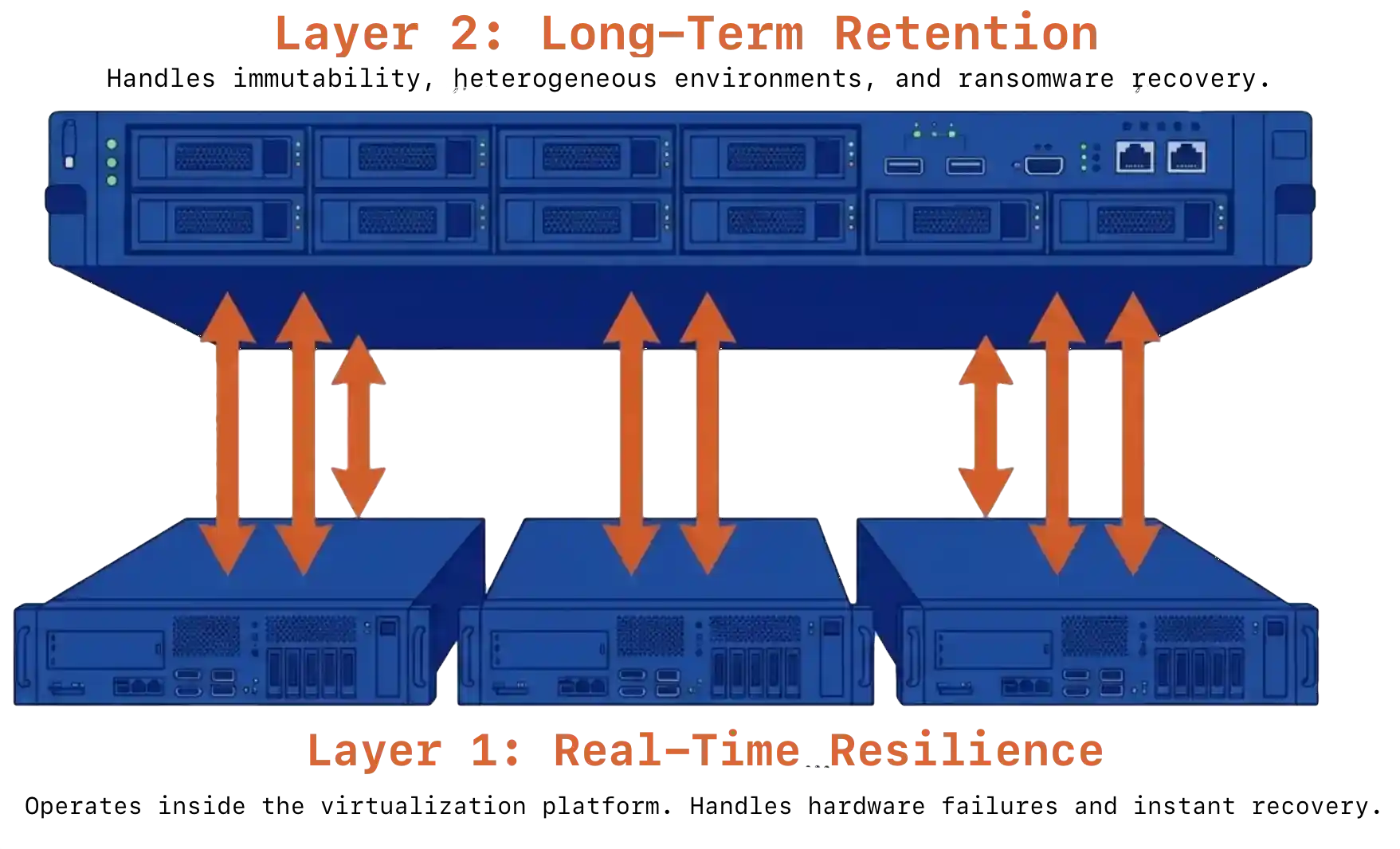
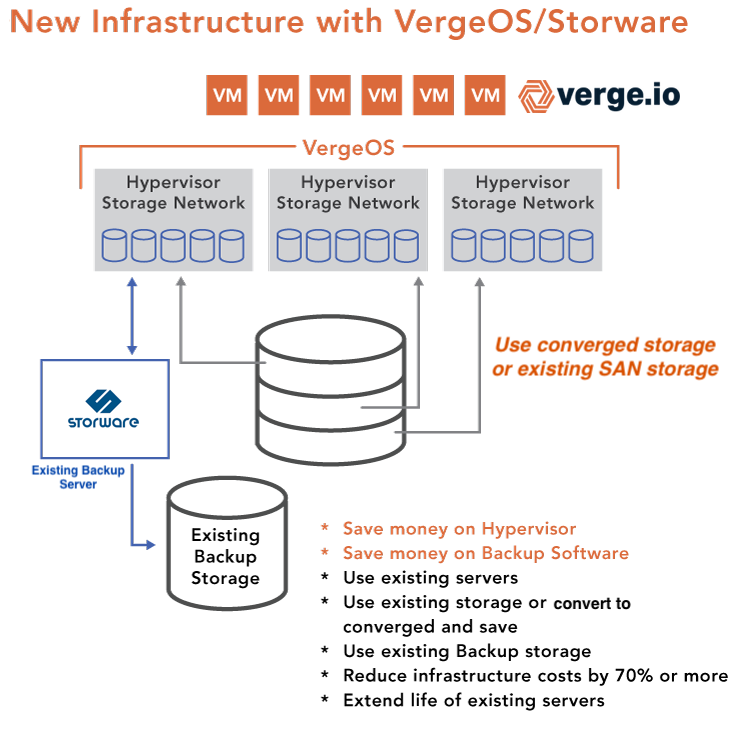
A robust VMware alternative must provide two layers of protection: real-time infrastructure resilience and long-term data protection. VergeIO and Storware work together to create a double-protected solution, combining real-time safeguards like ioGuardian, ioClone (snapshots), and ioReplicate with long-term retention and archival capabilities provided by Storware Backup and Recovery.

This approach delivers the strongest data protection strategy and allows IT teams to leverage existing server and backup storage hardware, reducing costs and eliminating the need for rip-and-replace upgrades.

First Layer of Protection: Built-in Infrastructure Resiliency

Many VMware alternatives rely heavily on third-party backup solutions for protection, leaving gaps in immediate recovery and real-time failure resilience. A double-protected VMware alternative must first integrate infrastructure-native data protection that ensures data availability without relying on backups for everyday failures.

ioGuardian: Continuous Failure Detection and Recovery

The foundation of VergeIO’s built-in resiliency is ioGuardian, which proactively monitors infrastructure health and automatically reroutes workloads in the event of drive or node failures. Unlike traditional instant-recovery solutions that require IT intervention, ioGuardian provides real-time, automated protection that keeps applications running without delays or downtime. It also protects against multiple simultaneous drive failures, ensuring data remains accessible even in worst-case scenarios.

ioClone: Instant, Space-Efficient Snapshots

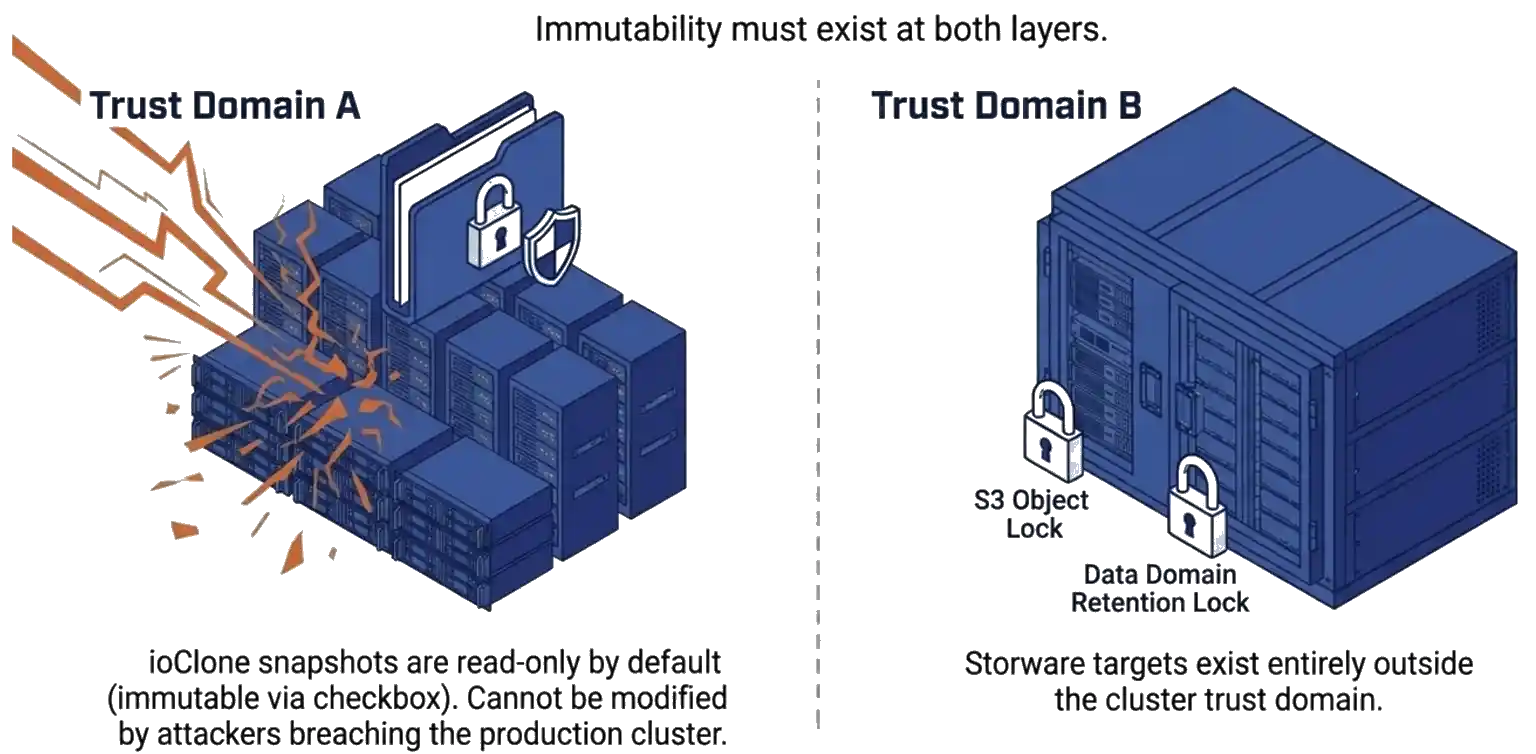
Snapshots are a critical component of an effective data resilience strategy, but most legacy HCI and VMware solutions create performance bottlenecks when snapshots accumulate. VergeIO’s ioClone snapshots eliminate this issue by providing instant, space-efficient, performance-neutral snapshots that IT can use to recover from accidental deletions and system corruption quickly. Snapshots can even be used to recover from ransomware attacks because they are read-only from inception.

ioReplicate: Multi-Site Data Resiliency

VergeIO offers ioReplicate, an efficient, WAN-optimized replication engine that enables real-time or scheduled replication to offsite locations for organizations needing geo-redundancy. This ensures that even in the event of a primary site failure, IT teams can rapidly failover and restore operations from a secondary location.

Global Inline Deduplication

VergeOS features integrated global inline deduplication, the foundation for both ioClone and ioReplicate. This technology decreases storage consumption by ensuring that unique data blocks are written, greatly enhancing efficiency. Removing redundant data globally improves storage performance and maximizes available capacity, making snapshots and replication operations even more cost-effective.

Second Layer of Protection: Long-Term Data Retention

A double-protected VMware alternative requires more than built-in resiliency and data availability in real-time. IT teams also need a long-term data protection strategy to defend against data corruption, cyber threats, and to meet compliance requirements.

Storware Backup and Recovery: Deep Integration with VergeIO

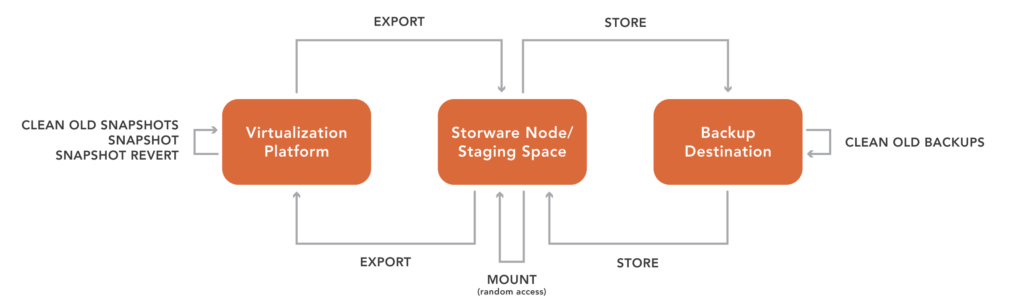
Storware extends VergeIO’s protection by offering long-term backup retention, compliance archiving, and multi-destination backup support, allowing organizations to meet regulatory and business continuity requirements. Unlike traditional backup solutions, Storware is directly integrated into VergeOS, enabling seamless backup of ioClone snapshots and leveraging VergeIO’s changed block tracking (CBT) for faster, storage-efficient backups.

To learn more about VergeIO’s and Storware’s Double Protection and to see it in action, watch our on-demand webinar, “Exit VMware, Retain Server and Backup Hardware.”

Use Existing Server and Backup Storage Hardware

VergeOS enhances flexibility by supporting a broad range of existing server hardware. With its intelligent resource allocation and ability to run on nearly any x86 hardware purchased in the last six years, IT teams can continue using their current infrastructure instead of refreshing everything simultaneously.

One of the most costly aspects of transitioning off of VMware is replacing backup infrastructure due to compatibility limitations with new platforms. Storware removes this concern by supporting a wide range of backup storage hardware, including:

  • Existing NAS/SAN backup storage
  • Object storage (on-prem and cloud-based)
  • Backup appliances from vendors like Rubrik, ExaGrid, and Dell EMC

Storware: Keep Your Existing Backup Storage

Storware enables IT teams to continue using their existing backup storage infrastructure, eliminating the need to purchase new backup appliances. Whether organizations rely on on-premises storage or cloud-based repositories, Storware provides seamless backup and archival capabilities. This flexibility helps businesses reduce costs while ensuring backup operations remain efficient and secure.

ioOptimize: Extending Hardware Lifespan

VergeOS includes ioOptimize, a technology designed to maximize the efficiency of existing hardware. By intelligently distributing workloads, optimizing storage, and reducing system overhead, ioOptimize allows organizations to extend the life of their current infrastructure while also improving performance. IT teams can repurpose aging servers and storage systems rather than retiring them early, ultimately reducing costs and making infrastructure refresh cycles more flexible.

The Most Data-Resilient VMware Alternative

VergeIO believes that data protection and resiliency is a shared responsibility. The combination of VergeIO and Storware creates the most resilient VMware alternative, delivering:

  • Real-time failure detection and recovery with ioGuardian
  • Instant, space-efficient snapshots with ioClone
  • Multi-site data replication with ioReplicate
  • Fast, storage-efficient backups with Storware’s CBT integration
  • Long-term retention and archival capabilities using existing backup storage hardware
  • Extended server lifecycle with ioOptimize

With VergeIO’s built-in resilience and Storware’s long-term data protection, IT teams can confidently transition from VMware without sacrificing security, availability, or infrastructure flexibility.

Conclusion

A VMware exit should not come at the cost of data protection or hardware flexibility. VergeIO and Storware provide a double-protected VMware alternative that delivers real-time resilience and long-term security, ensuring IT teams reduce costs, enhance uptime, and retain control over their infrastructure.

Organizations looking to exit VMware now have a cost-effective, highly available, and deeply resilient alternative that protects both today and into the future.

Filed Under: Protection Tagged With: Alternative, dataprotection, Disaster Recovery, VMware

October 6, 2024 by George Crump

When considering an alternative to VMware, it’s essential to elevate your infrastructure rather than simply seeking cost savings. Elevating your infrastructure means improving data protection, resiliency, and availability—critical elements that should define your next virtualization platform. In this post, we’ll explore the key features you should demand in a modern virtualization platform, and how VergeIO delivers on those expectations.

How to Elevate Your Infrastructure with Better Data Resilience

Snapshot Technology

In today’s IT environments, preparing for potential data loss, corruption, or accidental deletions is crucial. One of the most vital features in any virtualization platform is advanced snapshot technology. Traditional snapshots are often plagued by performance bottlenecks and limited retention, resulting in large gaps in protection. Many organizations are forced to take only one snapshot per day to feed their backup software, which is no longer enough.

To elevate your infrastructure, your VMware alternative should provide frequent, independent snapshots that don’t rely on redirect-on-write techniques. These snapshots should maintain system performance while allowing multiple snapshots throughout the day. This enhances Recovery Point Objectives (RPO) and Recovery Time Objectives (RTO), ensuring fast recovery when needed.

Workload Isolation

Secure workload isolation is key to protecting mission-critical workloads. Multi-tenancy ensures individual workloads are isolated for better performance and enhanced security. With an elevated infrastructure, you can place mission-critical applications in their own tenants, isolating them from less critical workloads. If ransomware attacks a user workload, it won’t spread to other tenants.

Multi-tenancy also streamlines disaster recovery (DR). By encapsulating consistent states of networking, storage, and virtual machines, the failover process becomes simpler and more reliable, improving your DR capabilities. Frequent testing becomes easier, encouraging proactive planning.

Key considerations include:

  • Robust isolation mechanisms to protect workloads.
  • Custom backup policies for each workload.
  • Encapsulated DR processes for easy recovery.

Protection from Hardware Failures

Look for a VMware alternative that can elevate your infrastructure by withstanding multiple simultaneous hardware failures. While most platforms can handle a single failure, resilient virtualization solutions keep workloads running even during multiple failures.

Look for virtualization platforms that offer self-healing capabilities to automatically reroute workloads to available hardware, ensuring minimal downtime. Solutions that provide affordable redundancy can enable high availability without requiring excessive resources.

Disaster Recovery

A comprehensive disaster recovery (DR) plan is key to elevating your infrastructure. While backup solutions play a crucial role, they must be paired with automated disaster recovery capabilities. DR should be fully integrated into the platform, with failover and failback processes automated to ensure that workloads remain available during outages. Frequent DR testing without disrupting production is also essential for preparing your infrastructure for worst-case scenarios.

Importance of a Separate Backup Process for Long-Term Retention

While advanced snapshots and disaster recovery are critical, they cannot replace the need for a separate backup process to ensure compliance with the 3-2-1 backup rule. This rule mandates that organizations maintain three copies of their data: two on different storage media and one offsite.

An effective VMware alternative should integrate seamlessly with separate backup solutions that can provide long-term retention and offsite storage. This process ensures compliance, protects against ransomware, and meets legal or regulatory data retention requirements. Moreover, having a distinct backup solution enables organizations to recover data from further back in time, providing more flexibility and protection in the event of an unexpected disaster or human error.

Backup considerations include:

  • Immutable backups that cannot be modified or deleted, providing extra protection against ransomware.
  • Offsite storage for compliance with the 3-2-1 rule.
  • Long-term retention capabilities that meet regulatory and legal requirements.

VergeIO: Elevate Your Infrastructure

Among the many VMware alternatives, VergeIO stands out by offering more than just an alternative—it elevates your infrastructure, particularly in the realm of data protection and resiliency.

Elevate Your Infrastructure with Advanced IOclone Technology

VergeOS’s IOclone technology takes data protection to the next level. Unlike traditional snapshots that slow down performance and use excessive storage, IOclone creates fully independent snapshots of virtual machines, instances, or virtual data centers. Snapshots are optimized with inline deduplication, maximizing storage efficiency while maintaining high performance.

Elevate Your Infrastructure

These independent snapshots mean that even if the original data is deleted, the snapshot remains intact. This capability allows IT teams to take frequent snapshots and reduce their RPO and RTO, enabling granular recovery of full virtual data centers, individual VMs, or even specific files. Experience using snapshots for granular recovery in our hands-on lab.

Elevate Your Infrastructure with Virtual Data Centers

VergeOS provides secure multi-tenancy but takes it a step further by delivering virtual data centers for each tenant. These virtual data centers encapsulate networking, storage, and compute resources into consolidated objects, allowing complete environments to be recovered quickly during outages.

This encapsulation minimizes recovery delays, offering a more robust approach to disaster recovery by ensuring all configuration files are in sync and workloads are restored seamlessly. See how to use virtual data centers right now in our hands-on lab.

Elevate Your Infrastructure by Protecting it from Hardware Failures

VergeOS’ self-healing architecture detects failures in real-time, rerouting workloads automatically to minimize downtime. VergeOS provides affordable redundancy, ensuring high availability without the need for resource duplication.

Elevate Your Infrastructure

For greater protection, VergeOS includes ioGuardian, an integrated capability which offers inline recovery in case of catastrophic multiple simultaneous hardware failures. ioGuardian delivers missing data segments to virtual machines in real-time, enabling VMs to remain operational and saving you from resorting to your backup software.

Elevate Your Infrastructure by Exceeding the 3-2-1 Rule

While VergeOS provides robust snapshot technology and integrated disaster recovery, working with Storware ensures complete compliance with the 3-2-1 backup rule. Storware offers an advanced backup solution that integrates seamlessly with VergeOS’s snapshot capabilities, allowing organizations to meet long-term retention and offsite storage requirements.

Storware’s incremental forever backups ensure that only changed data is backed up after the initial full backup, minimizing storage use while still offering comprehensive protection. Storware also supports immutable backups, which are critical for protecting against ransomware and accidental deletions.

Conclusion: VergeIO is the Future of Virtualization

Don’t just settle for a VMware alternative that maintains the status quo. Elevate your infrastructure with VergeIO, a solution that improves snapshot technology, workload isolation, resiliency against failures, and integrated disaster recovery.

Next Steps

  • Explore more about VergeIO’s approach to data protection through our on-demand webinar “Protecting VergeOS.”
  • Experience VergeOS first-hand by signing up for our hands-on lab here.
  • Download our solution brief for an in-depth look at how VergeIO and Storware provide complete data protection.

Filed Under: Protection Tagged With: dataprotection, Disaster Recovery, DR

October 1, 2024 by George Crump

Warsaw, Poland – September 24, 2024 – Storware, a European leader in enterprise data backup and recovery, renowned for its stability and seamless integration capabilities, has announced a strategic partnership with VergeIO, the leading provider of ultraconverged infrastructure. This collaboration addresses the growing market demand for turnkey solutions that deliver an integrated data center operating environment with end-to-end backup, disaster recovery, and robust protection against ransomware.

VergeIO, a pioneer in VMware alternatives, offers effortless solutions for deploying powerful platforms using existing hardware while enhancing data resiliency and performance. The VergeOS software is more than just a VMware alternative—it provides superior efficiency, leading to better performance, scalability, hardware resiliency, upfront cost savings, and significant long-term reductions in total cost of ownership (TCO). The flexible, hardware-agnostic approach simplifies project launches with minimal technical setup while maintaining high availability and workload scalability.

The collaboration between Storware and VergeIO strengthens data security, ensuring confidentiality and business continuity. This partnership offers significant benefits for businesses of all types and sizes, enabling them to build robust infrastructures for a wide range of environments, including secure research (HPC), hyperconverged data centers, and multi-tenant private clouds.

Key Benefits of the Partnership:

  • A unified solution for simplifying data center virtualization and infrastructure management.
  • Enables organizations to build or scale IT environments using end-to-end software rapidly, minimizing costs and deployment times.
  • Storware Backup and Recovery integrates seamlessly with VergeOS, offering a centralized console for managing backup tasks while supporting the creation of fully encapsulated virtual data centers.
  • The hardware-agnostic infrastructure supports evolving business demands and accelerates growth.
  • Significant reduction in total cost of ownership (TCO) as environments scale.

“The Storware-VergeIO partnership is not just about collaboration; it’s about creating synergy between innovation and expertise to accelerate technological transformation,” said Jan Sobieszczanski, CEO of Storware. “We’re excited to offer a joint solution that combines VergeOS’ unique ultraconverged infrastructure with Storware’s powerful Backup and Recovery capabilities. Together, we’re ready to tackle emerging market challenges head-on.”

Yan Ness, CEO of VergeIO, added, “Integrating Storware Backup and Recovery with VergeOS provides customers with confidence as they transition from VMware. The combined solution enhances cybersecurity with rapid backups, including incremental and differential backups, granular recovery options, and automated backup scheduling. This partnership makes virtualization and moving to fully functional, resilient virtual data centers a turnkey solution.”

About VergeIO

VergeIO is the future of virtualization and the leading VMware alternative. Unlike hyperconverged infrastructure (HCI), VergeIO’s ultraconverged infrastructure (UCI) collapses the traditional IT stack (compute, storage, and networking) into a single, integrated data center operating environment: VergeOS. This approach allows organizations to achieve greater workload density, improved data resiliency and simplified IT management using their existing hardware—resulting in lower costs and higher availability. VergeOS delivers better performance, scalability, hardware resiliency, and significant upfront and long-term cost savings.

For more information, visit www.verge.io.

About Storware

Storware is a European enterprise data backup and recovery solutions provider recognized for its stability and comprehensive platform integration. Storware secures data across virtual machines, containers, cloud environments, and applications, including Microsoft 365. It supports a variety of backup destinations, such as file systems and object storage, and acts as a proxy for enterprise backup providers. Established in 2013 in Warsaw, Poland, Storware continues expanding its reach through a robust global distribution and partner network.

Connect with Storware on Facebook, LinkedIn, or visit storware. eu for more information.

Media Contacts:

Tasha Kobzarenko
Product Marketing Manager, Storware
[email protected]

Judy Smith
JPR Communications, representing VergeIO
[email protected]
(818) 522-9673

Filed Under: Press Release Tagged With: dataprotection

  • Page 1
  • Page 2
  • Page 3
  • Go to Next Page »

855-855-8300

Get Started

  • Versions
  • Request Tour

VergeIO For

  • VMware Alternative
  • SAN Replacement
  • Solving Infrastructure Modernization Challenges
  • Artificial Intelligence
  • Hyperconverged
  • Server Room
  • Secure Research Computing

Product

  • Benefits
  • Documents
  • Architecture Overview
  • Use Cases
  • Videos

Company

  • About VergeIO
  • Blog
  • Technical Documentation
  • Legal

© 2026 VergeIO. All Rights Reserved.