• Skip to main content
  • Architecture
    • Overview
      Learn about VergeOS’ unique unfied architecture that integrates virtualization, storage, networking, AI, backup and DR into a single data center operating system
    • Infrastructure Wide Deduplication
      VergeOS transforms deduplication from a storage-only commodity into a native, infrastructure-wide capability that spans storage, virtualization, and networking, eliminating hidden resource taxes
    • VergeFS
      VergeFS is a distributed, high-performance global file system integrated into VergeOS, unifying storage across nodes, tiers, and workloads while eliminating the need for external SANs
    • VergeFabric
      VergeFabric is VergeOS’s integrated virtual networking layer, delivering high-speed, low-latency communication across nodes while eliminating the complexity of traditional network configurations.
    • Infrastructure Automation
      VergeOS integrates Packer, Terraform, and Ansible to deliver an end-to-end automation pipeline that eliminates infrastructure drift and enables predictable, scalable deployments.
    • VergeIQ
      Unlock secure, on-premises generative AI—natively integrated into VergeOS. With VergeIQ, your enterprise gains private AI capabilities without the complexity, cloud dependency, or token-based pricing.
  • Features
    • Virtual Data Centers
      A VergeOS Virtual Data Center (VDC) is a fully isolated, self-contained environment within a single VergeOS instance that includes its own compute, storage, networking, and management controls
    • High Availability
      VergeOS provides a unified, easy-to-manage infrastructure that ensures continuous high availability through automated failover, storage efficiency, clone-like snapshots, and simplified disaster recovery
    • ioClone
      ioClone utilizes global inline deduplication and a blockchain-inspired file system within VergeFS to create instant, independent, space-efficient, and immutable snapshots of individual VMs, volumes, or entire virtual data centers.
    • ioReplicate
      ioReplicate is a unified disaster-recovery solution that enables simple, cost-efficient DR testing and failover via three‑click recovery of entire Virtual Data Centers—including VMs, networking, and storage.
    • ioFortify
      ioFortify creates immutable, restorable VDC checkpoints and provides proactive ransomware detection with instant alerts for rapid recovery and response.
    • ioMigrate
      ioMigrate enables large-scale VMware migrations, automating the rehosting of hundreds of VMs (including networking settings) in seconds with minimal downtime by seamlessly transitioning entire VMware environments onto existing hardware stacks.
    • ioProtect
      ioProtect offers near-real-time replication of VMware VMs—including data, network, and compute configurations—to a remote disaster‑recovery site on existing hardware, slashing DR costs by over 60% while supporting seamless failover and testing in an efficient, turnkey VergeOS Infrastructure.
    • ioOptimize
      ioOptimize leverages AI and machine learning to seamlessly integrate new and old hardware and automatically migrate workloads from aging or failing servers.
    • ioGuardian
      ioGuardian is VergeIO’s built-in data protection and recovery capability, providing near-continuous backup and rapid VM recovery during multiple simultaneous drive or server failures.
  • IT Initiatives
    • VMware Alternative
      VergeOS offers seamless migration from VMware, enhancing performance and scalability by consolidating virtualization, storage, and networking into a single, efficient platform.
    • Hyperconverged Alternative
      VergeIO’s page introduces ultraconverged infrastructure (UCI) via VergeOS, which overcomes HCI limitations by supporting external storage, scaling compute and storage independently, using existing hardware, simplifying provisioning, boosting resiliency, and cutting licensing costs.
    • SAN Replacement / Storage Refresh
      VergeIO’s storage by replacing aging SAN/NAS systems within its ultraconverged infrastructure, enhancing security, scalability, and affordability.
    • Infrastructure Modernization
      Legacy infrastructure is fragmented, complex, and costly, built from disconnected components. VergeOS unifies virtualization, storage, networking, data protection, and AI into one platform, simplifying operations and reducing expenses.
    • Virtual Desktop Infrastructure (VDI)
      VergeOS for VDI delivers a faster, more affordable, and easier-to-manage alternative to traditional VDI setups—offering organizations the ability to scale securely with reduced overhead
    • Secure Research Computing
      VergeIO's Secure Research Computing solution combines speed, isolation, compliance, scalability, and resilience in a cohesive platform. It’s ideal for institutions needing segmented, compliant compute environments that are easy to deploy, manage, and recover.
    • Venues, Remote Offices, and Edge
      VergeOS delivers resiliency and centralized management across Edge, ROBO, and Venue environments. With one platform, IT can keep remote sites independent while managing them all from a single pane of glass.
  • Blog
      • VMware Alternative DR: How VergeOS and Veeam Split the JobRansomware encrypts 400 VMs at 2 a.m. VMware alternatives that don't solve the backup question leave you exposed. VergeOS and Veeam split that job — platform recovery in seconds, granular retention for weeks.
      • The oVirt Standard: How Open Backup Compatibility Completes the VMware Exit
      • From Zero to RAG in a GPU Virtual WorkstationNVIDIA's RAG Application Toolkit turns a GPU virtual workstation into an AI development environment. VergeOS makes the infrastructure invisible.
    • View All Posts
  • Resources
    • Become a Partner
      Get repeatable sales and a platform built to simplify your customers’ infrastructure.
    • Technology Partners
      Learn about our technology and service partners who deliver VergeOS-powered solutions for cloud, VDI, and modern IT workloads.
    • White Papers
      Explore VergeIO’s white papers for practical insights on modernizing infrastructure. Each paper is written for IT pros who value clarity, performance, and ROI.
    • In The News
      See how VergeIO is making headlines as the leading VMware alternative. Industry analysts, press, and partners highlight our impact on modern infrastructure.
    • Press Releases
      Get the latest VergeOS press releases for news on product updates, customer wins, and strategic partnerships.
    • Case Studies
      See how organizations like yours replaced VMware, cut costs, and simplified IT with VergeOS. Real results, real environments—no fluff.
    • Webinars
      Explore VergeIO’s on-demand webinars to get straight-to-the-point demos and real-world infrastructure insights.
    • Documents
      Get quick, no-nonsense overviews of VergeOS capabilities with our datasheets—covering features, benefits, and technical specs in one place.
    • Videos
      Watch VergeIO videos for fast, focused walkthroughs of VergeOS features, customer success, and VMware migration strategies.
    • Technical Documentation
      Access in-depth VergeOS technical guides, configuration details, and step-by-step instructions for IT pros.
  • How to Buy
    • Schedule a Demo
      Seeing is believing, set up a call with one of our technical architects and see VergeOS in action.
    • Versions
      Discover VergeOS’s streamlined pricing and flexible deployment options—whether you bring your own hardware, choose a certified appliance, or run it on bare metal in the cloud.
    • Test Drive – No Hardware Required
      Explore VergeOS with VergeIO’s hands-on labs and gain real-world experience in VMware migration and data center resiliency—no hardware required
  • Company
    • About VergeIO
      Learn who we are, what drives us, and why IT leaders trust VergeIO to modernize and simplify infrastructure.
    • Support
      Get fast, expert help from VergeIO’s support team—focused on keeping your infrastructure running smoothly.
    • Careers
      Join VergeIO and help reshape the future of IT infrastructure. Explore open roles and growth opportunities.
  • 855-855-8300
  • Contact
  • Search
  • 855-855-8300
  • Contact
  • Search
  • Architecture
    • Overview
    • VergeFS
    • VergeFabric
    • Infrastructure Automation
    • VergeIQ
  • Features
    • Virtual Data Centers
    • High Availability
    • ioClone
    • ioReplicate
    • ioFortify
    • ioMigrate
    • ioProtect
    • ioOptimize
    • ioGuardian
  • IT Initiatives
    • VMware Alternative
    • Hyperconverged Alternative
    • SAN Replacement / Storage Refresh
    • Infrastructure Modernization
    • Virtual Desktop Infrastructure (VDI)
    • Secure Research Computing
    • Venues, Remote Offices, and Edge
  • Blog
  • Resources
    • Become a Partner
    • Technology Partners
    • White Papers
    • In The News
    • Press Releases
    • Case Studies
    • Webinars
    • Documents
    • Videos
    • Technical Documentation
  • How to Buy
    • Schedule a Demo
    • Versions
    • Test Drive – No Hardware Required
  • Company
    • About VergeIO
    • Support
    • Careers
×
  • Architecture
    • Overview
    • VergeFS
    • VergeFabric
    • Infrastructure Automation
    • VergeIQ
  • Features
    • Virtual Data Centers
    • High Availability
    • ioClone
    • ioReplicate
    • ioFortify
    • ioMigrate
    • ioProtect
    • ioOptimize
    • ioGuardian
  • IT Initiatives
    • VMware Alternative
    • Hyperconverged Alternative
    • SAN Replacement / Storage Refresh
    • Infrastructure Modernization
    • Virtual Desktop Infrastructure (VDI)
    • Secure Research Computing
    • Venues, Remote Offices, and Edge
  • Blog
  • Resources
    • Become a Partner
    • Technology Partners
    • White Papers
    • In The News
    • Press Releases
    • Case Studies
    • Webinars
    • Documents
    • Videos
    • Technical Documentation
  • How to Buy
    • Schedule a Demo
    • Versions
    • Test Drive – No Hardware Required
  • Company
    • About VergeIO
    • Support
    • Careers

oVirt Backup with Veeam and VergeOS

April 14, 2026 by George Crump

Organizations leaving VMware face a question that stalls more migrations than any technical challenge: will our backup tools still work? VergeOS answers that question at the architecture level. VergeOS 26.1.2 implements the oVirt API natively — the same interface that enterprise backup platforms like Veeam are already built to support. Exit VMware. Keep your backup tools. No custom integration, no replacement vendors, no renegotiated contracts.

Key Takeaways
Exit VMware without replacing your backup platform. VergeOS 26.1.2 implements the oVirt API natively — any backup tool that supports the oVirt or KVM standard connects immediately, with no custom development on either side.
Veeam connects to VergeOS through its existing oVirt driver in under one hour, with no code changes and no new agents. Existing backup jobs, schedules, and retention policies apply immediately.
The primary barrier to exiting VMware — backup continuity — is removed at the architecture level. Migration timelines are no longer gated by data protection readiness.
VergeOS runs on existing hardware. With DRAM up 171% and NAND flash up 55–60%, organizations avoid a forced server refresh by migrating on the infrastructure they already own.
VergeOS reduces the physical RAM footprint for the same workload count, extending DDR4 server life and reducing exposure to DDR5 pricing during the supercycle.
A live demo with Veeam runs April 15, 2026 at 1:00 PM ET — from blank environment to fully protected workloads in a single session.

The oVirt Standard: Why Backup Tools Already Support VergeOS

The oVirt API is the established interface for KVM-based virtualization environments. Major backup vendors adopted this standard as the path to supporting modern hypervisor platforms, building their products against a single, common interface rather than maintaining separate integrations for each platform. The result is a broad ecosystem of compatible tools that organizations can bring to any oVirt-compatible environment.

VergeOS 26.1.2 implements this interface natively within the platform. No custom development is required on either side. Backup platforms connect to VergeOS through the same driver they already use for KVM environments, authenticate, and operate at full production scale. Both sides work as designed.

Key Terms
oVirt API

The standard management interface for KVM-based virtualization environments. Major backup vendors implemented oVirt drivers to support KVM platforms, creating a shared compatibility layer across the KVM ecosystem.

KVM (Kernel-based Virtual Machine)

A Linux kernel virtualization module that serves as the hypervisor foundation for VergeOS and other open-source virtualization platforms. oVirt was built specifically to manage KVM environments.

oVirt Driver

A software component within enterprise backup platforms such as Veeam that enables communication with oVirt-compatible hypervisors. The driver handles VM discovery, snapshot management, and data transfer without platform-specific customization.

Virtual Data Center (VDC)

A VergeOS construct that encapsulates a complete, isolated environment including compute, storage, and networking. VergeOS can protect and recover an entire VDC as a single unit, independent of workload-level backup tools.

Memory and Storage Supercycle

The current market condition of simultaneous DRAM (171% projected YoY through 2027) and NAND flash (55–60% in Q1 2026) price increases, combined with extended server lead times. Organizations replacing hardware during this period face significantly elevated acquisition costs.

Two-Layer Protection Model

The data protection architecture where VergeOS handles infrastructure-level availability (disk, node, site failures) and enterprise backup platforms handle granular protection (file-level restore, application-aware backup, long-term retention). Both layers operate independently and simultaneously.

The Operational Impact of Exiting VMware with Backup Intact

The most persistent barrier to exiting VMware is not infrastructure complexity. It is the prospect of replacing data protection infrastructure that IT teams have built their recovery strategies around. VergeOS removes that barrier at the architecture level. Organizations connect their existing backup platforms to VergeOS, discover workloads, and apply current protection policies without change. Backup workflows, retention strategies, and recovery procedures carry forward intact.
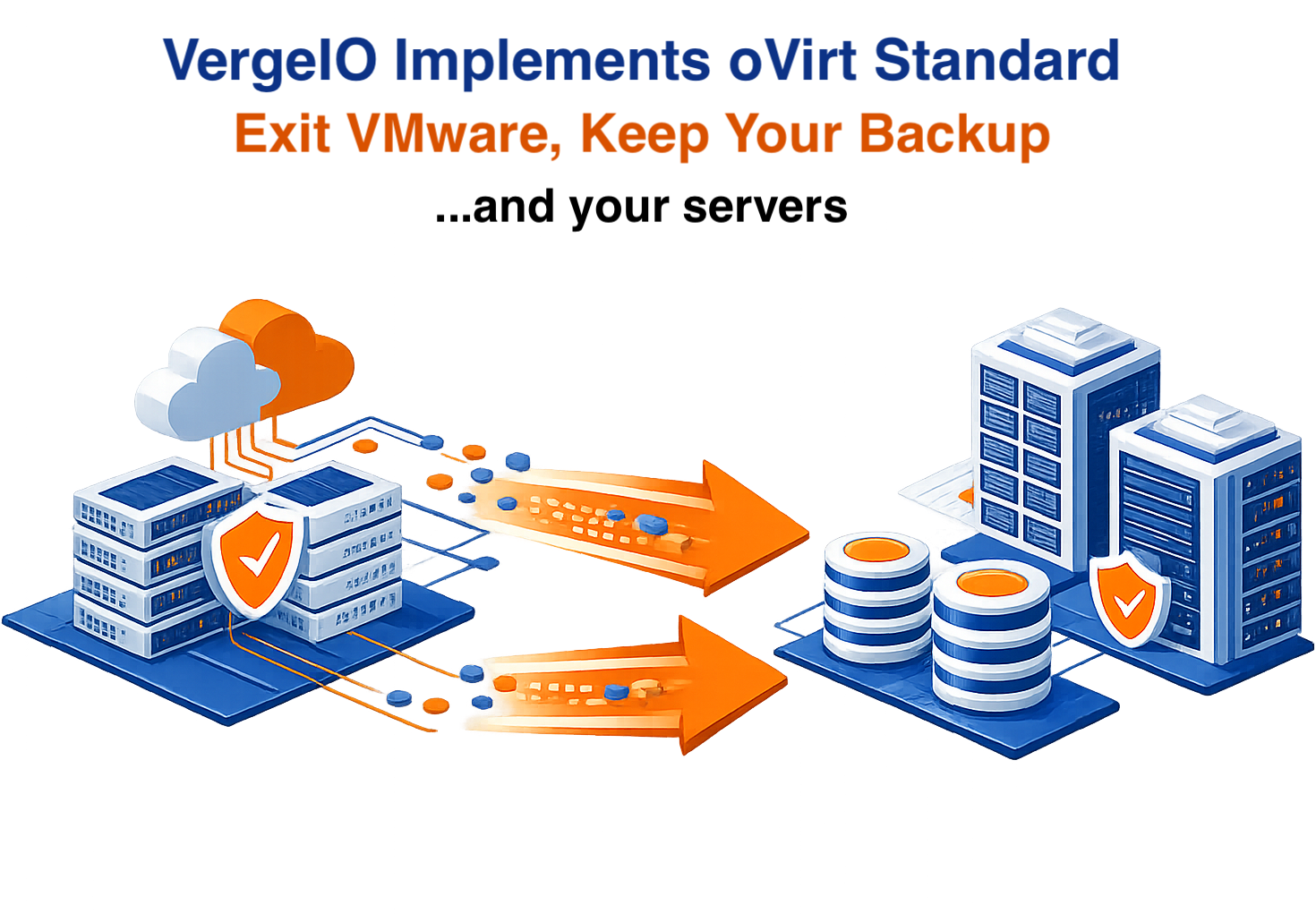
VergeOS oVirt Integration — Exit VMware Keep Your BackupVeeam is a leading example of this in practice. Veeam’s oVirt driver connects to VergeOS 26.1.2 with no modifications and no custom code. The integration deploys in under an hour and runs at full production scale from day one. For any organization running Veeam as its backup standard, VergeOS is immediately compatible.

Migration projects no longer stall on backup readiness. The question shifts from “How do we handle backup after we exit VMware?” to “When do we want to move?”

Keep Your Existing Servers Through the Memory and Storage Price Supercycle

171%
Projected YoY DRAM price increase through 2027
55–60%
NAND flash contract price increase in Q1 2026 alone
Months
Extended server lead times as memory shortages hit supply chains

DRAM prices are projected to increase 171% year-over-year through 2027. NAND flash contract prices jumped 55–60% in Q1 2026 alone. Server lead times have extended to months in some categories as memory and flash shortages ripple through the supply chain. DDR4 production is winding down while DDR5 pricing reflects AI infrastructure demand that enterprise IT cannot negotiate away.

Organizations that commit to staying on VMware are committing to a hardware refresh cycle at the worst possible time. Broadcom’s licensing changes frequently require hardware that meets updated specifications, pushing organizations toward new server purchases precisely when server costs are at a cycle peak.

VergeOS runs on the hardware you already own. Exiting VMware through VergeOS means organizations migrate workloads without replacing infrastructure. The same servers that run VMware today run VergeOS tomorrow — with the same backup tools, through the same oVirt-compatible interface, on the same physical hardware.

VergeOS also reduces the RAM footprint for the same workload count. The platform’s global inline deduplication extends across memory as well as storage, reducing the physical RAM your infrastructure requires. Organizations running DDR4 hardware that might otherwise require DDR5 upgrades to sustain workload density on VMware can maintain and increase density on VergeOS without new memory purchases — a direct operational response to the supercycle.

The combination matters: exit VMware on your terms, keep the backup tools you have, keep the servers you have, and move when the timing works for your organization — not when a licensing deadline or hardware refresh cycle forces the decision.

A Two-Layer Protection Model

VergeOS and oVirt-compatible backup platforms divide data protection responsibilities cleanly. VergeOS operates at the infrastructure layer, maintaining continuous data availability and supporting recovery at the scale of entire Virtual Data Centers. Failures at the disk, node, or site level are absorbed within the platform. Backup platforms handle the granular layer — file-level restore, application-aware protection, and long-term retention. Each system operates within its intended role.

Availability

Native oVirt API compatibility is available today in VergeOS 26.1.2 and later. Organizations ready to exit VMware connect their existing backup platforms through the standard oVirt interface and begin protecting workloads immediately.

A live demonstration with Veeam is scheduled for April 15, 2026, at 1:00 PM ET. Register for the webinar.
Frequently Asked Questions
Can I exit VMware without replacing Veeam?
Yes. VergeOS 26.1.2 implements the oVirt API natively, and Veeam’s oVirt driver connects to VergeOS using the same standard KVM driver it uses for any oVirt-compatible environment. No special build, custom plugin, or replacement backup platform is required.
What VergeOS version is required for oVirt compatibility?
VergeOS 26.1.2 or later. The oVirt API endpoint is active by default in this release. No additional configuration is needed to enable it.
How long does it take to connect Veeam to VergeOS after exiting VMware?
The integration deploys in under one hour. Add the VergeOS oVirt endpoint as a managed server in Veeam using the standard KVM driver, allow VM discovery to complete, and apply existing backup policies. No pre-work is required on the VergeOS side beyond running version 26.1.2.
Will existing backup jobs and policies carry forward after the migration?
Yes. Backup jobs, schedules, retention rules, and SLA policies defined in Veeam apply to VergeOS VMs discovered through the oVirt API without reconfiguration. The policy layer lives in Veeam, not in the hypervisor, so exiting VMware does not reset your data protection posture.
Can we run VergeOS on our existing hardware without a memory upgrade?
In most cases, yes. VergeOS uses global inline deduplication across both storage and RAM, which reduces the physical memory footprint for the same workload count compared to VMware. Organizations running DDR4-based servers that would otherwise require DDR5 upgrades to sustain density on VMware can frequently maintain or improve density on VergeOS without new memory purchases — a meaningful advantage during the current supercycle.
Does oVirt compatibility work with backup platforms other than Veeam?
Yes. Any enterprise backup platform with an oVirt or KVM driver can connect to VergeOS through the oVirt API. Veeam is the most widely deployed example and the focus of the April 15 live demo, but the compatibility extends to any platform built against the oVirt standard.
Does VergeOS replace the need for an enterprise backup platform?
No — and it is not designed to. VergeOS handles infrastructure-level data protection: disk and node failure absorption, site-level replication, and Virtual Data Center recovery. Enterprise backup platforms handle granular protection: file-level restore, application-aware backup, and long-term retention. The two layers are complementary and operate simultaneously.

Filed Under: Press Release Tagged With: oVirt Backup with Veeam and VergeOS, TechAlert

April 13, 2026 by George Crump

The oVirt API bridges VMware alternatives and existing backup platforms, removing the last barrier to migration.

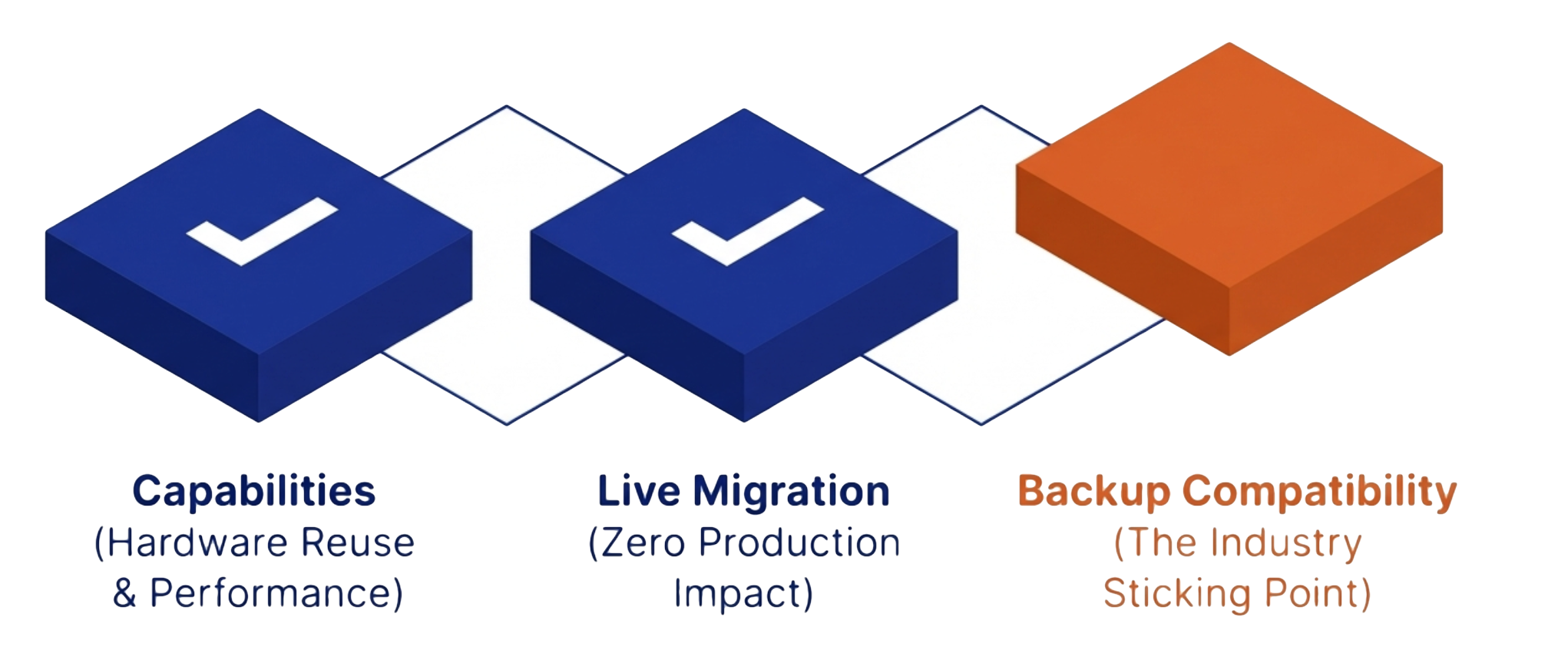
The oVirt standard enables a complete VMware exit by solving the one requirement that stalls the evaluation of most VMware alternatives: backup compatibility. IT professionals need three things before they commit to an alternative. The platform must deliver compelling capabilities beyond a lower price in the areas of hardware reuse, performance, and built-in data availability. Migration must be executable during business hours without impacting operations. And the existing backup infrastructure must carry forward intact.

Three VMware exit priorities that oVirt enables

VergeOS answers the first two decisively. It runs on existing servers, delivers infrastructure-scale data protection as a core platform function, and supports live migration during production hours. The third requirement, backup compatibility, has been the industry-wide sticking point. Not for lack of technology, but for lack of a common interface between backup vendors and VMware alternatives.

oVirt enables a complete VMware exit by closing that gap. The oVirt API gives both the backup software vendor and the alternative hypervisor vendor a common bridge to cross. When both sides implement the same standard, the backup question does not get answered. It gets eliminated.

As a proof point, VergeIO delivered a working, production-ready integration with a major enterprise backup platform within three months of starting the project. VergeIO and Veeam will be demonstrating this capability live on tomorrow’s webinar, VergeOS oVirt Integration.

Key Takeaways
  • The oVirt API enables a complete VMware exit by giving backup platforms and VMware alternatives a common interface that requires no custom development.
  • VergeOS 26.1.2 implements the oVirt standard natively, making it immediately compatible with any backup platform that has an oVirt driver.
  • The delay in oVirt support allowed VergeIO to build industry-leading data availability, protection, and disaster recovery directly into the platform.
  • oVirt-compatible backup platforms like Veeam connect to VergeOS in under an hour with no changes to existing policies, schedules, or SLA tiers.
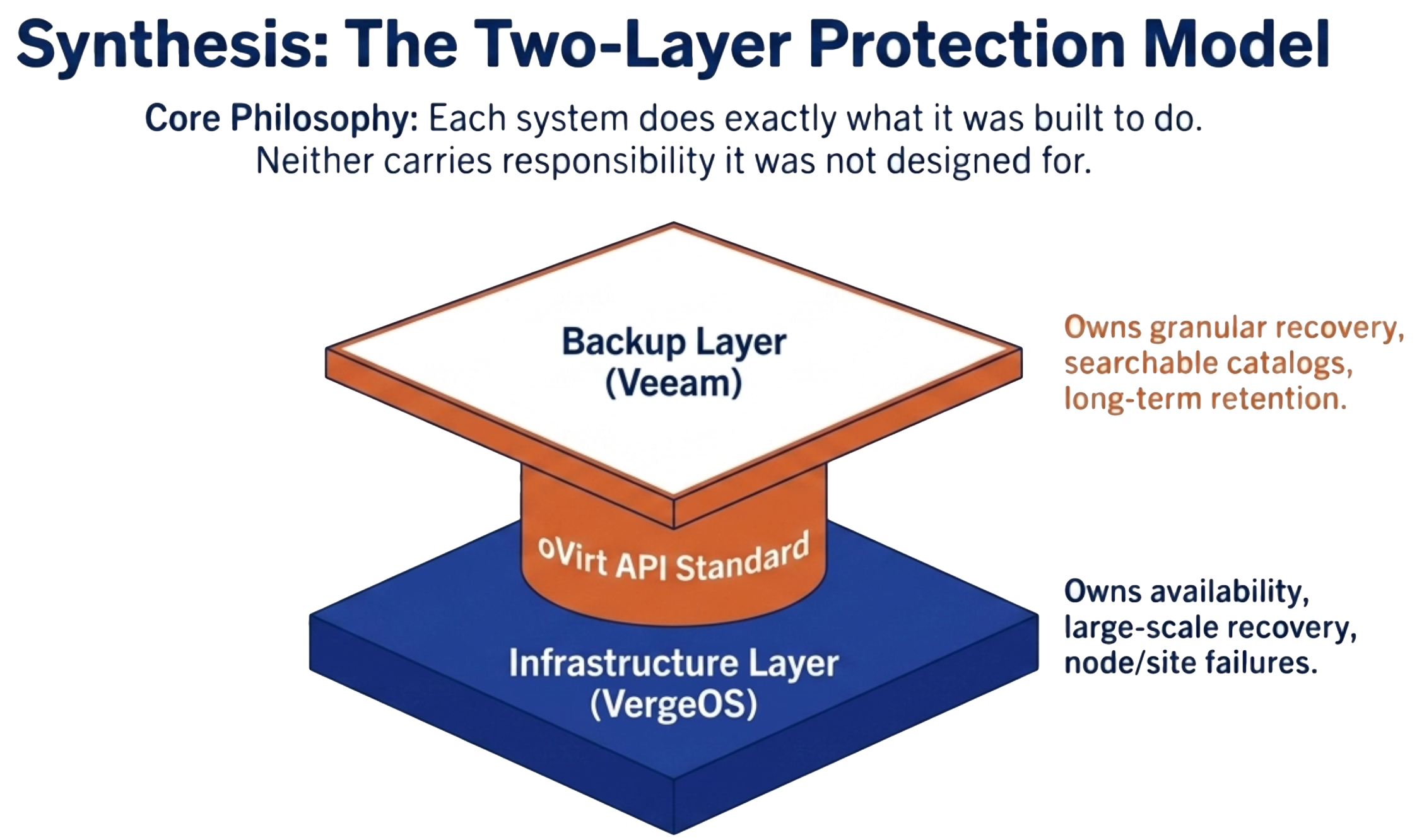
  • Infrastructure owns availability and large-scale recovery. Backup owns granular recovery and long-term retention. The oVirt integration lets each system do what it was built to do.

Why oVirt Enables a VMware Exit

The oVirt API is the established interface for KVM-based virtualization environments. VergeIO did not invent it. No single backup vendor created it. It emerged as an industry decision, a deliberate architectural strategy by major backup vendors to support the growing ecosystem of open-source hypervisor platforms through a single, common interface.
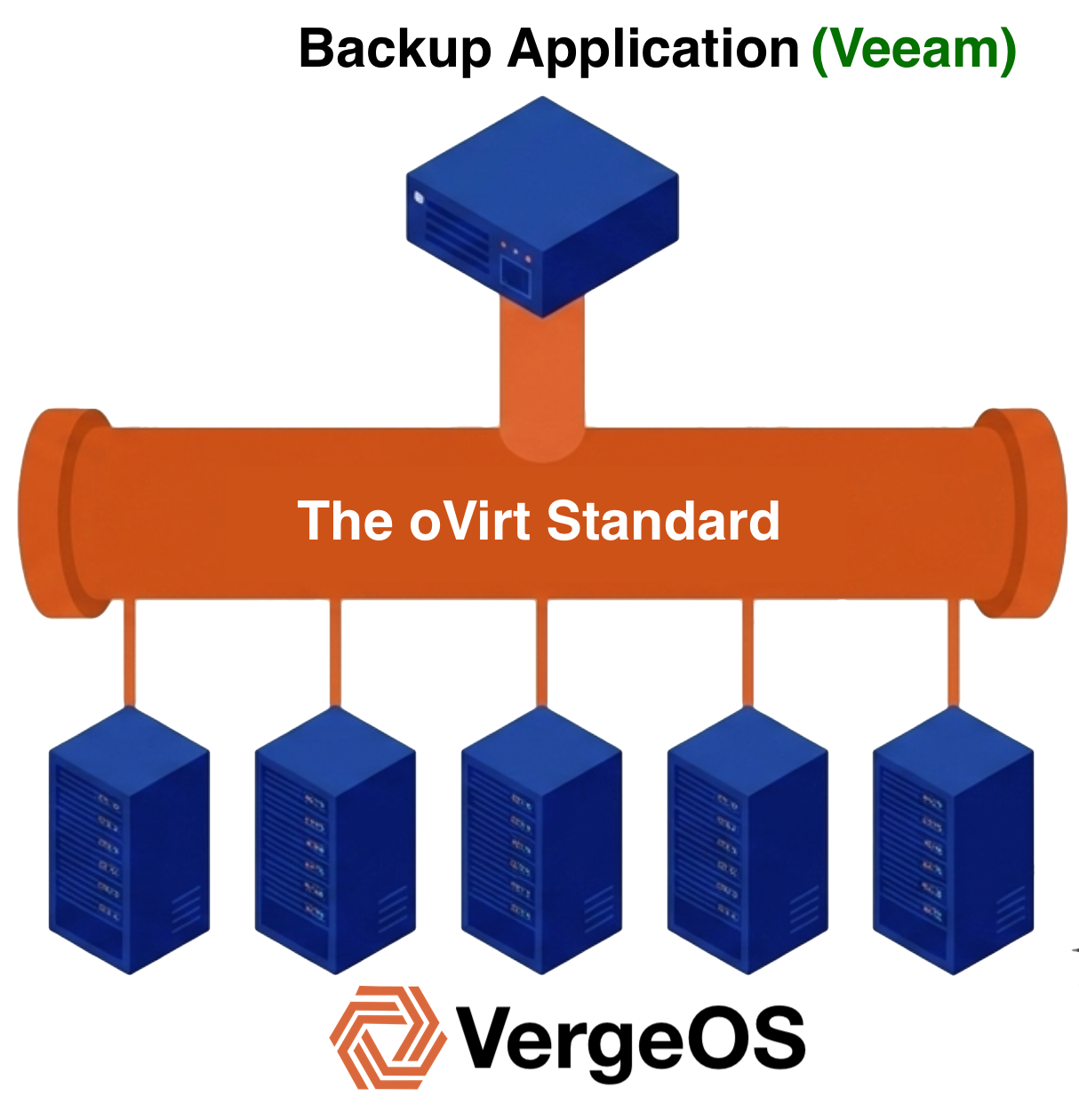
The oVirt standard enables VMware exit through a common API

Backup vendors like Veeam are choosing to build their products against the oVirt standard rather than maintaining one-off integrations for every new hypervisor that enters the market. Any platform that implements oVirt natively gains access to the full ecosystem of compatible backup tools without custom development on either side. That design decision is what makes oVirt the bridge that enables a VMware exit without sacrificing backup infrastructure.

VergeOS 26.1.2 implements the oVirt API natively. For organizations running any backup platform with an oVirt driver, VergeOS is immediately compatible. The integration is not something that needs to be requested, negotiated, or built from scratch. It is already there.

Key Terms
oVirt API
The established interface standard for KVM-based virtualization environments. Major backup vendors build against this standard to support open-source hypervisor platforms through a single, common integration point.
Virtual Data Center (VDC)
A VergeOS construct that groups compute, storage, and networking resources into a defined boundary. VDCs are the unit of management, isolation, and recovery, allowing entire application environments to be restored as a coordinated system.
ioGuardian
A VergeOS technology that extends drive failure protection beyond configured redundancy levels. It turns N+2 protection into N+X by continuing to serve data actively during multiple simultaneous drive failures.
Data Center Encapsulation
A VergeOS capability that captures data, VM configurations, and network configurations together in point-in-time consistent snapshots. These snapshots are immediately replicated off-site, simplifying disaster recovery into a single coordinated restore.
Two-Layer Protection Model
An architecture where infrastructure owns availability and large-scale recovery, and backup platforms own granular recovery and long-term retention. Each layer operates at its maximum effectiveness when the boundary between them is clear.

Why the oVirt Delay Strengthened the VMware Exit

It would have been nice to have oVirt compatibility on day one, however, the delay created an unexpected advantage. Without a third-party backup integration to lean on, VergeIO took on the responsibility of building advanced, industry-leading data availability, protection and disaster recovery capabilities directly into the VergeOS platform.
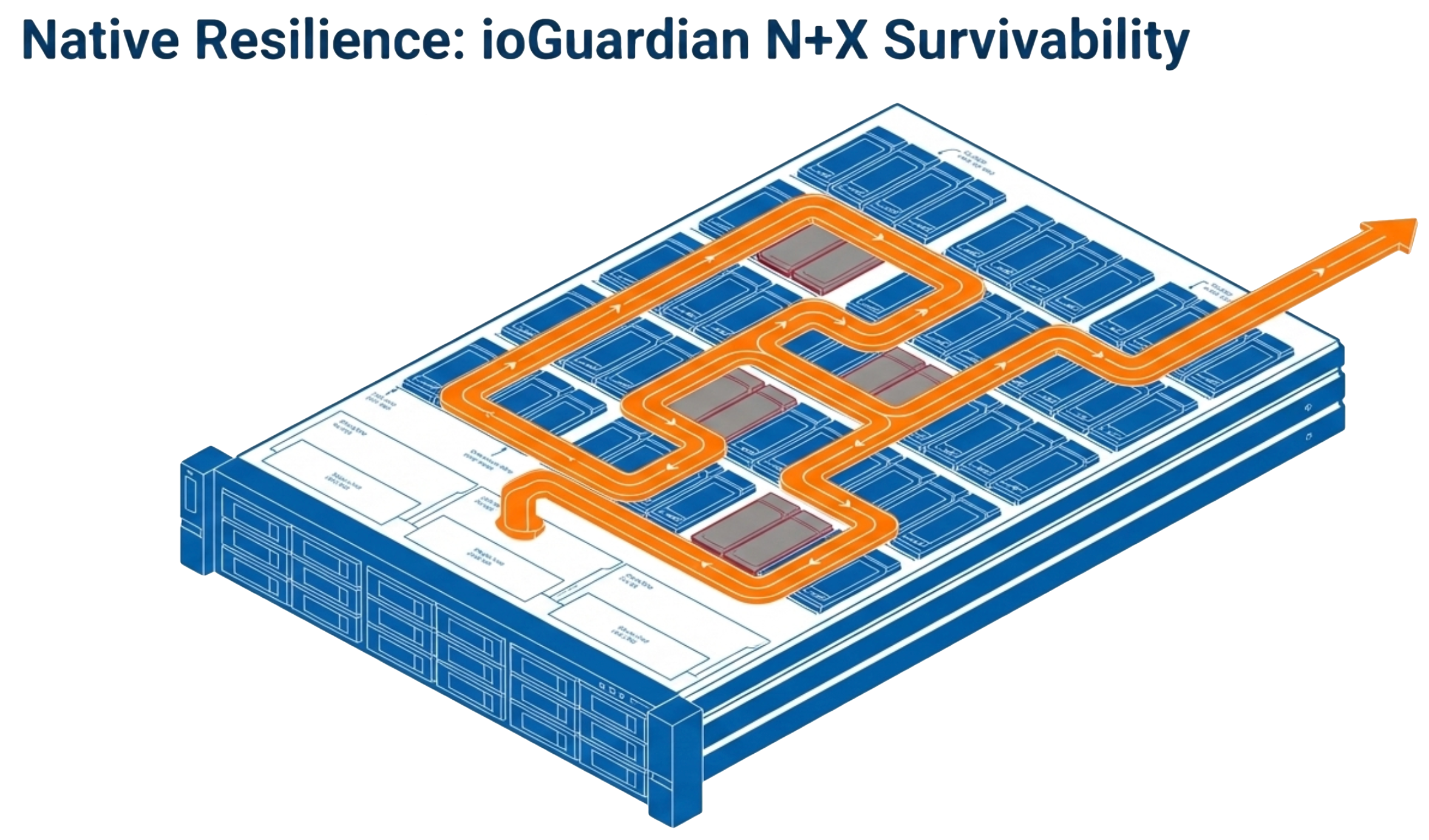
Native resilience features in VergeOS that oVirt enables alongside backup

The result is a level of resilience and recovery that most hypervisors do not attempt. VergeOS delivers unlimited snapshots with no performance penalty. Multiple levels of drive failure protection come standard. ioGuardian extends protection beyond configured redundancy levels, turning N+2 protection into N+X by continuing to serve data actively during multiple simultaneous drive failures that exceed the configured protection level.

Integrated remote replication operates at the platform level, not the VM level. Data center encapsulation captures data, VM configurations, and network configurations together in point-in-time consistent snapshots which are immediately replicated off-site. That approach simplifies disaster recovery from a multi-step orchestration exercise into a single coordinated restore.

None of this goes away with the addition of oVirt. VergeOS enters the backup compatibility conversation from a position of strength, not dependency.

What oVirt Brings to VergeOS

VergeOS already delivers top-tier data protection, but a single vendor provides all of it. Some organizations see that as a strength. Others see it as a gap, particularly those with compliance requirements or operational models that expect a dedicated backup platform with its own management layer.

This is where enterprise backup tools add clear value. Products like Veeam provide a robust, searchable catalog of backups, files, and recovery points. Single-file restores are GUI-driven and intuitive. An administrator searches, selects, and restores without needing to know the exact location or snapshot in advance. VergeOS can mount a snapshot as a drive and allow an administrator to copy files back directly. That method is fast and effective, but it requires the administrator to know what they are looking for.

oVirt bridges this gap. Organizations that want the operational familiarity and granular precision of a dedicated backup platform alongside the infrastructure-scale protection of VergeOS can now run both without compromise and without custom integration.

How VergeOS Uses oVirt in Practice

The integration is straightforward. An oVirt-compatible backup platform, like Veeam connects to VergeOS without modification on either side. No custom plugin. No professional services engagement. No changes to existing backup policies, schedules, or SLA tiers.

Two-layered protection model where oVirt enables VMware exit with backup compatibility

The full feature set of the backup platform is available from day one. File-level restore, application-aware recovery, instant VM recovery, and long-term retention all function at production scale. Deployments confirm the integration completes in under an hour.

Backup compatibility alone is not a strategy. Having a backup platform connect to VergeOS is table stakes. The deeper question is what happens when something fails, and how much of that outcome depends on backup software.

The answer with VergeOS is less than it used to be. Infrastructure owns availability and large-scale recovery. It absorbs drive failures, node failures, and site-level disruptions within the platform. Backup owns granular recovery and long-term retention. It restores individual files, application objects, and historical data with precision. Each system does what it was built to do. Neither carries responsibility it was not designed for.

The VMware Exit Economic Window Is Open

The RAM and NAND flash supercycle has broken server supply chains and pushed hardware costs to cycle highs. DRAM prices are up 171% year-over-year through 2027. NAND flash contract prices jumped 55 to 60 percent in Q1 2026. Multi-month server delivery delays are now standard in categories that shipped in weeks two years ago.

Most VMware alternatives force a server refresh alongside the platform change. VergeOS does not. It runs on the servers already in production. With oVirt, it now uses the backup infrastructure you have already invested in. New hypervisor, same servers, same backup platform. The economic window to act is now.

Standard Exit vs. VergeOS Exit

  Standard Alternative VergeOS
Hardware Requirement New server refresh Re-use existing servers
(+171% DRAM avoidance)
Backup Integration Custom plugins / waitlists Native oVirt standard
Platform Resilience Standard N+1/N+2 ioGuardian N+X survivability
Disaster Recovery Multi-step orchestration Single-click VDC encapsulation

A live demonstration of the VergeOS oVirt integration is scheduled for April 15, 2026, at 1:00 PM ET. Rick Vanover, VP of Product Strategy at Veeam, and Paul Hodges, VergeIO Field CTO, will deploy and demonstrate the full integration live. Register for the webinar.

Ready to see VergeOS in action? Take a Test Drive Today.

Frequently Asked Questions
What is the oVirt API and why does it matter for VMware migration?
The oVirt API is the established interface for KVM-based virtualization environments. Major backup vendors built their products against this standard to support open-source hypervisor platforms through a single integration point. Any VMware alternative that implements oVirt natively gains immediate compatibility with these backup tools, removing the need for custom development on either side.
Does the oVirt integration require changes to existing Veeam policies or configurations?
No. Veeam’s oVirt driver connects to VergeOS without modification. Existing backup policies, schedules, SLA tiers, and recovery workflows carry forward unchanged. The integration deploys in under an hour at production scale.
What backup features are available through the oVirt integration?
The full feature set of the backup platform is available from day one. For Veeam, that includes file-level restore, application-aware recovery, instant VM recovery, and long-term retention. All features function at production scale through the standard oVirt driver.
Does VergeOS still need third-party backup if it has built-in data protection?
VergeOS delivers infrastructure-scale data availability, disaster recovery, and unlimited snapshots as core platform functions. Enterprise backup platforms like Veeam add a complementary layer of granular recovery, searchable backup catalogs, and long-term retention. The two-layer model lets each system operate within its intended role.
Are backup platforms other than Veeam compatible with VergeOS through oVirt?
Any backup platform with an oVirt driver is architecturally compatible with VergeOS. Veeam has been validated and will be demonstrated live. Other platforms will be certified as customer demand prioritizes them.
Can VergeOS run on existing servers or does migration require new hardware?
VergeOS runs on the servers already in production. It does not require a hardware refresh. With DRAM prices up 171% year-over-year and NAND flash contracts up 55 to 60 percent in Q1 2026, hardware reuse is a significant economic advantage over VMware alternatives that require new infrastructure.
What is the two-layer protection model?
The two-layer model separates data protection responsibilities between infrastructure and backup. VergeOS handles availability and large-scale recovery at the infrastructure layer, absorbing drive, node, and site-level failures within the platform. Backup platforms like Veeam handle granular recovery, application-aware protection, and long-term retention. Each system does what it was built to do.

Filed Under: VMwareExit Tagged With: oVirt Backup with Veeam and VergeOS, VMware

855-855-8300

Get Started

  • Versions
  • Request Tour

VergeIO For

  • VMware Alternative
  • SAN Replacement
  • Solving Infrastructure Modernization Challenges
  • Artificial Intelligence
  • Hyperconverged
  • Server Room
  • Secure Research Computing

Product

  • Benefits
  • Documents
  • Architecture Overview
  • Use Cases
  • Videos

Company

  • About VergeIO
  • Blog
  • Technical Documentation
  • Legal

© 2026 VergeIO. All Rights Reserved.