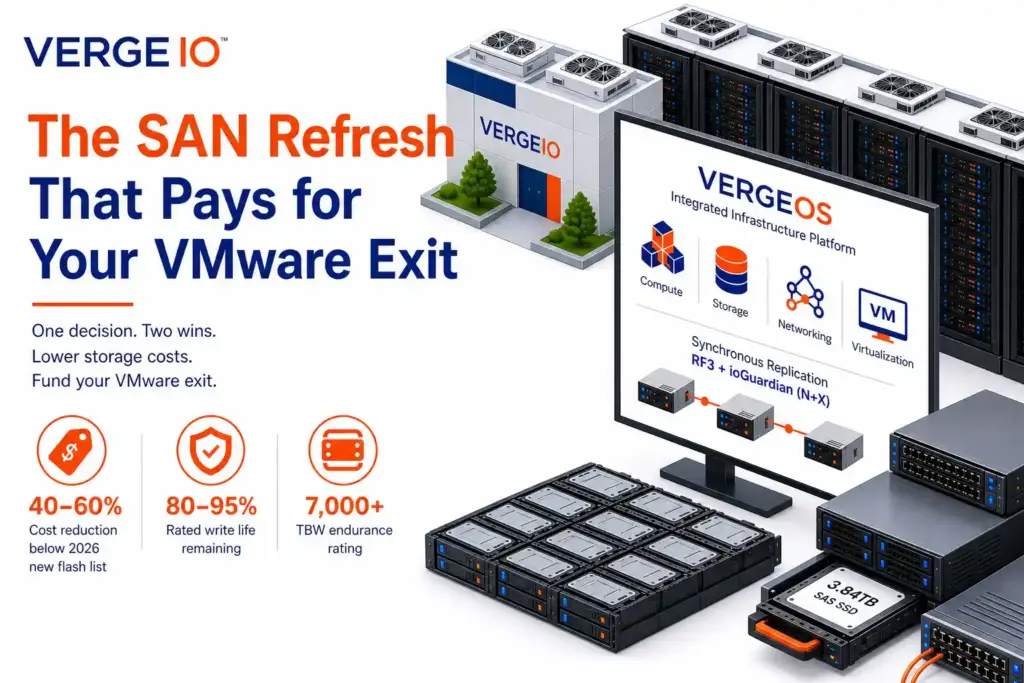
The SAN Refresh That Pays for Your VMware Exit
Refurbished enterprise SSDs cut your 2026 SAN refresh below 2025 prices. The hardware savings fund the VMware exit. Two wins from one budget cycle.
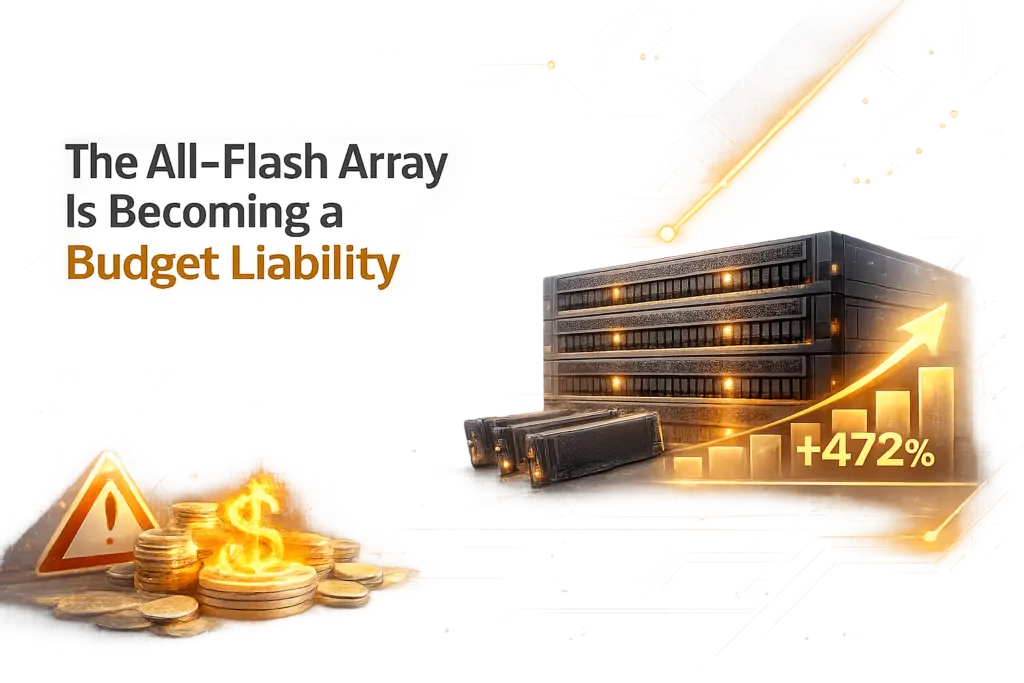
All-flash array cost in 2026 has fundamentally changed. AI-driven NAND and DRAM demand has pushed enterprise SSD pricing up 472 percent year over year — and closed-media platforms leave buyers with no sourcing alternatives. The architecture underneath your storage layer now determines how much of that inflation you absorb, and how much you can avoid.
DRAM is up 171%. Flash jumped 55–60%. Will hard drives solve the flash and memory supercycle? The short answer is no — and here’s what actually does.
DRAM prices are up 171% year-over-year. Proprietary enterprise flash is on backorder. VMware licensing changes are compounding the pain. Here is why a storage refresh in 2026 costs more than ever — and what IT teams can do about it.
Proxmox’s zero licensing cost hides a growing storage tax created by ZFS, Ceph, and external arrays. Capacity waste, expertise demands, and operational overhead increase costs. VergeOS removes these taxes through global deduplication and unified architecture.
Deduplication and RAM cache often clash in storage-centric systems. Infrastructure-wide deduplication aligns them, boosting cache effectiveness, reducing latency, and ensuring applications gain real performance benefits without rehydration penalties.