Blog / Storage

Blog

Stay in the know with insights from industry experts.

All Storage Posts

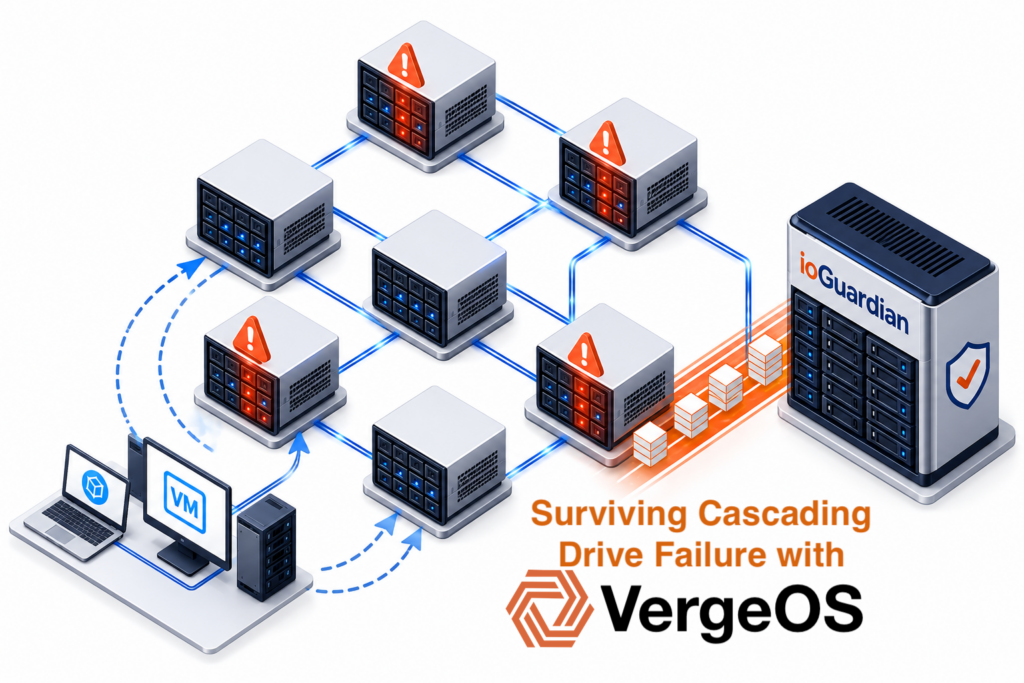
Surviving Cascading Drive Failure

Cascading drive failure is the scenario every operator dreads. One drive fails, rebuilds spin up, then a second and third drive give out as the surviving drives wear faster. VergeOS keeps VMs running through synchronous replication, ioGuardian inline recovery, and live migration, even when the cascade exceeds RF2 and RF3.
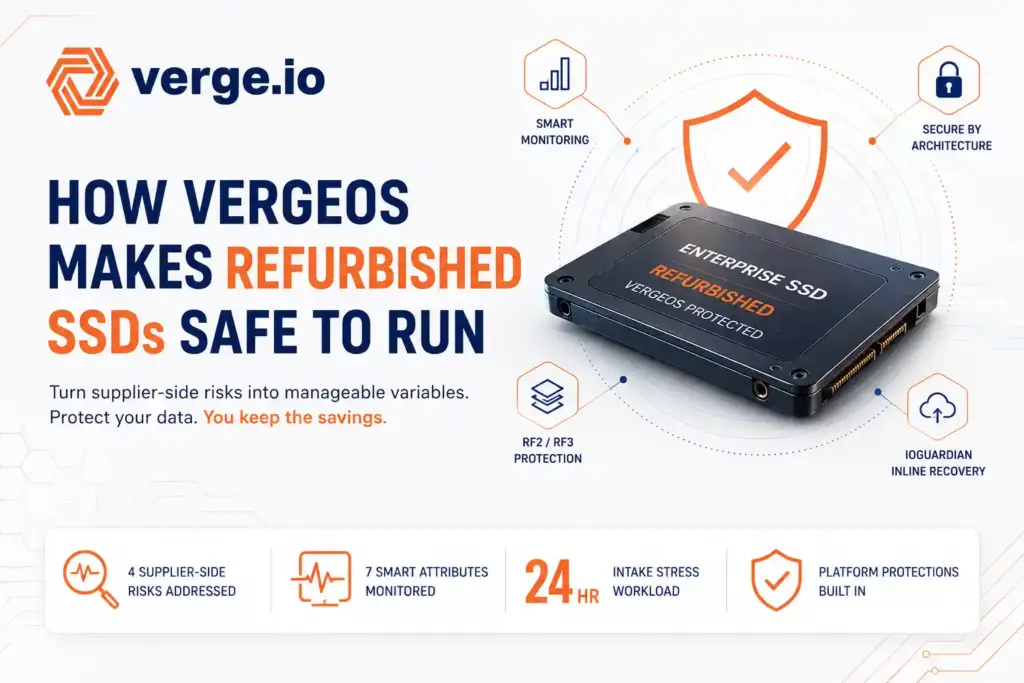
How VergeOS Makes Refurbished SSDs Safe

Refurbished enterprise SSDs cut forty to sixty percent off the storage refresh bill. They also pose four supplier-side risks: tampered SMART data, OEM firmware lock, residual data, and batch-failure correlation. VergeOS handles each one at the platform layer.

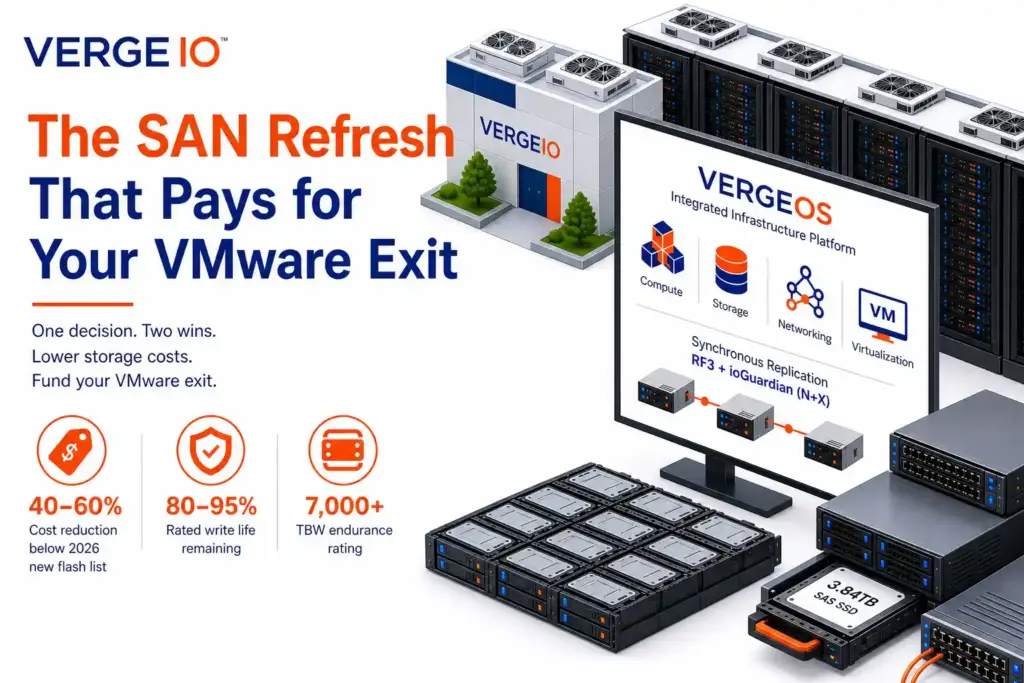
The SAN Refresh That Pays for Your VMware Exit

Refurbished enterprise SSDs cut your 2026 SAN refresh below 2025 prices. The hardware savings fund the VMware exit. Two wins from one budget cycle.

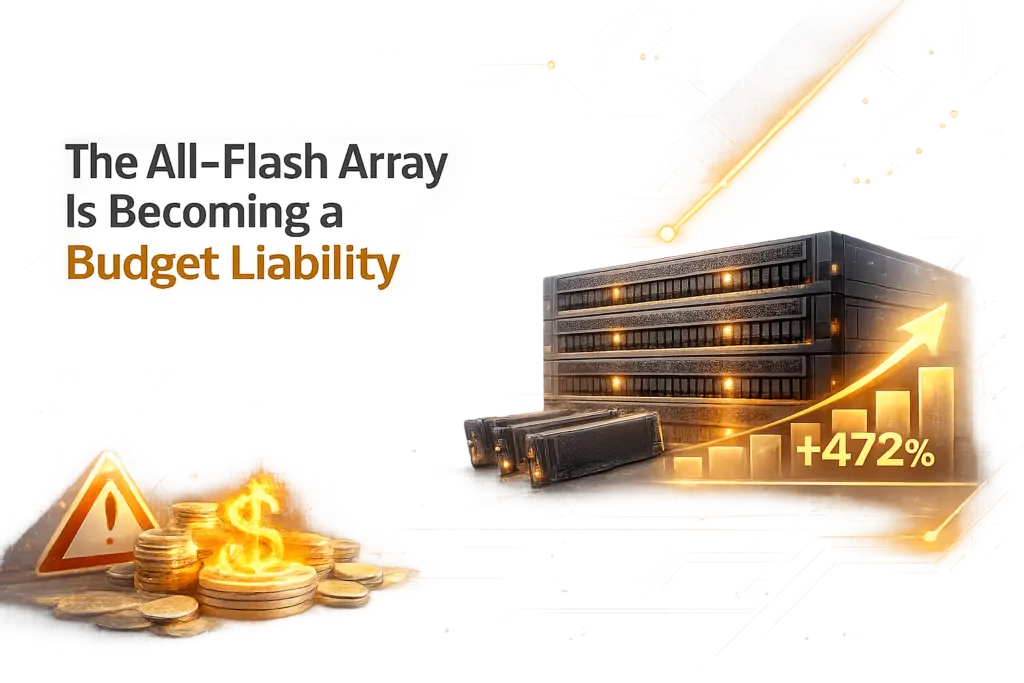
Are All-Flash Arrays a Budget Liability?

All-flash array cost in 2026 has fundamentally changed. AI-driven NAND and DRAM demand has pushed enterprise SSD pricing up 472 percent year over year — and closed-media platforms leave buyers with no sourcing alternatives. The architecture underneath your storage layer now determines how much of that inflation you absorb, and how much you can avoid.

Will Hard Drives Save Us From the Flash and RAM Supercycle?

DRAM is up 171%. Flash jumped 55–60%. Will hard drives solve the flash and memory supercycle? The short answer is no — and here’s what actually does.

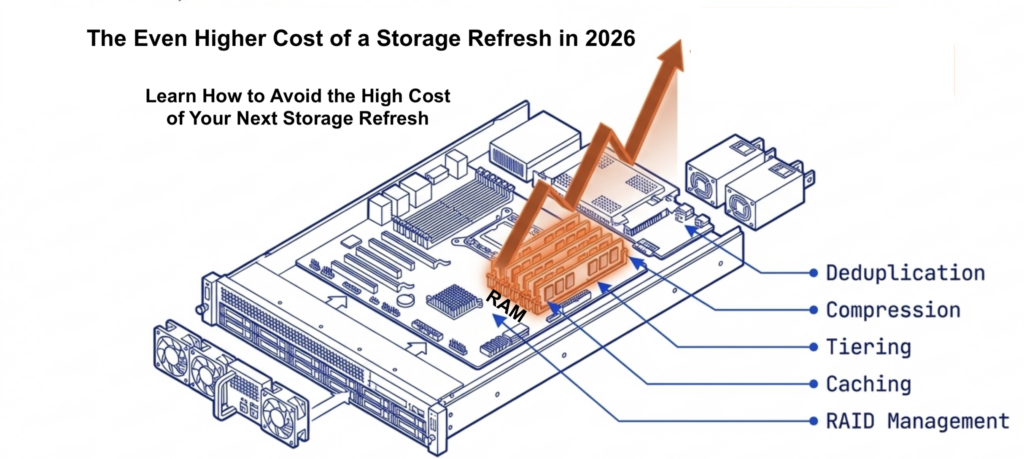
The Even Higher Cost of a Storage Refresh in 2026

DRAM prices are up 171% year-over-year. Proprietary enterprise flash is on backorder. VMware licensing changes are compounding the pain. Here is why a storage refresh in 2026 costs more than ever — and what IT teams can do about it.