Blog
Stay in the know with insights from industry experts.
Featured Blog Post
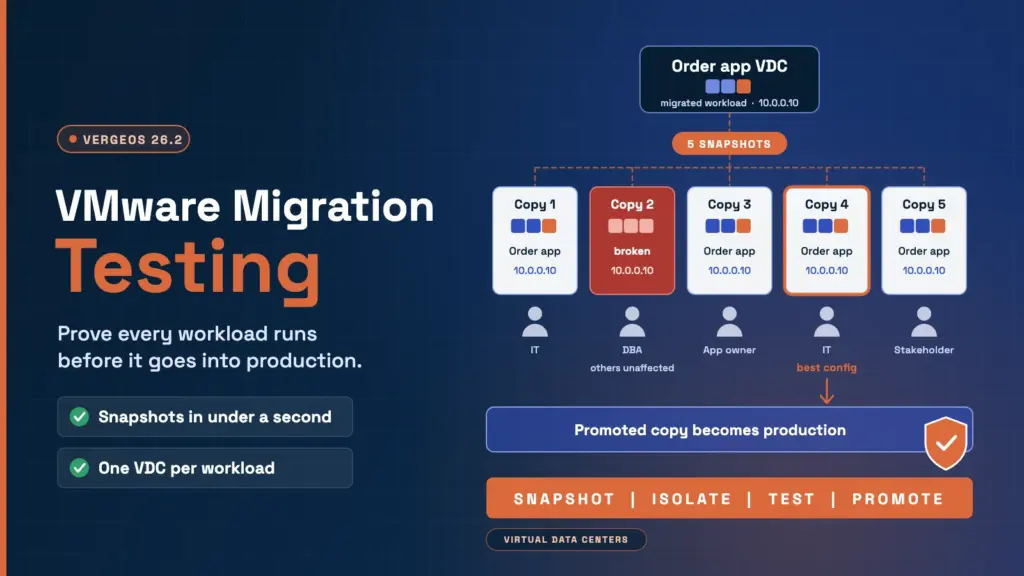
VMware Migration Testing Is Critical to Completing Your Exit
VMware migration testing decides whether your exit finishes. VergeOS keeps the VMware image, takes instant snapshots and isolates each workload in a VDC.
All Blog Posts
VMware Migration Testing Is Critical to Completing Your Exit
VMware migration testing decides whether your exit finishes. VergeOS keeps the VMware image, takes instant snapshots and isolates each workload in a VDC.
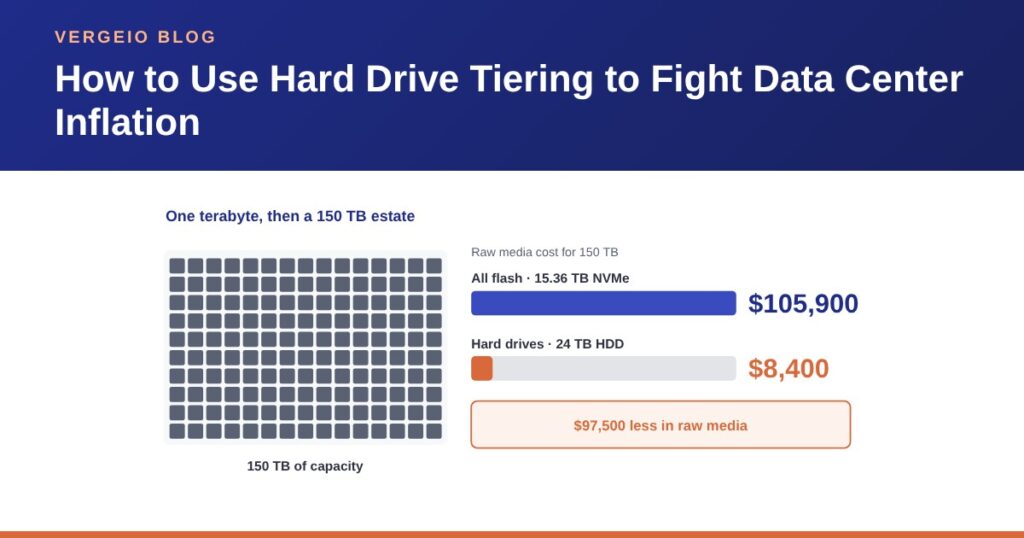
How to Use Hard Drive Tiering to Fight Data Center Inflation
Hard drive tiering is back. See how VergeOS lets you pick each drive’s tier, move it live, and put the long tail on $56/TB disk instead of $706/TB flash.
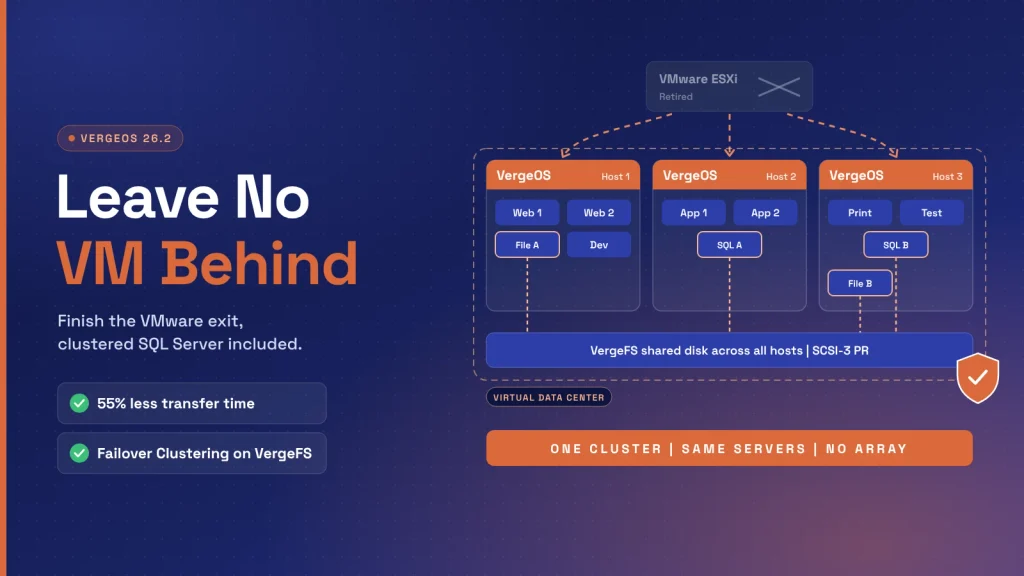
Leave No VM Behind
A complete VMware migration includes clustered SQL Server. VergeOS 26.2 shortens cutover and protects critical workloads inside isolated VDCs.
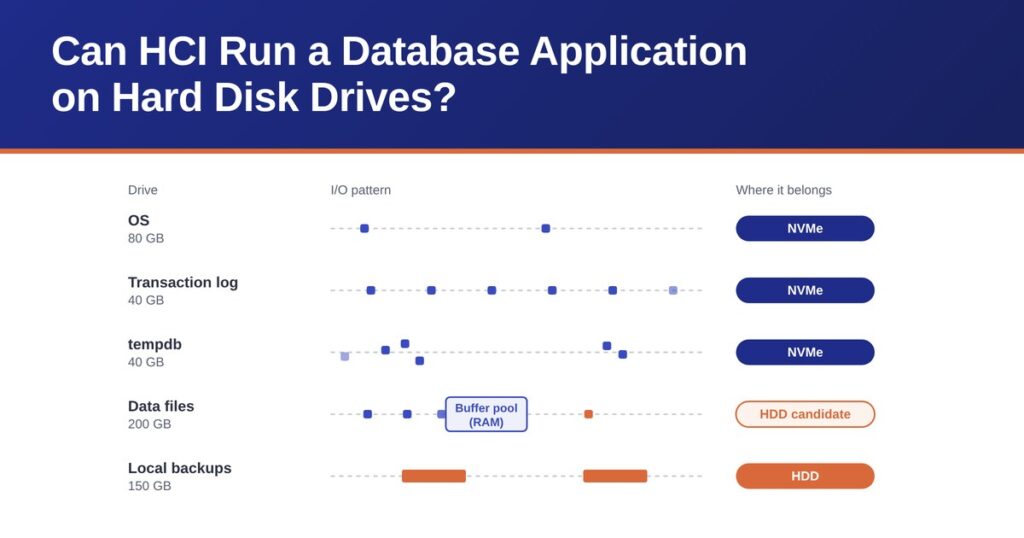
Can HCI Run a Database Application on Hard Disk Drives?
Can HCI run a database on hard disk drives? One live tier change moved a SQL Server data drive to HDD and cut the VM’s storage media cost in half.
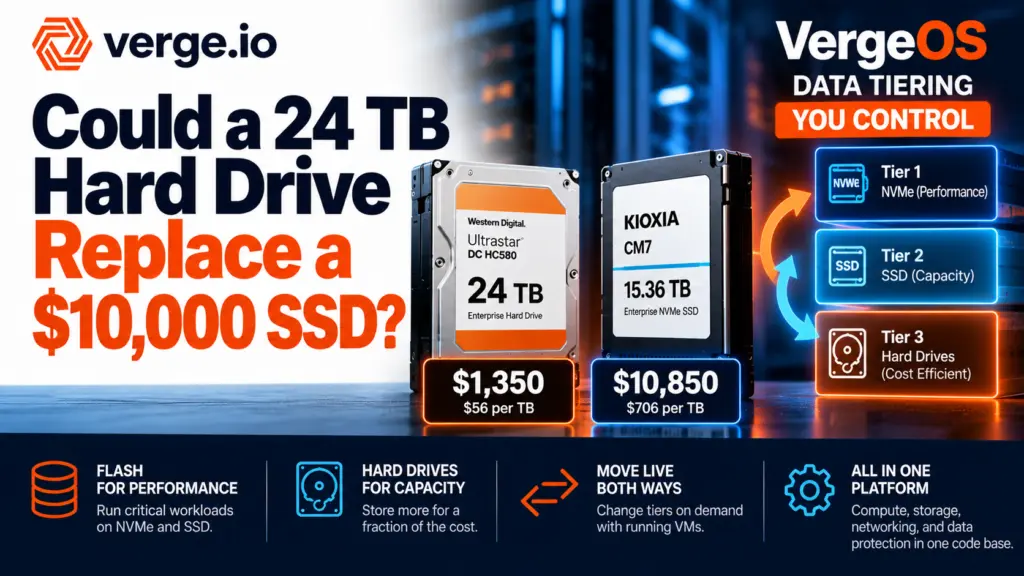
Could a 24 TB Hard Drive Replace a $10,000 SSD?
A 24 TB hard drive costs about $56 per TB, and a 15.36 TB SSD costs over $700. See how VergeOS puts hard drives back to work inside HCI clusters.
Refurbished Hardware Made Resilient
Refurbished hardware funds your VMware exit. VergeOS keeps it running through drive and server failures with RF2, RF3, and ioGuardian.
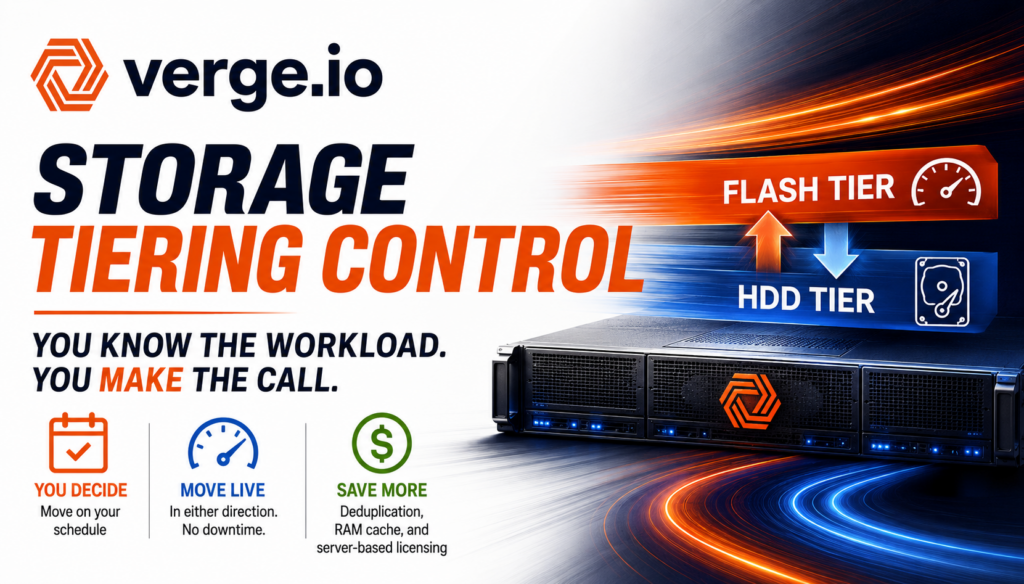
Storage Tiering is Not the Problem. Losing Control of It Is.
Auto-tiering guesses which data is hot, and the guess costs money in both directions: flash held too long, or flash withheld too late. VergeOS puts storage tiering control back with the team running the workload, moving live VMs between tiers instantly, shrinking what the next flash refresh has to buy.
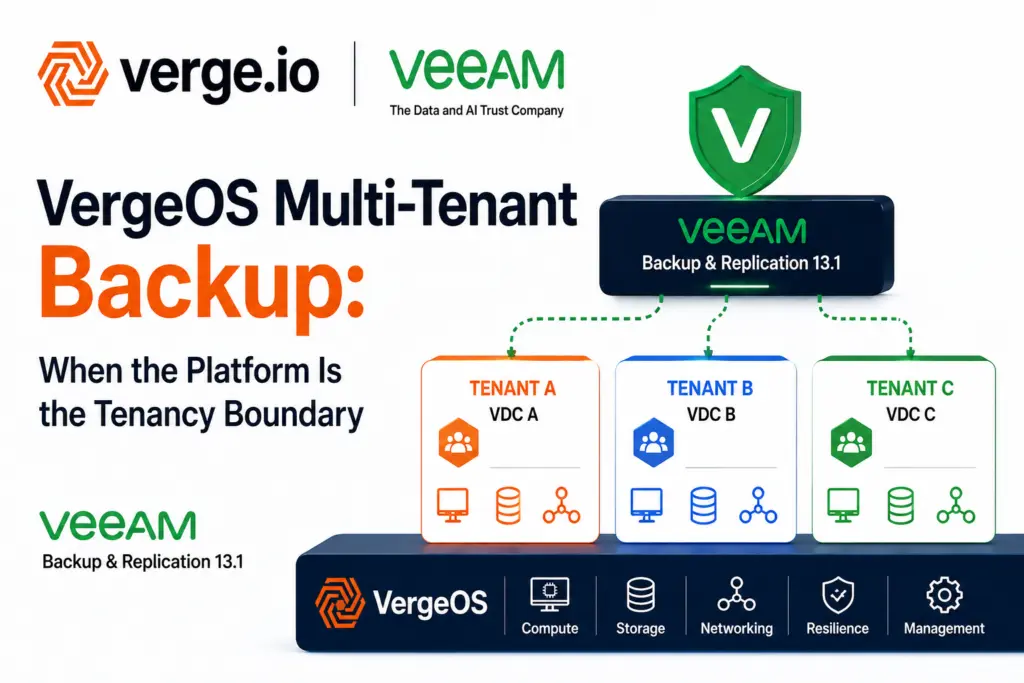
Multi-Tenant Backup
Most teams treat the Virtual Data Center as a cloud-provider feature, but enterprises carry the same tenancy problem under different names: production and development, a subsidiary, a regulated department. VergeOS enforces that boundary at the infrastructure layer, and Veeam inherits it, tenant by tenant, each one its own VergeOS Manager.
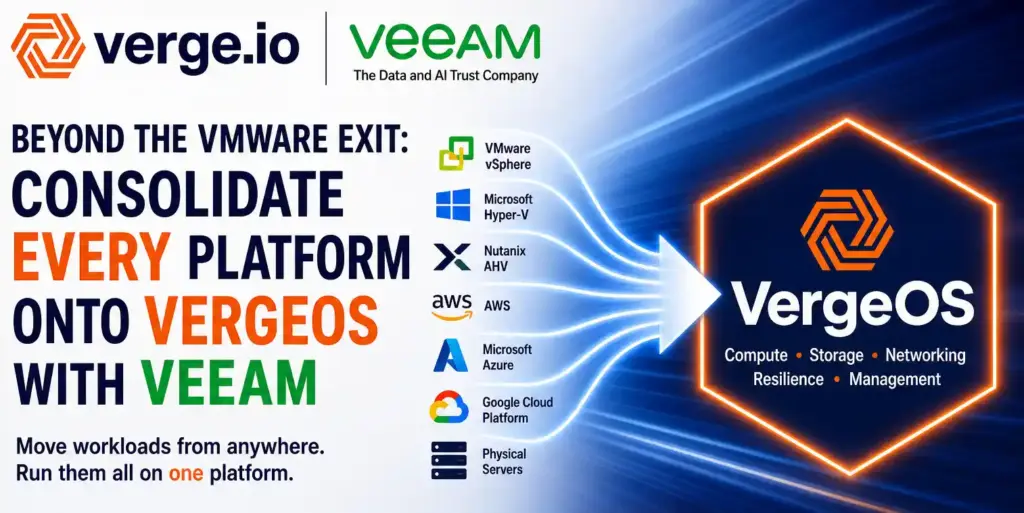
Beyond the VMware Exit Consolidate Every Platform onto VergeOS with Veeam
Most VMware alternatives only promise a home for vSphere workloads. With official VergeOS support in Veeam Backup & Replication 13.1, one restore job moves workloads from vSphere, Hyper-V, Nutanix AHV, AWS, Azure, GCP, and physical servers onto VergeOS. Consolidate onto VergeOS from every platform you run, and retire the rest.
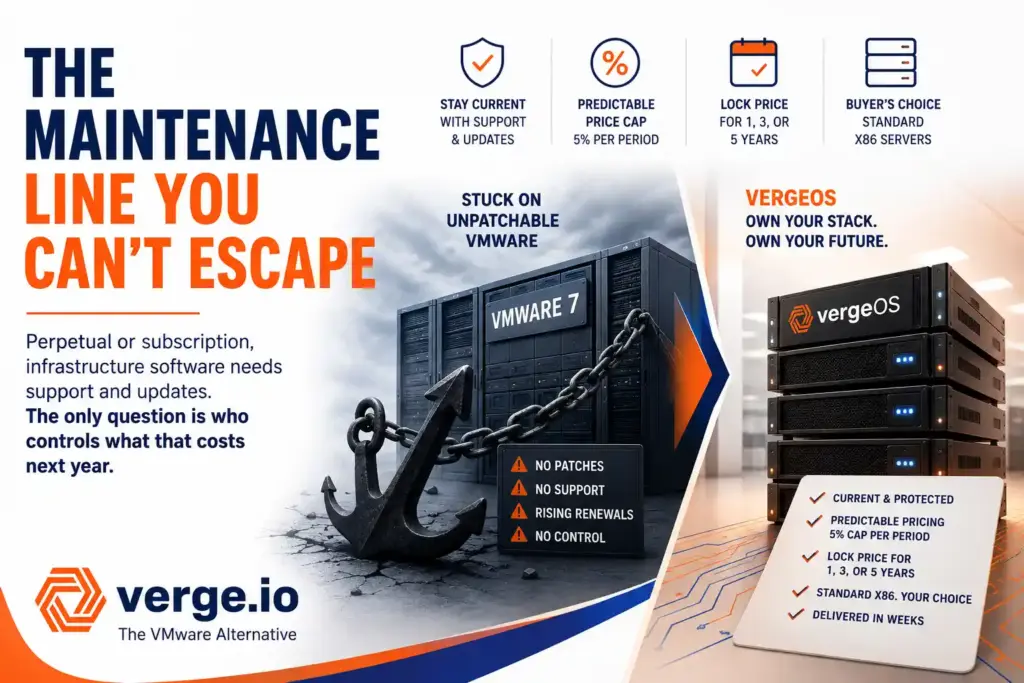
The Maintenance Line You Can’t Escape
Scott Bartgis stopped paying VMware maintenance and froze Saratoga Casino Holdings at version 7. The license type was never the problem. The renewal curve was. Here is what a VMware perpetual license buys you, what it costs to hold one unsupported in a regulated environment, and the terms that got him back under support.