Blog / Blog

Blog

Stay in the know with insights from industry experts.

All Blog Posts

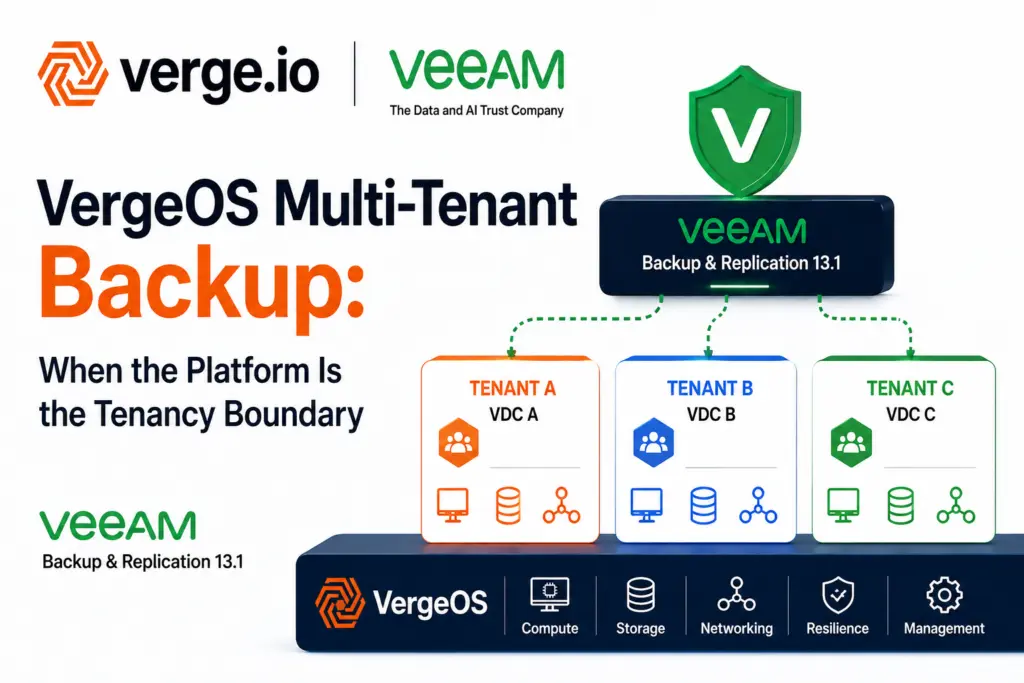
Multi-Tenant Backup

Most teams treat the Virtual Data Center as a cloud-provider feature, but enterprises carry the same tenancy problem under different names: production and development, a subsidiary, a regulated department. VergeOS enforces that boundary at the infrastructure layer, and Veeam inherits it, tenant by tenant, each one its own VergeOS Manager.
Beyond the VMware Exit Consolidate Every Platform onto VergeOS with Veeam

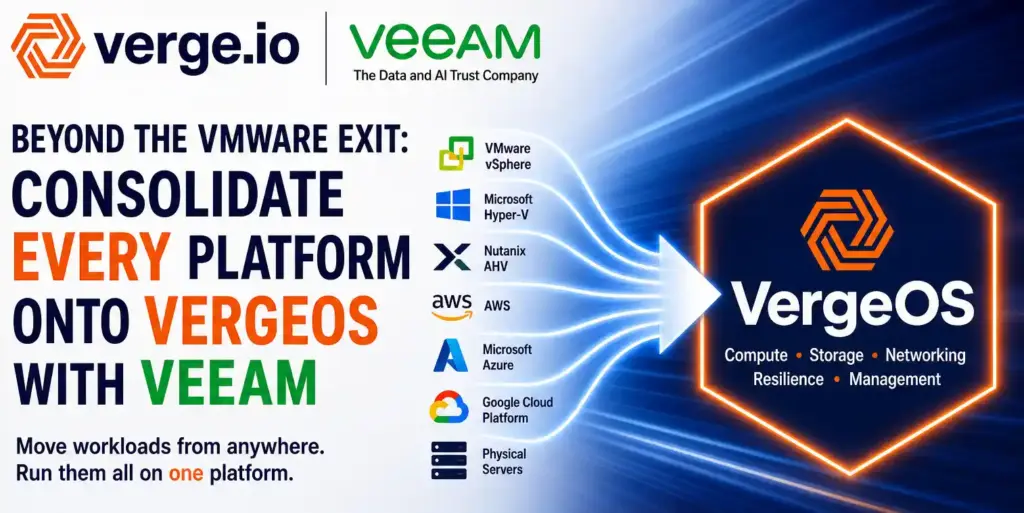
Most VMware alternatives only promise a home for vSphere workloads. With official VergeOS support in Veeam Backup & Replication 13.1, one restore job moves workloads from vSphere, Hyper-V, Nutanix AHV, AWS, Azure, GCP, and physical servers onto VergeOS. Consolidate onto VergeOS from every platform you run, and retire the rest.

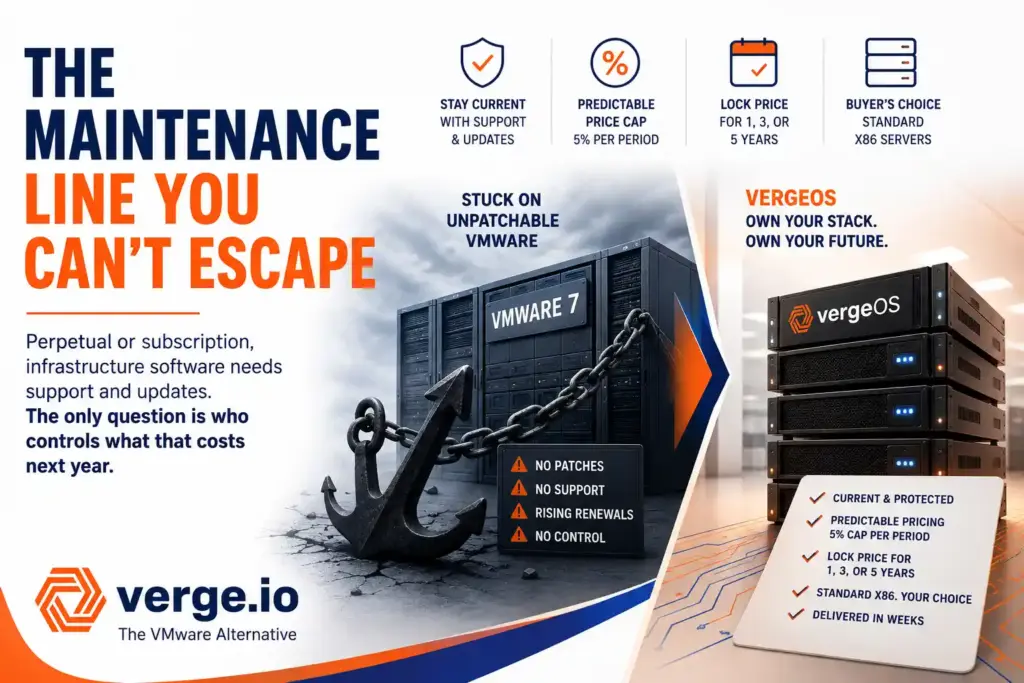
The Maintenance Line You Can’t Escape

Scott Bartgis stopped paying VMware maintenance and froze Saratoga Casino Holdings at version 7. The license type was never the problem. The renewal curve was. Here is what a VMware perpetual license buys you, what it costs to hold one unsupported in a regulated environment, and the terms that got him back under support.

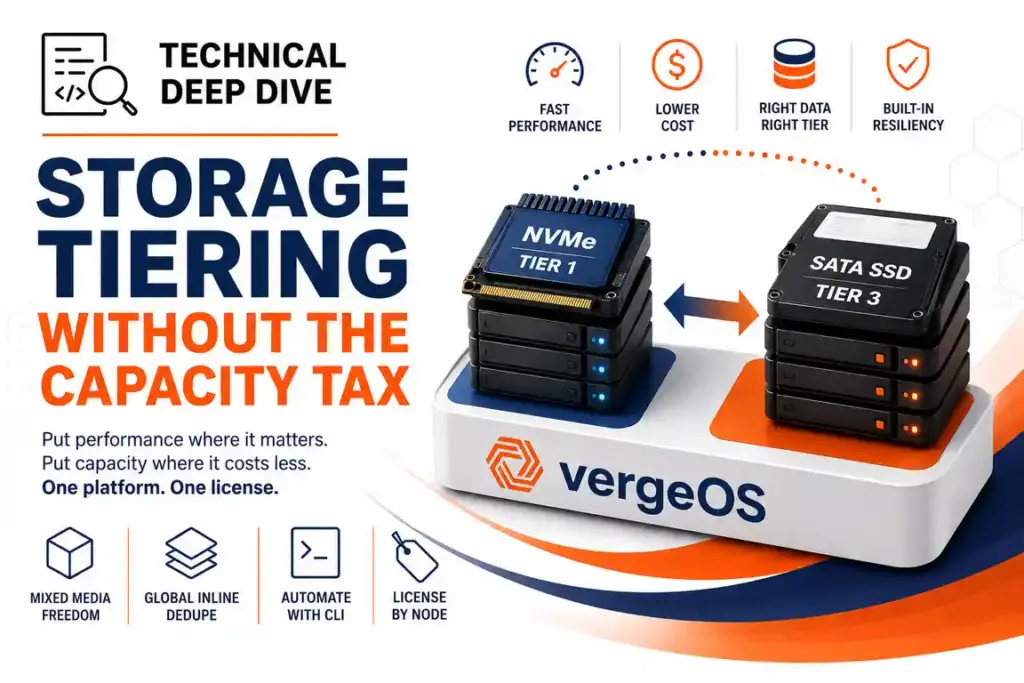
Storage Tiering Without the Capacity Tax

Storage tiering was never an array feature. It was a placement decision that lived where the intelligence sat. Lab measurements show a VergeOS tier change acknowledged in 1.3 seconds with the VM still running, and per-node licensing that decides who captures the data reduction: the customer or the vendor’s meter.

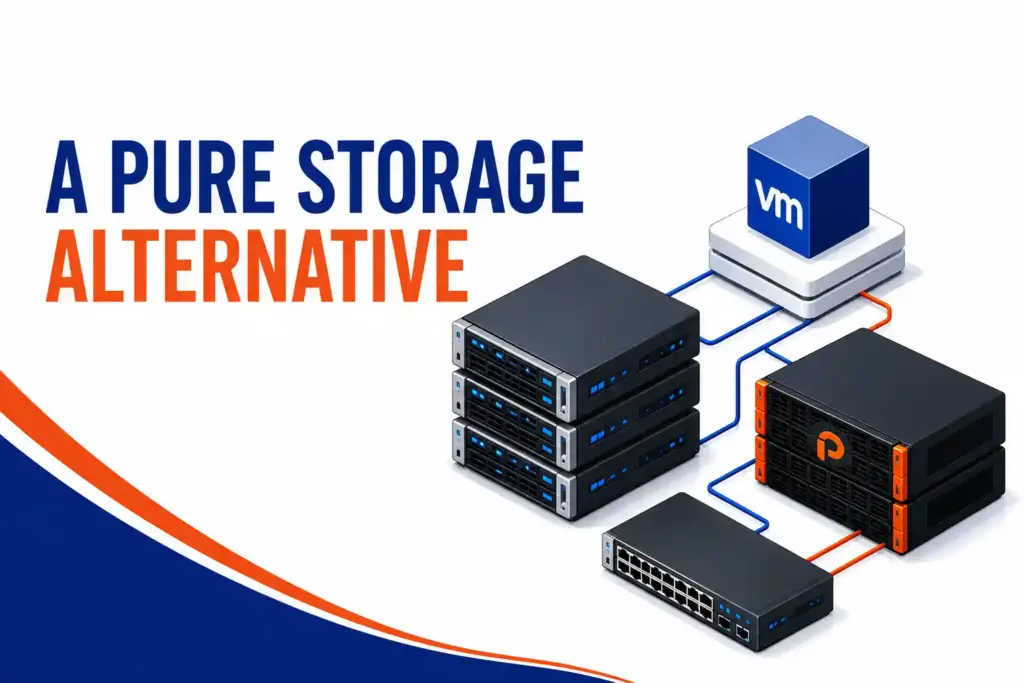
A Pure Storage Alternative

A Pure Storage alternative rarely starts as a storage project. Saratoga Casino Holdings inherited mirrored Pure Storage arrays, Cisco UCS blades, and VMware from a partnership that wound down. Scott Bartgis took the decision back, chose his own nodes through CXTEC equal2new, and removed roughly $50,000 a year in array maintenance.

Legacy HCI Took Control of Your Data Center

Legacy HCI promised to simplify the data center, then set three clocks IT no longer controls: the renewal date, the hardware refresh, and the servers you are allowed to buy. This post breaks down how each clock got set, and how a single-codebase Private Cloud Operating System hands all three back.