Blog / Blog

Blog

Stay in the know with insights from industry experts.

All Blog Posts

Surviving Cascading Drive Failure

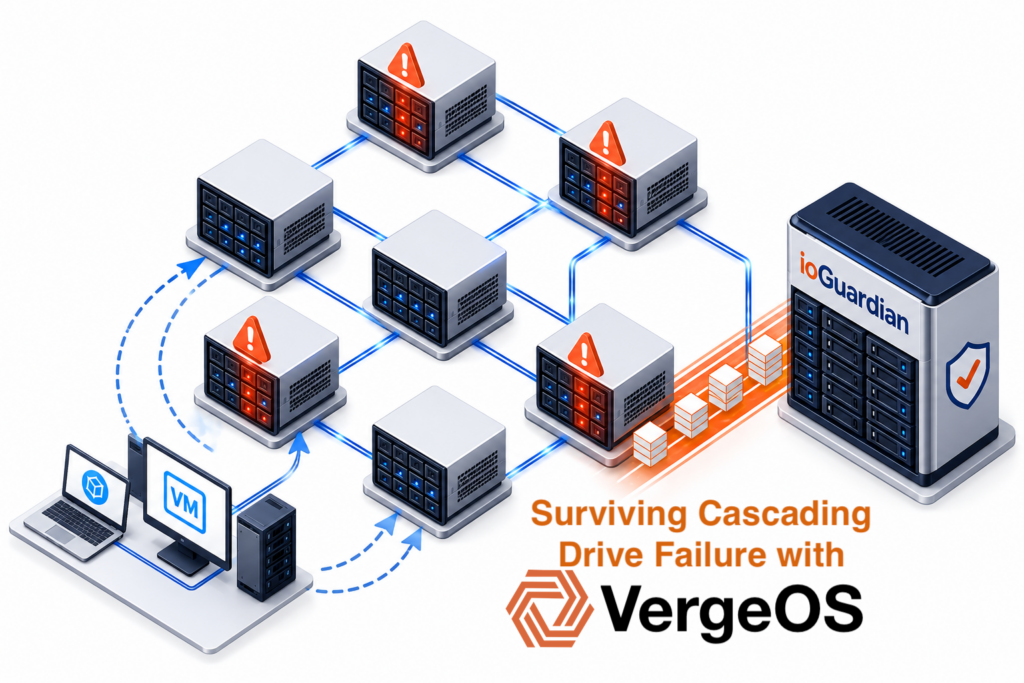
Cascading drive failure is the scenario every operator dreads. One drive fails, rebuilds spin up, then a second and third drive give out as the surviving drives wear faster. VergeOS keeps VMs running through synchronous replication, ioGuardian inline recovery, and live migration, even when the cascade exceeds RF2 and RF3.

Evaluating Kubernetes? Pick Your Foundation First.

On May 20, half the live audience said they’re still evaluating Kubernetes. The harder question is whether a team can evaluate Kubernetes and exit VMware at the same time. The platform underneath the cluster decides more of the five-year operations math than the distribution does. Pick the foundation first.

vGPU 20 VergeOS Field Report

Six weeks after the NVIDIA vGPU 20 webinar, IT director questions shifted from cost to deployment timing. VergeOS closed four operational gaps at once and moved the conversation from “can we afford this” to “when do we start.” The field report on what changed and why it stuck.

The Kubernetes VMware Exit Math, Explained

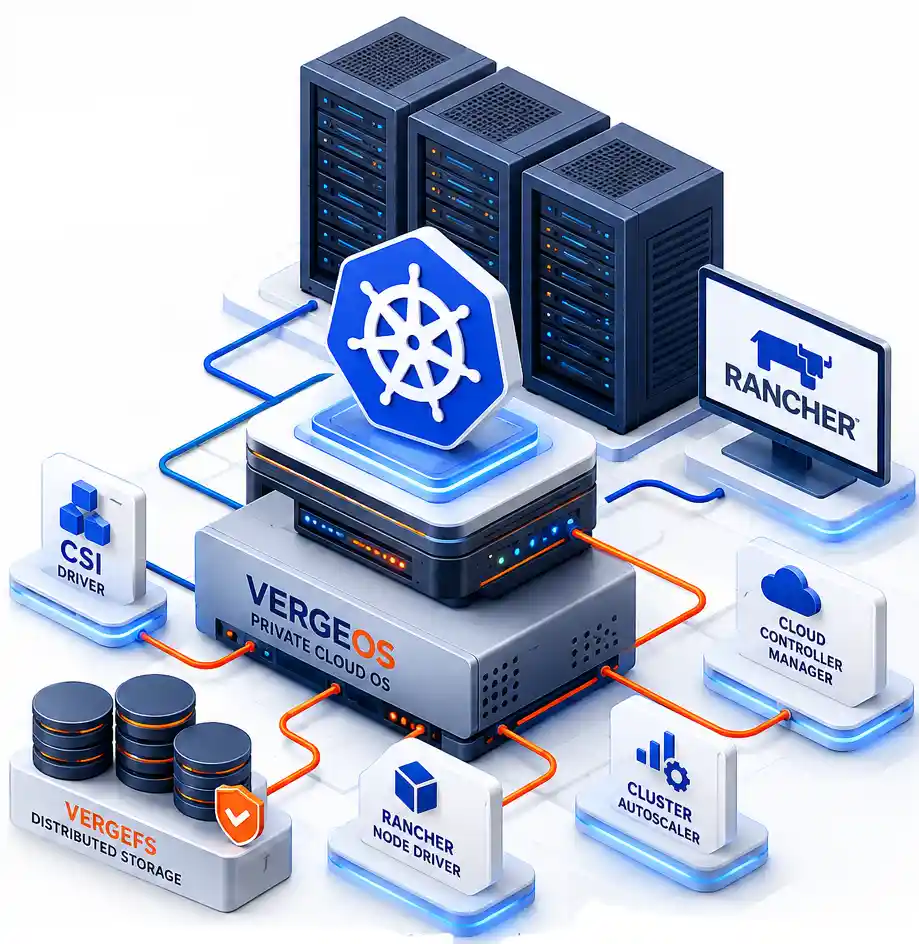
VergeIO announced general availability of Kubernetes support in VergeOS, distributed as four Helm charts on GitHub. VMware shops running Kubernetes today pay three separate taxes: vSphere licensing, a Kubernetes distribution fee, and overlay storage. VergeOS consolidates all three into a single integrated platform. Rancher remains the management plane your team uses.

How VergeOS Makes Refurbished SSDs Safe

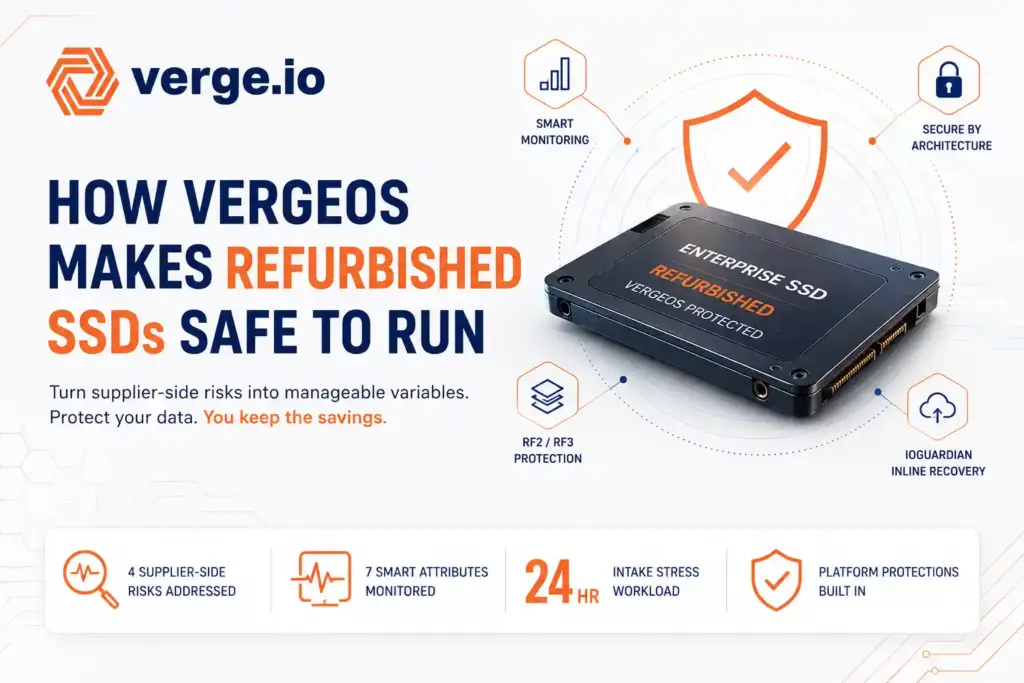
Refurbished enterprise SSDs cut forty to sixty percent off the storage refresh bill. They also pose four supplier-side risks: tampered SMART data, OEM firmware lock, residual data, and batch-failure correlation. VergeOS handles each one at the platform layer.

The SAN Refresh That Pays for Your VMware Exit

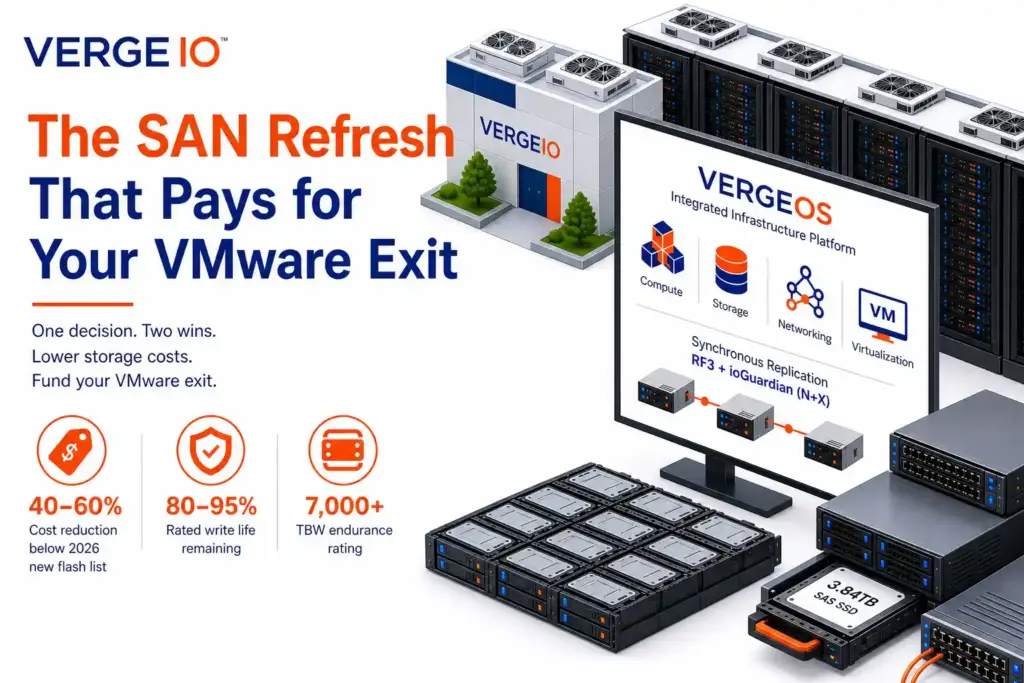
Refurbished enterprise SSDs cut your 2026 SAN refresh below 2025 prices. The hardware savings fund the VMware exit. Two wins from one budget cycle.