VMware Migration Testing Is Critical to Completing Your Exit
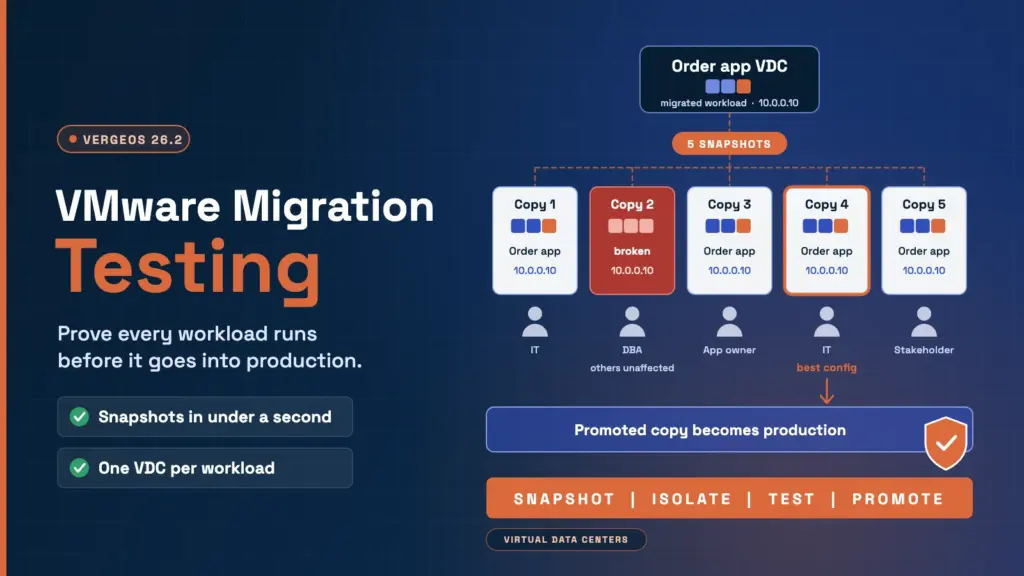
VMware migration testing decides whether your exit finishes. VergeOS keeps the VMware image, takes instant snapshots and isolates each workload in a VDC.
VMware migration testing decides whether your exit finishes. VergeOS keeps the VMware image, takes instant snapshots and isolates each workload in a VDC.
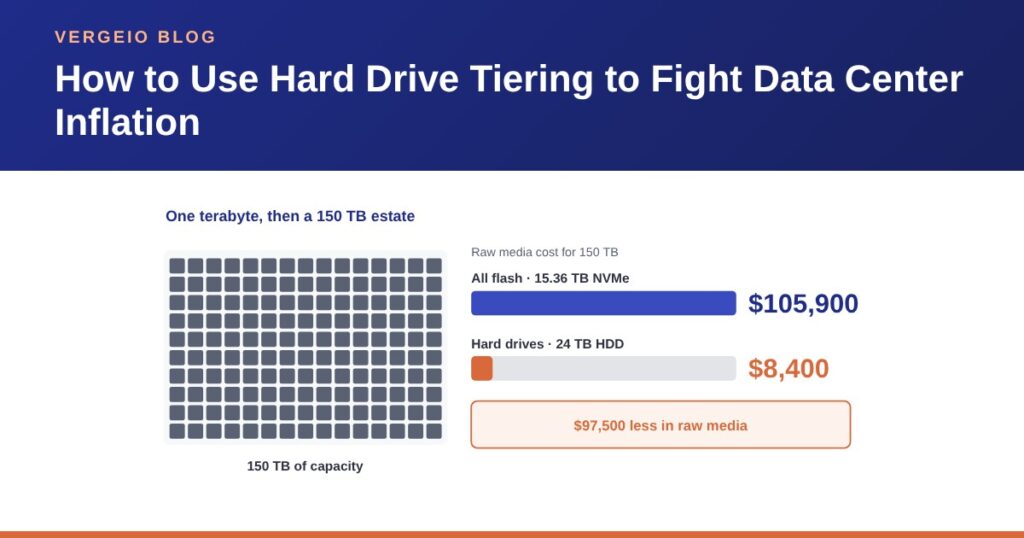
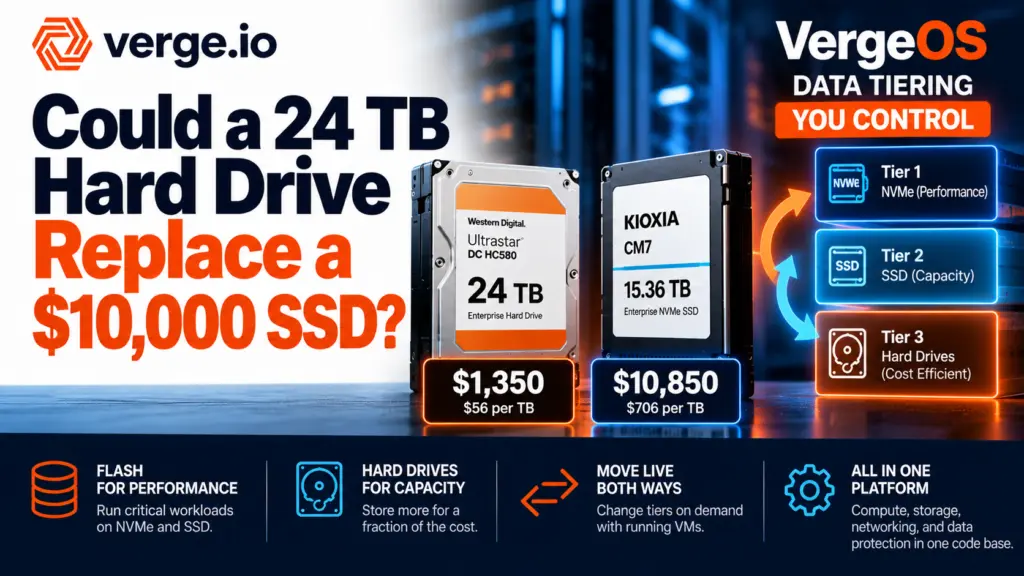
Hard drive tiering is back. See how VergeOS lets you pick each drive’s tier, move it live, and put the long tail on $56/TB disk instead of $706/TB flash.
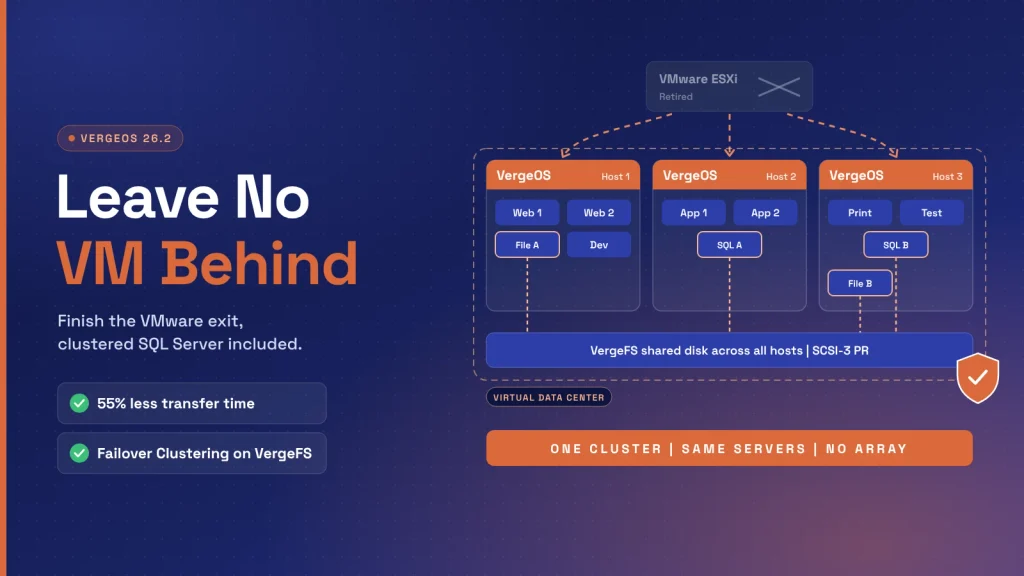
A complete VMware migration includes clustered SQL Server. VergeOS 26.2 shortens cutover and protects critical workloads inside isolated VDCs.
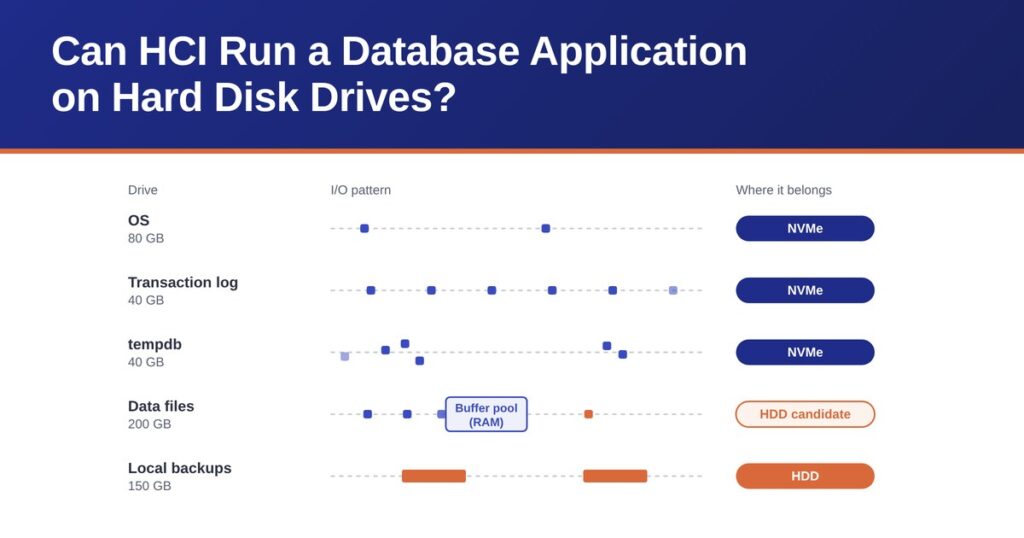
Can HCI run a database on hard disk drives? One live tier change moved a SQL Server data drive to HDD and cut the VM’s storage media cost in half.
A 24 TB hard drive costs about $56 per TB, and a 15.36 TB SSD costs over $700. See how VergeOS puts hard drives back to work inside HCI clusters.
Refurbished hardware funds your VMware exit. VergeOS keeps it running through drive and server failures with RF2, RF3, and ioGuardian.