The oVirt standard enables a complete VMware exit by solving the one requirement that stalls the evaluation of most VMware alternatives: backup compatibility. IT professionals need three things before they commit to an alternative. The platform must deliver compelling capabilities beyond a lower price in the areas of hardware reuse, performance, and built-in data availability. Migration must be executable during business hours without impacting operations. And the existing backup infrastructure must carry forward intact.
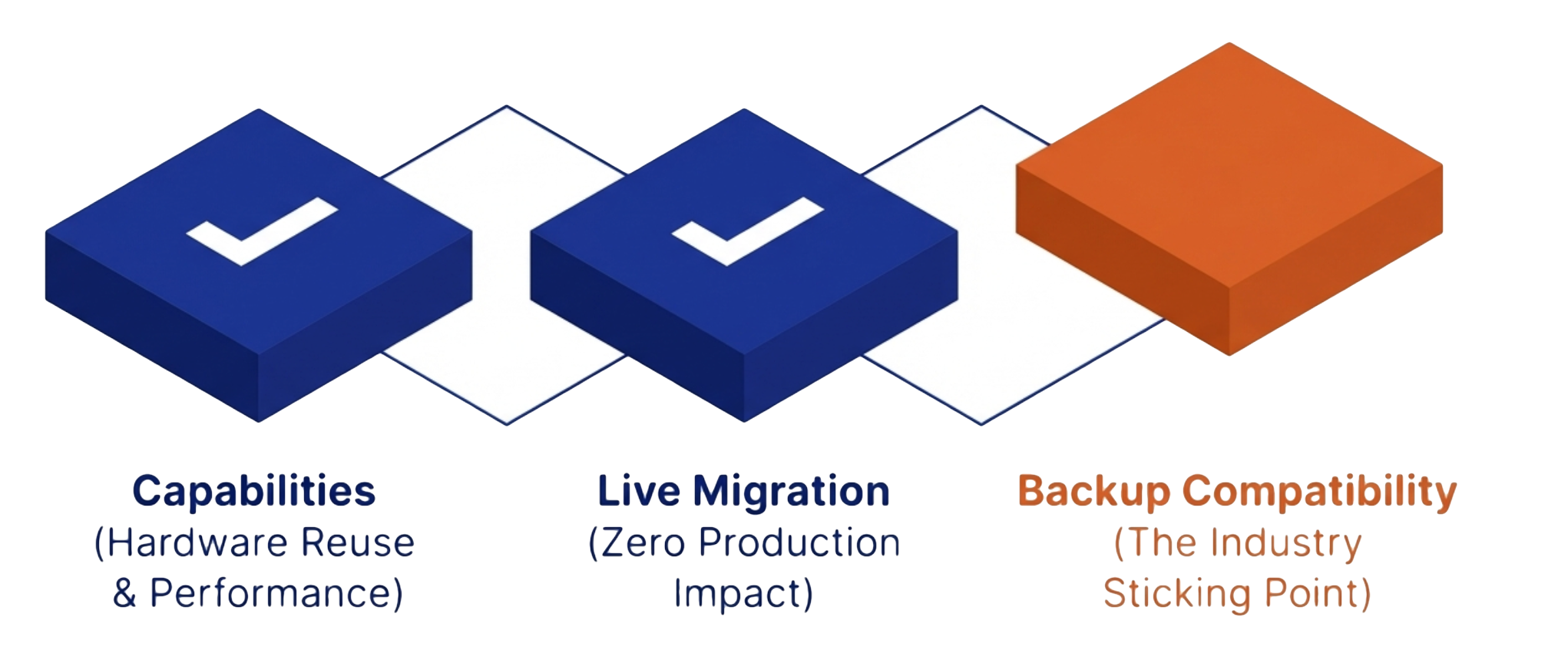 VergeOS answers the first two decisively. It runs on existing servers, delivers infrastructure-scale data protection as a core platform function, and supports live migration during production hours. The third requirement, backup compatibility, has been the industry-wide sticking point. Not for lack of technology, but for lack of a common interface between backup vendors and VMware alternatives.
oVirt enables a complete VMware exit by closing that gap. The oVirt API gives both the backup software vendor and the alternative hypervisor vendor a common bridge to cross. When both sides implement the same standard, the backup question does not get answered. It gets eliminated.
As a proof point, VergeIO delivered a working, production-ready integration with a major enterprise backup platform within three months of starting the project. VergeIO and Veeam will be demonstrating this capability live on tomorrow’s webinar, VergeOS oVirt Integration.
Key Takeaways
The oVirt API enables a complete VMware exit by giving backup platforms and VMware alternatives a common interface that requires no custom development.
VergeOS 26.1.2 implements the oVirt standard natively, making it immediately compatible with any backup platform that has an oVirt driver.
The delay in oVirt support allowed VergeIO to build industry-leading data availability, protection, and disaster recovery directly into the platform.
oVirt-compatible backup platforms like Veeam connect to VergeOS in under an hour with no changes to existing policies, schedules, or SLA tiers.
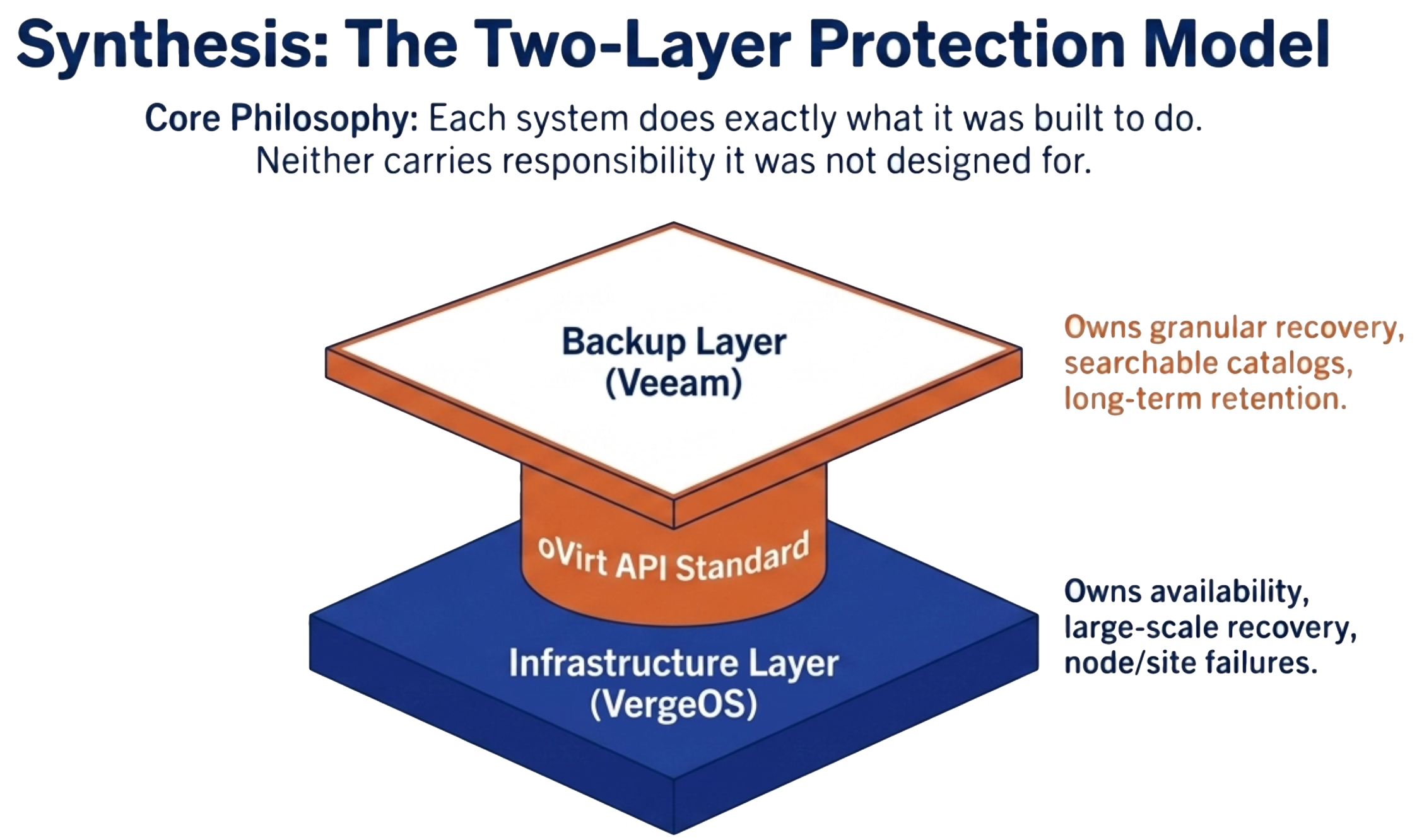
Infrastructure owns availability and large-scale recovery. Backup owns granular recovery and long-term retention. The oVirt integration lets each system do what it was built to do.
Why oVirt Enables a VMware Exit
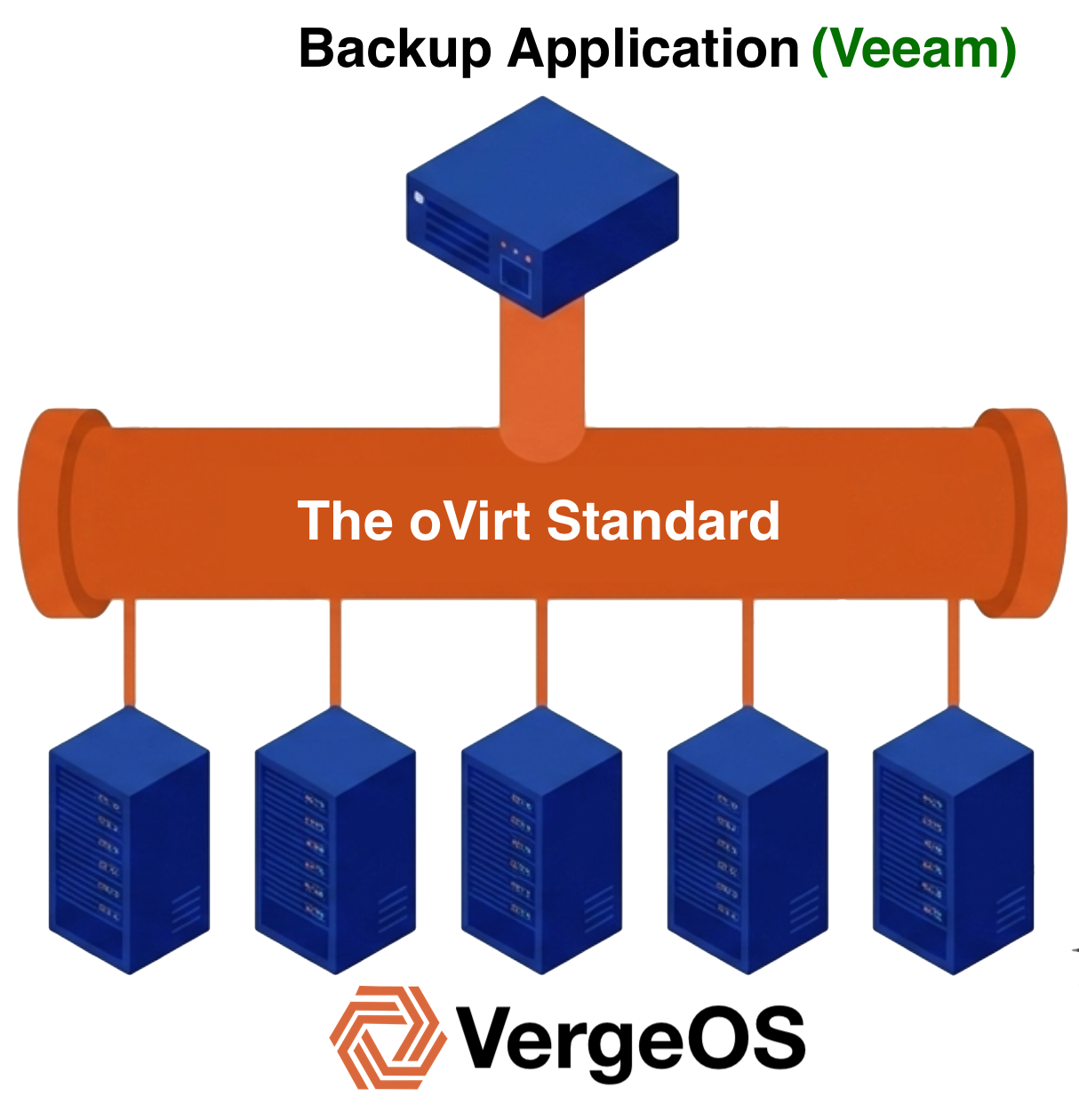 The oVirt API is the established interface for KVM-based virtualization environments. VergeIO did not invent it. No single backup vendor created it. It emerged as an industry decision, a deliberate architectural strategy by major backup vendors to support the growing ecosystem of open-source hypervisor platforms through a single, common interface.
Backup vendors like Veeam are choosing to build their products against the oVirt standard rather than maintaining one-off integrations for every new hypervisor that enters the market. Any platform that implements oVirt natively gains access to the full ecosystem of compatible backup tools without custom development on either side. That design decision is what makes oVirt the bridge that enables a VMware exit without sacrificing backup infrastructure.
VergeOS 26.1.2 implements the oVirt API natively. For organizations running any backup platform with an oVirt driver, VergeOS is immediately compatible. The integration is not something that needs to be requested, negotiated, or built from scratch. It is already there.
Key Terms
The established interface standard for KVM-based virtualization environments. Major backup vendors build against this standard to support open-source hypervisor platforms through a single, common integration point.
A VergeOS construct that groups compute, storage, and networking resources into a defined boundary. VDCs are the unit of management, isolation, and recovery, allowing entire application environments to be restored as a coordinated system.
A VergeOS technology that extends drive failure protection beyond configured redundancy levels. It turns N+2 protection into N+X by continuing to serve data actively during multiple simultaneous drive failures.
A VergeOS capability that captures data, VM configurations, and network configurations together in point-in-time consistent snapshots. These snapshots are immediately replicated off-site, simplifying disaster recovery into a single coordinated restore.
An architecture where infrastructure owns availability and large-scale recovery, and backup platforms own granular recovery and long-term retention. Each layer operates at its maximum effectiveness when the boundary between them is clear.
Why the oVirt Delay Strengthened the VMware Exit
 It would have been nice to have oVirt compatibility on day one, however, the delay created an unexpected advantage. Without a third-party backup integration to lean on, VergeIO took on the responsibility of building advanced, industry-leading data availability, protection and disaster recovery capabilities directly into the VergeOS platform.
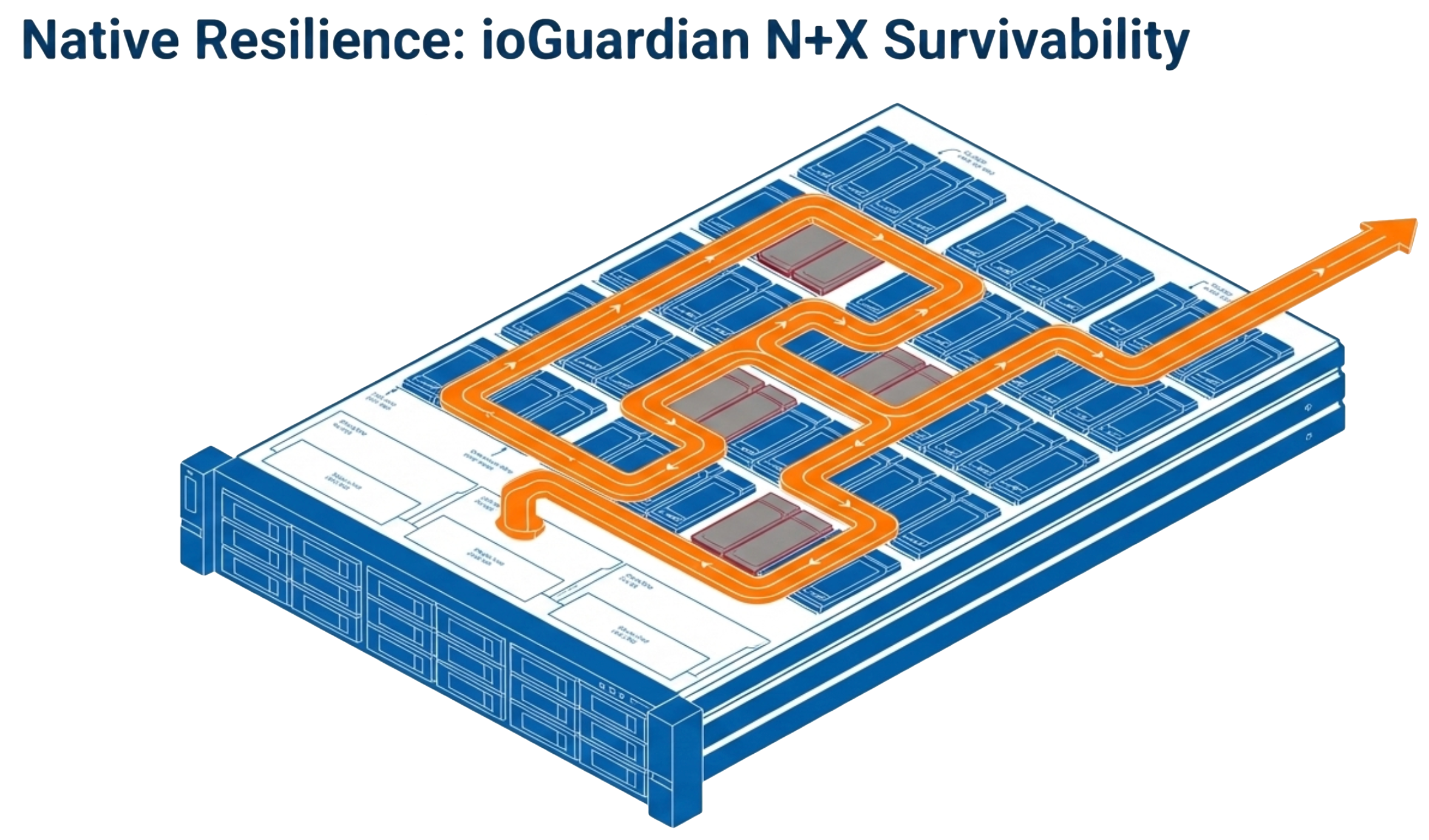
The result is a level of resilience and recovery that most hypervisors do not attempt. VergeOS delivers unlimited snapshots with no performance penalty. Multiple levels of drive failure protection come standard. ioGuardian extends protection beyond configured redundancy levels, turning N+2 protection into N+X by continuing to serve data actively during multiple simultaneous drive failures that exceed the configured protection level.
Integrated remote replication operates at the platform level, not the VM level. Data center encapsulation captures data, VM configurations, and network configurations together in point-in-time consistent snapshots which are immediately replicated off-site. That approach simplifies disaster recovery from a multi-step orchestration exercise into a single coordinated restore.
None of this goes away with the addition of oVirt. VergeOS enters the backup compatibility conversation from a position of strength, not dependency.
What oVirt Brings to VergeOS
VergeOS already delivers top-tier data protection, but a single vendor provides all of it. Some organizations see that as a strength. Others see it as a gap, particularly those with compliance requirements or operational models that expect a dedicated backup platform with its own management layer.
This is where enterprise backup tools add clear value. Products like Veeam provide a robust, searchable catalog of backups, files, and recovery points. Single-file restores are GUI-driven and intuitive. An administrator searches, selects, and restores without needing to know the exact location or snapshot in advance. VergeOS can mount a snapshot as a drive and allow an administrator to copy files back directly. That method is fast and effective, but it requires the administrator to know what they are looking for.
oVirt bridges this gap. Organizations that want the operational familiarity and granular precision of a dedicated backup platform alongside the infrastructure-scale protection of VergeOS can now run both without compromise and without custom integration.
How VergeOS Uses oVirt in Practice
 The integration is straightforward. An oVirt-compatible backup platform, like Veeam connects to VergeOS without modification on either side. No custom plugin. No professional services engagement. No changes to existing backup policies, schedules, or SLA tiers.
The full feature set of the backup platform is available from day one. File-level restore, application-aware recovery, instant VM recovery, and long-term retention all function at production scale. Deployments confirm the integration completes in under an hour.
Backup compatibility alone is not a strategy. Having a backup platform connect to VergeOS is table stakes. The deeper question is what happens when something fails, and how much of that outcome depends on backup software.
The answer with VergeOS is less than it used to be. Infrastructure owns availability and large-scale recovery. It absorbs drive failures, node failures, and site-level disruptions within the platform. Backup owns granular recovery and long-term retention. It restores individual files, application objects, and historical data with precision. Each system does what it was built to do. Neither carries responsibility it was not designed for.
The VMware Exit Economic Window Is Open
The RAM and NAND flash supercycle has broken server supply chains and pushed hardware costs to cycle highs. DRAM prices are up 171% year-over-year through 2027. NAND flash contract prices jumped 55 to 60 percent in Q1 2026. Multi-month server delivery delays are now standard in categories that shipped in weeks two years ago.
Most VMware alternatives force a server refresh alongside the platform change. VergeOS does not. It runs on the servers already in production. With oVirt, it now uses the backup infrastructure you have already invested in. New hypervisor, same servers, same backup platform. The economic window to act is now.
Standard Exit vs. VergeOS Exit
| Standard Alternative | VergeOS | |
|---|---|---|
| Hardware Requirement | New server refresh | Re-use existing servers (+171% DRAM avoidance) |
| Backup Integration | Custom plugins / waitlists | Native oVirt standard |
| Platform Resilience | Standard N+1/N+2 | ioGuardian N+X survivability |
| Disaster Recovery | Multi-step orchestration | Single-click VDC encapsulation |
Rick Vanover (Veeam VP of Product Strategy) and Paul Hodges (VergeIO Field CTO) deploy and demonstrate the full integration live. Q&A included.
The demonstration is scheduled for April 15, 2026 at 1:00 PM ET. The session covers adding VergeOS to the Veeam console as an oVirt KVM Manager, running the first backup job, and restoring a workload — end to end.
The Q&A addresses the questions most teams ask during a VMware exit: license portability, retention policies during migration, and how the two-layer model changes the recovery conversation with the business.
Ready to see VergeOS in action? Take a Test Drive Today.