When I was CEO of Online Tech (now Otava) we did a lot of unit cost economics on every service we sold. Each service had it’s own SKU. We had a few 100 of them. So, there was a SKU for a cloud server. There was a SKU for RAM on a cloud server. We had separate SKU’s for each of a block of IP addresses; 4 u of colocation; 1 mb of bandwidth etc. Each “solution” involved a customer contracting for a number of SKUs, each SKU with their own price and SLA.
Pricing is mostly determined by the market, seldom does a company have pure pricing power. Costs on the other hand can be managed, but only if you know what drives them. Knowing your true costs also gives you negotiating power when trying to win a deal. You know your true walk-away number and can make it clear when need be.
There are 3 types of costs when deploying each SKU: incremental cash cost; allocation of pre-deployed capex and staff time. These costs occur when the SKU is first deployed and also on a recurring basis as long as you’re delivering that SKU. Three types of costs, each incurring at one of two different times, means there are 6 types of cost.
We did this cost analysis for everyone of our 100+ SKUs and had a system that would automatically tell us the GM for each quote and order. We had to have a system because it was incredibly complex but very important to get right, at scale (100s of quotes / month).
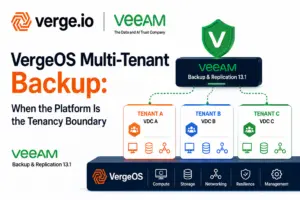
The reason I joined VergeIO is because I know where and how it changes the unit cost structure for delivering cloud services. Cash, Allocation and Staff costs all go down, both at setup and on a recurring business. Which is great, but even better is that this newer lower cost structure expands the use cases. You can now deliver nested, secure multi-tenant virtual data centers at the edge with a tiny hardware footprint.
Can’t wait for all those MSPs, hosting providers, cloud providers and telcos to see how this works. In the meantime, know your costs.