A VMware perpetual license feels like leverage right up to the moment you need a patch. You already own the software. Stop paying maintenance, keep the environment running, and the renewal quote goes away. Scott Bartgis, Corporate Director of IT at Saratoga Casino Holdings, made exactly that call after the post-Broadcom numbers arrived. He stopped at version 7 and let maintenance expire. On our August 13 session he described the position he had occupied ever since in four words: stuck on unpatchable VMware.
He arrived there by elimination. A regulated gaming floor belongs on current code, and every engineer running one knows it. He refused to fund the renewal, and the license he already owned offered him exactly one other move: freeze.
That distinction matters more than the perpetual-versus-subscription argument the industry keeps having. Own the license outright and you still want it under maintenance, since maintenance is what delivers support and updates. Rent it by subscription and the same holds. Either way you are paying a line item every year to keep the software supported. What separates one vendor from the next is what happens to that line item over time.
Key Takeaways
- Perpetual or subscription, infrastructure software stays under maintenance if you want support and security updates. The license model does not change that.
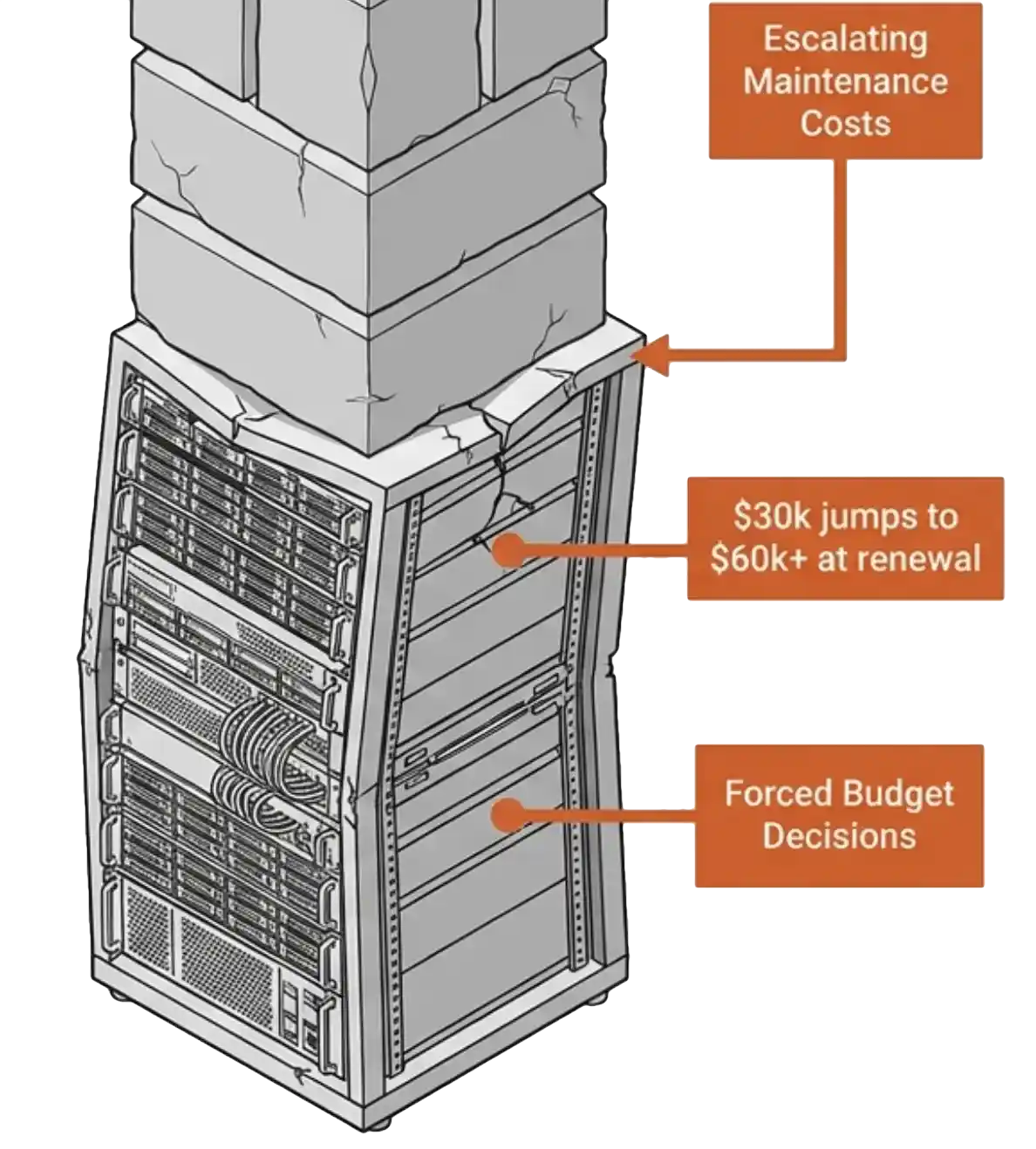
- The variable that matters is the escalation rate. Saratoga watched a combined renewal climb from the thirty-thousand range into the fifty and sixty-thousand range, then stopped paying and froze at version 7.
- The VergeIO terms and conditions currently cap any subscription increase at 5 percent per period, and a customer can lock the price for one year, three years, or five years.
The Renewal Number That Kept Climbing
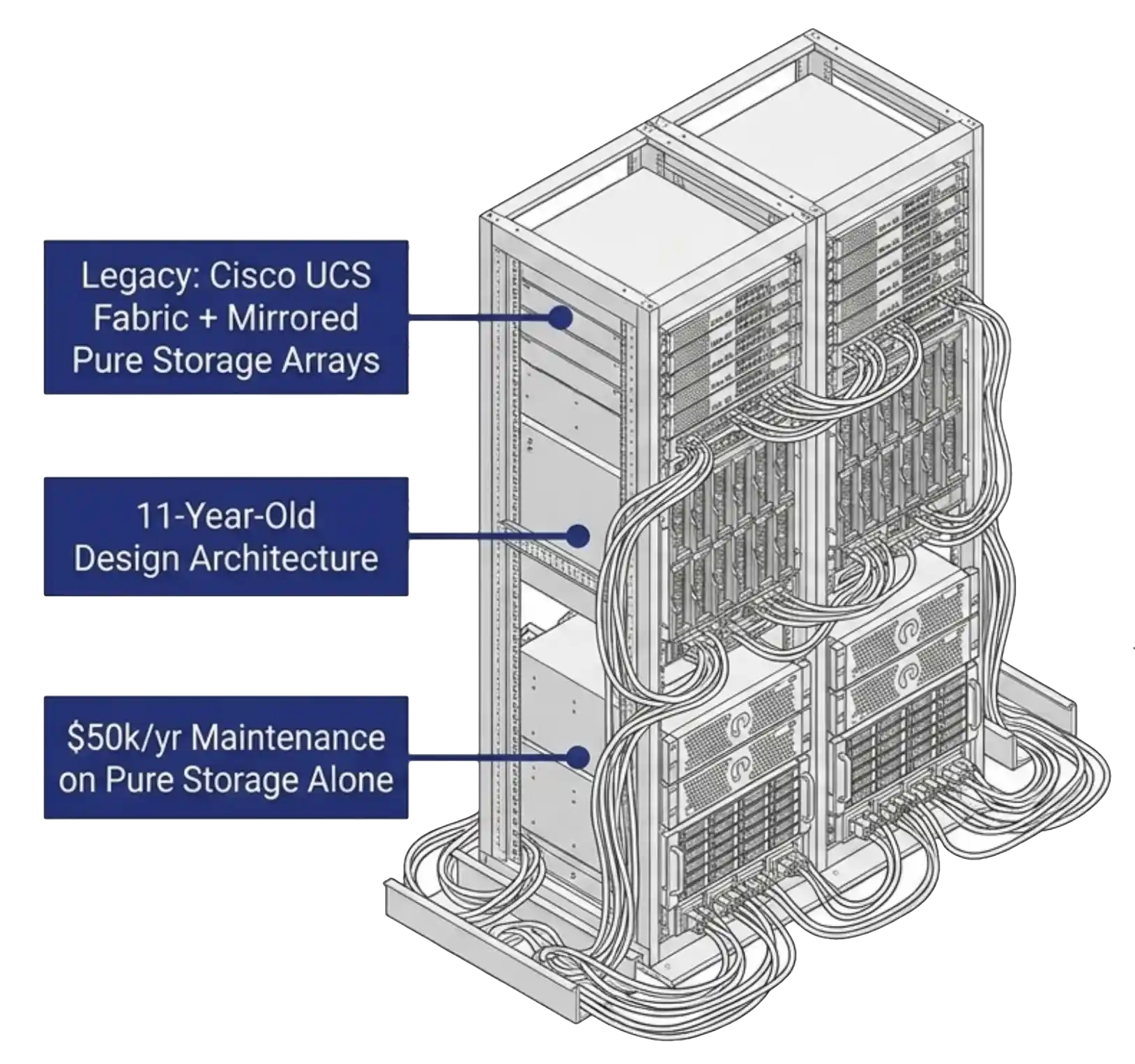
Three contracts came due against the same budget year. Maintenance on the two mirrored Pure Storage arrays ran about $50,000 a year on its own. Cisco UCS hardware support added another line, and the post-Broadcom VMware quote asked Scott to pay again for licenses he already owned. He watched the combined annual figure move from the thirty-thousand range into the fifty and sixty-thousand range across successive renewals, then drew a line and stopped renewing.
Dropping maintenance removed one invoice and started a different clock. Every quarter the version stayed put widened the distance between the code in production and the code with fixes available. That trade works fine in a lab. In a regulated gaming environment it works for a limited time, which is why the search for a replacement platform started the same year.
Read the sequence carefully and the cost curve is the cause, not the license type. A perpetual license renewing at a predictable number stays under maintenance.
What to Ask Before You Sign Anything
Every infrastructure vendor charges for support and updates. Very few will tell you in writing how much that charge can rise at renewal, which is how a manageable line item becomes a budget event three years later. The question worth asking on the first call is simple: what is the ceiling, and can I lock it?
VergeIO answers both in writing. The current terms and conditions cap any subscription increase at 5 percent per period, and a customer can lock that price for one year, three years, or five years. The software still costs money, and a subscription is still a subscription. What disappears is the surprise, which is the part that pushed Saratoga onto an unpatched version in the first place.
Key Terms
Four Quotes, One Delivery Date
Scott priced the exit properly, with four builds in side-by-side columns. Scale Computing came up short on node count and capacity for the Saratoga property. Nutanix priced close enough to VMware that he grouped the two together on cost and complexity. The finalists were VergeOS on new Dell servers and VergeOS on CXTEC® equal2new® systems.
Delivery date decided it. He ran the numbers in February, and the new-build answer put his servers on a loading dock somewhere around August. CXTEC delivered four equal2new® nodes in about two weeks, ahead of the rack he had ordered to hold them. Each equal2new® server ships with a lifetime warranty on the chassis and its components, and RapidCare® support runs about a third of OEM cost. CXTEC makes the same argument from the hardware side of the transaction in their own post on hardware freedom with VergeOS.
A Migration That Ran on His Calendar
The move started one workload at a time rather than as a single weekend event. VergeOS synchronizes a running VMware VM in the background, then takes a final sync once the source powers down. That final step runs about 30 seconds. Scott had moved 36 workloads by the day of the session with 19 still to go, all of it inside maintenance windows he already had.
Data protection stayed exactly where it was. He runs Veeam into an air-gapped immutable target, and Veeam 13.1 added native VergeOS support with no agents and a VergeOS entry in the backup job dropdown. Knowing that integration was close is what moved him to start migrating his most critical workloads.
Two Ways to Pay for Support
| Frozen VMware stack | VergeOS on equal2new® | |
|---|---|---|
| Support and patches | None, maintenance expired at version 7 | Current code under active maintenance |
| Renewal exposure | Repriced at the vendor’s discretion | 5 percent per period ceiling in the terms and conditions, lockable for one, three, or five years |
| Hardware choice | Vendor compatibility list | Standard x86 servers, buyer’s pick |
| Delivery | Four to six months for new OEM nodes | About two weeks |
| Storage growth | Array expansion in the vendor’s increments | Add a node, spread the workload wider |
| Backup | Agent-based | Native VergeOS support in Veeam 13.1 |
The Performance Question, Answered
Retiring an all-flash array raises one objection above all others. Scott keeps the same database replicated on both platforms and compares them the way a twenty-year engineer does, by feel. His verdict: “If you blindfolded me, I wouldn’t be able to tell.”

He runs twice the capacity on half the hardware, at roughly a quarter of what the UCS and Pure design cost eleven years ago. The cluster holds a terabyte of RAM and just under 40 terabytes of storage, with a 25 gigabit fabric the blade chassis design priced out of reach. One player tracking SQL server takes 96 virtual CPUs, past the point where the interface stops to ask whether the number is a typo.
Own Your Stack Again
Scott is back under maintenance today, on hardware he selected, with a renewal number he can predict. That last part is what he lost when the post-Broadcom quote arrived, and getting it back is what let him stop running production on frozen code.
Frequently Asked Questions
Does a VMware perpetual license keep my environment supported?
Is a subscription worse than a perpetual license?
Can workloads move without a maintenance window?
Is refurbished hardware appropriate for production?
Next Steps
The recorded session, the full customer story, and the combined solution details are one click away.


