DCIG recently published its 2026 report on VMware Alternatives, which highlights the often overlooked criteria for VMware alternatives. The research team evaluated 19 solutions across more than 400 features to identify a shortlist of candidates. That level of analysis takes serious effort, and the resulting reports give IT leaders a structured way to compare options.
Key Takeaways
- The VMware alternative market is growing rapidly: Most new entrants are existing products that bolted on KVM hypervisors to chase a market condition, not vendors building long-term platform strategies.
- Vendor commitment matters more than features: Infrastructure decisions last a decade. Vendors capitalizing on a temporary opportunity will not invest in their platforms the same way dedicated vendors will.
- Support capabilities vary dramatically: Unified codebases enable faster issue resolution. Vendors new to KVM depend on open-source community guidance when hypervisor-level problems arise.
- Hardware independence extends infrastructure life: True alternatives run on commodity servers from any manufacturer, mix generations in the same cluster, and keep hardware in production until it fails rather than until a compatibility list expires.
- Efficiency determines real-world performance: Stacked architectures consume resources before workloads get any. Platforms built as single operating systems eliminate overhead and return capacity to production.
- RAM optimization is often overlooked: Per-guest storage caching fragments memory across VMs. Infrastructure-level caching through deduplicated storage pools eliminates this waste.
- Scope separates hypervisor swaps from platform modernization: A hypervisor swap addresses licensing. An integrated platform replaces storage arrays, backup software, replication tools, and networking products that cost 5X more than the hypervisor.
- VergeOS predates the VMware disruption: Founded in 2012 to serve cloud service providers, the architecture existed long before Broadcom created the market opportunity. DCIG named VergeOS a TOP 5 VMware Alternative for both SME and SLED markets.
But the feature comparison tells only part of the story.
The VMware Alternative Bandwagon Is Growing
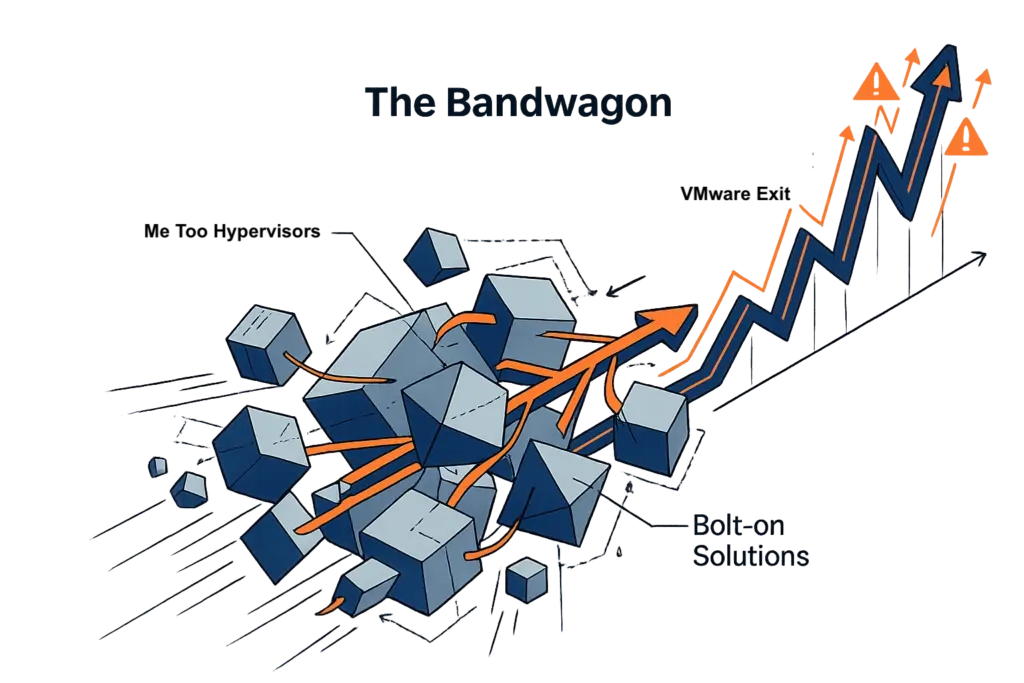
The first takeaway from this research is that the VMware alternative market is expanding rapidly. More vendors are jumping in every quarter. In almost every case, these are not new products. They are existing solutions that added a hypervisor, almost always KVM, to capitalize on a market condition. This is the IT equivalent of ambulance chasing.
Taking advantage of a market opportunity is not the same as building a long-term platform strategy. The VMware exit is a real multi-year market condition, similar to the memory supercycle now underway, but it will not last forever. The market will eventually evolve from VMware migration into migration between alternatives. Customers who have grown comfortable moving off VMware will start looking for solutions that solve broader infrastructure challenges. Vendors treating this as a hypervisor-only opportunity will not keep pace with those building Private Cloud platforms.
Key Terms
- KVM (Kernel-based Virtual Machine)
- An open-source hypervisor built into the Linux kernel. Most VMware alternatives use KVM as their virtualization layer, but mastering it requires years of development experience.
- Private Cloud Operating System
- A platform that virtualizes the entire data center as one integrated system, replacing separate compute, storage, networking, and data protection products with a unified software layer.
- Stacked Architecture
- Infrastructure built from separate modules developed by separate teams. Each module runs its own processes, memory footprint, and I/O overhead, consuming resources before workloads get any.
- Hardware Compatibility List (HCL)
- Vendor-maintained lists of certified hardware configurations. These lists limit purchasing options, enforce vendor lock-in, and force hardware retirement based on certification expiration rather than actual failure.
- Per-Guest Memory Allocation
- A storage caching approach where each virtual machine reserves its own RAM for cache, whether needed or not. This fragments memory across workloads and forces organizations to overprovision RAM.
- Infrastructure-Level Caching
- A storage caching approach that handles caching through a shared, deduplicated storage pool rather than per-VM allocation. Eliminates fragmented memory reserves and allows more workloads on the same physical memory.
- VergeFS
- VergeOS’s integrated software-defined storage service with inline deduplication, eliminating the need for external storage arrays.
- VergeFabric
- VergeOS’s software-defined networking layer, included at no additional cost. Eliminates the need for separate network virtualization products like VMware NSX.
- ioGuardian
- VergeOS feature enabling N+X redundancy, allowing a VergeOS instance to maintain full data availability through multiple simultaneous hardware failures rather than accepting the limits of mirroring or RAID.
- Virtual Data Center (VDC)
- A VergeOS capability that encapsulates entire environments as portable objects. VDCs can failover and recover in minutes, simplifying disaster recovery without third-party software.
- DCIG TOP 5
- Recognition from the Data Center Intelligence Group identifying the top five solutions in a product category. DCIG evaluated 19 VMware alternatives across 425+ features to determine the TOP 5 for SME and SLED markets.
What Should Matter When Choosing a VMware Alternative
Given this landscape, what are the considerations that feature matrices miss entirely?
Vendor Commitment
The overlooked criterion for VMware alternatives that has to be examined first is the vendor’s commitment to the platform. Are they taking advantage of a temporary market condition, or is this a core part of their strategy? The distinction matters because infrastructure decisions last a decade. A vendor that bolted on a hypervisor to chase VMware exits will not invest as much in the platform as a vendor that built infrastructure virtualization from the ground up.
Vendor Support Capabilities
When it comes to technical support, established vendors like VMware and Nutanix are showing signs of struggling to meet customer expectations. The weight of their stacks creates the problem. Separate modules built by separate development teams may accelerate time to market, but they add inefficiency and make supporting the complete solution far more difficult. A unified codebase developed by a single team delivers faster issue resolution and eliminates the finger-pointing that happens when problems cross module boundaries.

The vendors that recently bolted a KVM-based hypervisor onto their existing product face a different support problem. KVM is not for the faint of heart. It is powerful, but it is also complex, and mastering it requires years of development experience. These new entrants do not have that experience. When customers encounter hypervisor-level issues, these vendors are at the mercy of the open-source KVM community to help them understand code they did not write and do not fully grasp. That dependency creates support delays and limits how deeply the vendor can troubleshoot problems. Customers end up waiting while their vendor waits for community guidance.
Hardware Independence
Another overlooked criterion for VMware alternatives is hardware independence. Most VMware alternatives carry their own hardware compatibility lists and certification requirements. These lists limit your purchasing options and lock you into specific vendors and refresh cycles. True hardware independence means running on commodity servers from any manufacturer, mixing generations within the same system, and keeping hardware in production until it actually fails rather than until a compatibility list expires.
Efficiency
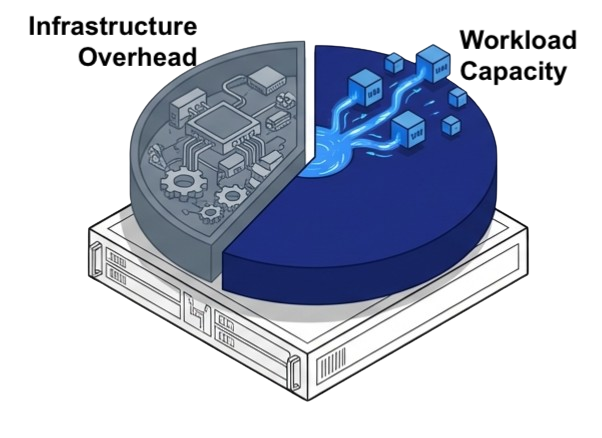
Potentially, the most overlooked criterion for VMware alternatives is efficiency. Stacked architectures consume resources before your workloads even get any. Each separate module, running its own processes, memory footprint, and I/O overhead, takes capacity away from production. A platform built as a single operating system eliminates that overhead and returns it to workloads, where it belongs. Customers routinely report better performance on the same hardware after migration to a Private Cloud platform.
RAM optimization deserves particular attention. Memory is expensive, and traditional virtualization platforms waste significant amounts of it. Most solutions require per-guest memory allocation for storage caching, meaning each virtual machine reserves RAM for its own cache, whether it needs it or not. This approach fragments memory across workloads and forces organizations to overprovision RAM to maintain performance. A platform that handles caching at the infrastructure level rather than the guest level eliminates this waste and allows memory to serve workloads rather than redundant caches.
Solving Infrastructure, Not Just Hypervisor
The biggest non-feature of all is the lack of scope. A hypervisor swap alone, addresses licensing costs. It does not address the storage arrays, backup software, replication tools, and networking products that surround virtualization. Those components cost five times what the hypervisor costs and consume far more operational effort. A platform that replaces the entire stack with integrated compute, storage, networking, and data protection delivers a fundamentally different outcome than a platform that only replaces the hypervisor.
How VergeOS Addresses Each Criterion
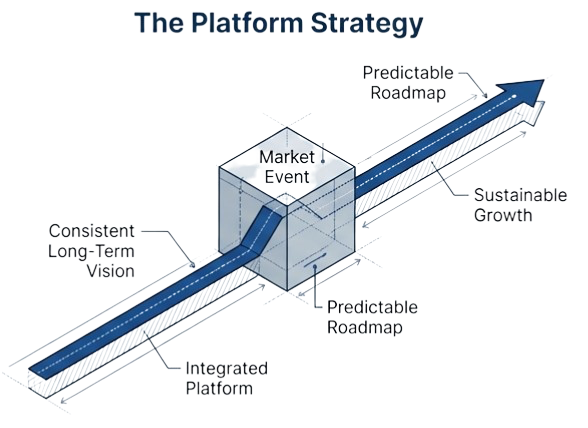
VergeOS was not built to chase VMware exits. The platform predates Broadcom’s acquisition of VMware by more than a decade. VergeIO was founded in 2012 to build infrastructure software for Cloud Service Providers who needed efficient multi-tenant capabilities. That vision expanded to include Managed Service Providers facing similar challenges. Later, the platform evolved to serve enterprises seeking a Private Cloud Operating System rather than just a virtualization solution. It was then that VergeIO added seamless VMware migration capabilities that can migrate thousands of VMs in under a minute. The VMware disruption created market awareness, but the VergeOS architecture existed long before the VMware exit opportunity did.
Vendor Commitment
VergeIO has one product: VergeOS. The company does not sell storage arrays, backup software, or networking appliances alongside a hypervisor. Every engineering resource, every support technician, and every product decision focuses on making the platform better. When the VMware exit market evolves into competition between alternatives, VergeIO will still be further innovating the same platform it started building in 2012.
Vendor Support Capabilities
VergeOS runs as a single codebase. When a customer opens a support ticket, the engineering team that built the storage also built the networking, the hypervisor, and the data protection. That entire team is 100% available to the support organization. There is no handoff between teams, no finger-pointing between modules, no waiting for community input, and no waiting for a third party to diagnose its component. Support engineers can trace issues across the entire stack because the entire stack is one piece of software.
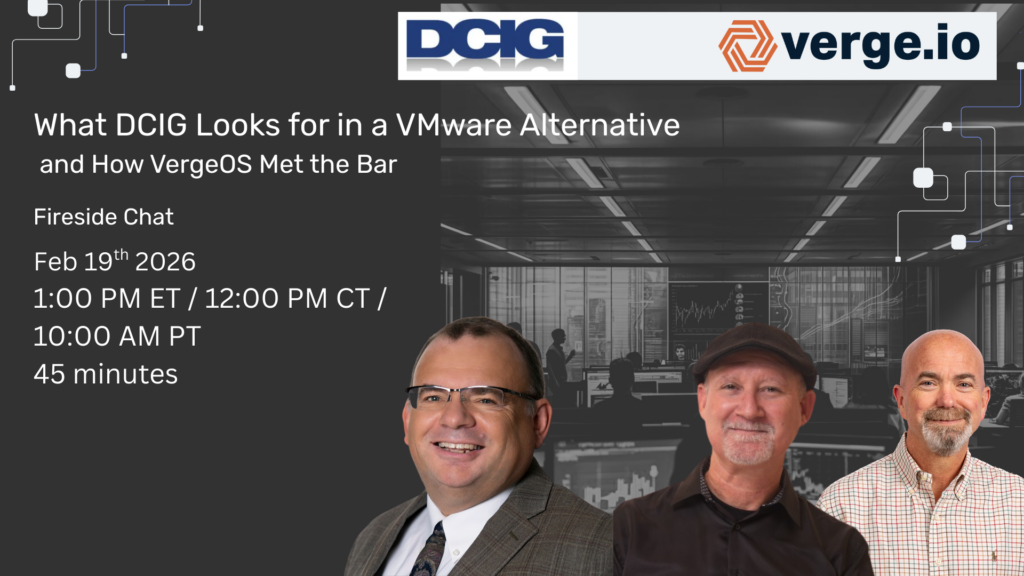
VergeIO’s deep experience with KVM sets it apart from vendors who recently adopted the hypervisor. More than a decade of integration work connecting KVM to VergeOS storage, networking, and data protection has given the engineering team comprehensive understanding of the hypervisor’s behavior. When issues arise at the virtualization layer, VergeIO engineers troubleshoot from direct knowledge rather than waiting for community guidance.
Hardware Independence
VergeOS runs on commodity x86 servers from any manufacturer. Organizations can mix Dell, HPE, Supermicro, and Lenovo servers in the same system. They can run different processor generations side by side. They can repurpose existing VMware servers, including the internal SSDs, without being forced to purchase new hardware. The platform balances workloads intelligently across heterogeneous hardware, placing demanding workloads on faster nodes while lighter workloads can run on older equipment.
Efficiency
VergeOS integrates compute, storage, and networking into a single operating system rather than stacking separate products. This architecture eliminates the redundant processes, memory consumption, and I/O overhead that stacked solutions introduce. Customers consistently report that workloads run faster on VergeOS using the same hardware they previously ran on VMware. The efficiency gain comes from removing layers, not from requiring better hardware.
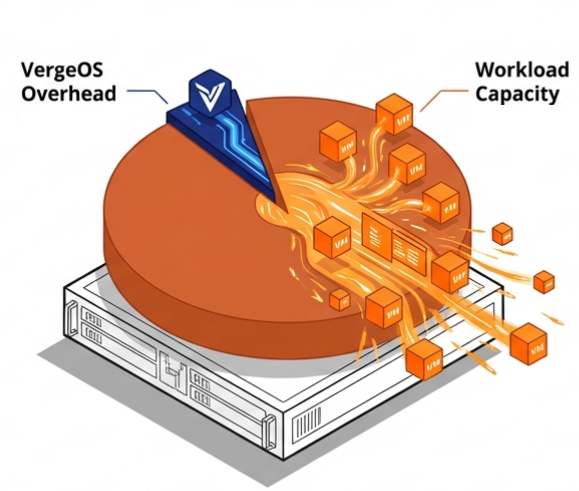
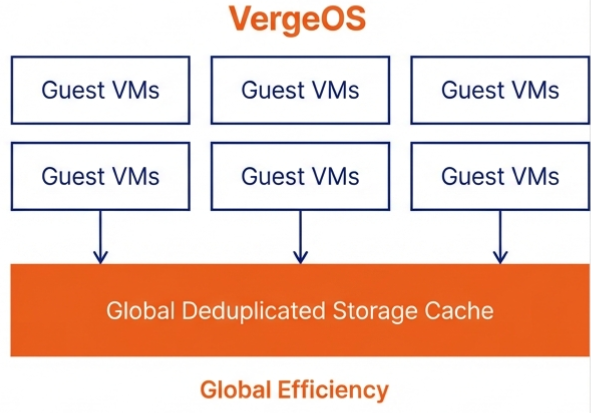
RAM efficiency is a particular strength. VergeOS requires lower memory overhead per virtual machine than traditional platforms. More importantly, the platform handles storage caching at the infrastructure level through a deduplicated storage pool rather than requiring per-guest RAM allocation for caching. This approach eliminates fragmented memory reserves across individual VMs and allows organizations to run more workloads on the same physical memory. RAM costs are an economic shift driving private cloud adoption.
Solving Infrastructure, Not Just Hypervisor
VergeOS replaces more than just the hypervisor. The platform includes VergeFS, an integrated software-defined storage capability that runs as a service, with global inline deduplication eliminating the need for external storage arrays. It includes VergeFabric, software-defined networking at no additional cost, eliminating the need for separate network virtualization products. It includes snapshot-based data protection with site-to-site replication, lessening the dependence on separate backup and DR software. A single VergeOS deployment can replace VMware ESXi, vSAN, NSX, and third-party backup products in a single migration, rather than four separate projects.
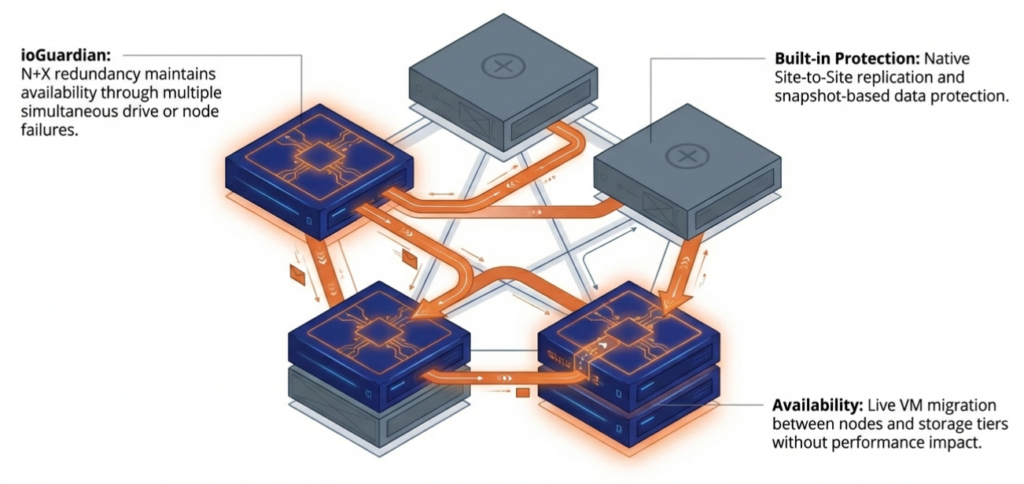
The capabilities of VergeHV, VergeFS, and VergeFabric would be meaningless if you could not maintain data availability and protect against data loss. VergeOS integrates high availability directly into the platform, including live VM migration between nodes and storage tiers without downtime or performance impact. N+X redundancy, enabled by ioGuardian, allows a VergeOS instance to maintain full data availability even in the face of multiple simultaneous hardware failures, rather than accepting the limits of mirroring or RAID’s single- or dual-component loss. Built-in replication delivers site-to-site protection without third-party software, and virtual data center technology makes disaster recovery straightforward by encapsulating entire environments as portable objects that can failover and recover in minutes.
The Real Evaluation Criteria
Feature comparisons help you understand what a product does, but they often do not consider the overlooked criteria for VMware alternatives. They do not tell you whether the vendor will still be investing in the platform five years from now, whether support will resolve issues quickly, whether you can run the hardware you already own, or whether the architecture will free up resources or consume them. Those questions determine long-term success far more than any individual feature checkbox.
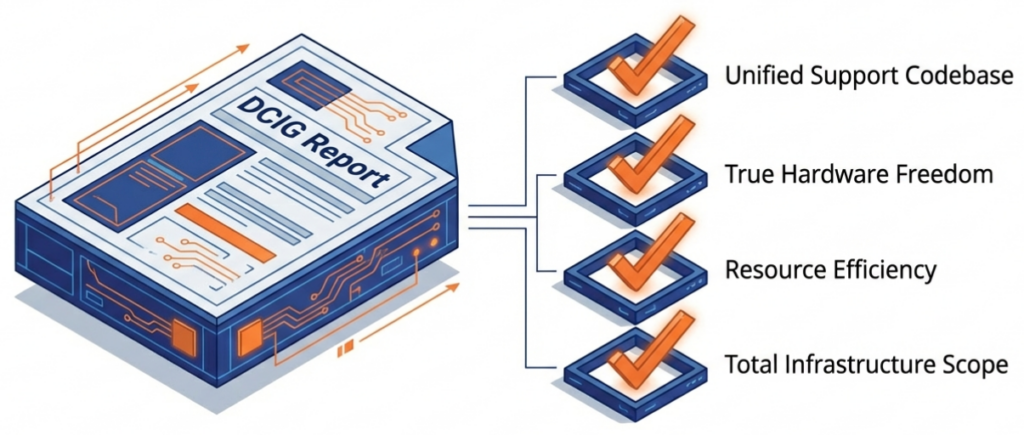
When DCIG named VergeOS a TOP 5 VMware Alternative for both SME and SLED markets, the recognition validated more than a feature list. It validated an architecture built to solve infrastructure challenges rather than just capitalize on a temporary market condition.
Frequently Asked Questions
Why are so many vendors suddenly offering VMware alternatives?
Broadcom’s acquisition of VMware created a market opportunity. Most new entrants are existing products that added a KVM-based hypervisor to capitalize on this condition. Taking advantage of a market opportunity is not the same as building a long-term platform strategy.
What happens when the VMware exit market evolves?
Customers who grow comfortable migrating off VMware will start evaluating alternatives against each other, not just against VMware. Vendors treating this as a hypervisor-only opportunity will not keep pace with those building Private Cloud platforms that solve broader infrastructure challenges.
Why does vendor commitment matter more than features?
Infrastructure decisions last a decade. A vendor that bolted on a hypervisor to chase VMware exits will not invest in the platform the same way a vendor that built infrastructure virtualization from the ground up. Feature lists tell you what a product does today, not whether the vendor will still be investing five years from now.
Why do vendors new to KVM struggle with support?
KVM is powerful but complex, and mastering it requires years of development experience. Vendors that recently adopted KVM depend on the open-source community to help them understand code they did not write. When customers encounter hypervisor-level issues, these vendors wait for community guidance before they can troubleshoot.
What is hardware independence and why does it matter?
Most VMware alternatives carry hardware compatibility lists that limit purchasing options and enforce refresh cycles. True hardware independence means running on commodity servers from any manufacturer, mixing generations in the same cluster, and keeping hardware in production until it fails rather than until a compatibility list expires.
How do stacked architectures affect performance?
Stacked architectures run separate modules with their own processes, memory footprints, and I/O overhead. These layers consume resources before workloads get any. Platforms built as a single operating system eliminate this overhead and return capacity to production workloads.
Why is RAM optimization often overlooked?
Traditional virtualization platforms require per-guest memory allocation for storage caching. Each VM reserves RAM for its own cache whether it needs it or not, fragmenting memory and forcing organizations to overprovision. Infrastructure-level caching through a deduplicated storage pool eliminates this waste.
What is the difference between a hypervisor swap and platform modernization?
A hypervisor swap addresses licensing costs but preserves storage arrays, backup software, replication tools, and networking products that cost five times more than the hypervisor. Platform modernization replaces the entire stack with integrated compute, storage, networking, and data protection in a single migration.
When was VergeOS created?
VergeIO was founded in 2012 to build infrastructure software for Cloud Service Providers. The platform later expanded to Managed Service Providers and then enterprises. VMware migration capabilities were added after the architecture was already mature. The VMware disruption created market awareness, but the architecture predates Broadcom’s acquisition by more than a decade.
What does the DCIG TOP 5 recognition mean?
DCIG evaluated 19 VMware alternative solutions across more than 425 features spanning data resilience, deployment, licensing, management, modern infrastructure, and support. VergeOS was named a TOP 5 VMware Alternative for both SME and SLED markets, validating an architecture built to solve infrastructure challenges rather than capitalize on a temporary market condition.
Broadcom’s acquisition of VMware created a market opportunity. Most new entrants are existing products that added a KVM-based hypervisor to capitalize on this condition. Taking advantage of a market opportunity is not the same as building a long-term platform strategy.
Customers who grow comfortable migrating off VMware will start evaluating alternatives against each other, not just against VMware. Vendors treating this as a hypervisor-only opportunity will not keep pace with those building Private Cloud platforms that solve broader infrastructure challenges.
Infrastructure decisions last a decade. A vendor that bolted on a hypervisor to chase VMware exits will not invest in the platform the same way a vendor that built infrastructure virtualization from the ground up. Feature lists tell you what a product does today, not whether the vendor will still be investing five years from now.
KVM is powerful but complex, and mastering it requires years of development experience. Vendors that recently adopted KVM depend on the open-source community to help them understand code they did not write. When customers encounter hypervisor-level issues, these vendors wait for community guidance before they can troubleshoot.
Most VMware alternatives carry hardware compatibility lists that limit purchasing options and enforce refresh cycles. True hardware independence means running on commodity servers from any manufacturer, mixing generations in the same cluster, and keeping hardware in production until it fails rather than until a compatibility list expires.
Stacked architectures run separate modules with their own processes, memory footprints, and I/O overhead. These layers consume resources before workloads get any. Platforms built as a single operating system eliminate this overhead and return capacity to production workloads.
Traditional virtualization platforms require per-guest memory allocation for storage caching. Each VM reserves RAM for its own cache whether it needs it or not, fragmenting memory and forcing organizations to overprovision. Infrastructure-level caching through a deduplicated storage pool eliminates this waste.
A hypervisor swap addresses licensing costs while preserving storage arrays, backup software, replication tools, and networking products that cost five times as much as the hypervisor. Platform modernization replaces the entire stack with integrated compute, storage, networking, and data protection in a single migration.
VergeIO was founded in 2012 to build infrastructure software for Cloud Service Providers. The platform later expanded to Managed Service Providers and then enterprises. VMware migration capabilities were added after the architecture was already mature. The VMware disruption created market awareness, but the architecture predates Broadcom’s acquisition by more than a decade.
DCIG evaluated 19 VMware alternative solutions across more than 425 features spanning data resilience, deployment, licensing, management, modern infrastructure, and support. VergeOS was named a TOP 5 VMware Alternative for both SME and SLED markets, validating an architecture built to solve infrastructure challenges rather than capitalize on a temporary market condition.