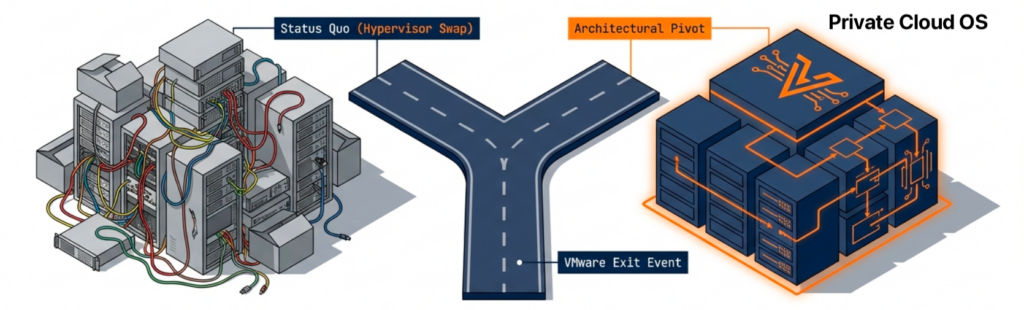
The conventional wisdom is to move from VMware to an alternative hypervisor, but should organizations move from VMware to private cloud instead? VMware licensing pressure affects enterprises of all sizes. The default response swaps hypervisor vendors. The better response evaluates whether private cloud infrastructure actually addresses the operational and economic problems driving VMware’s exit, especially given the second crisis of rising RAM and flash prices.
Key Takeaways
- VMware exits should evaluate private cloud infrastructure, not just alternative hypervisors. Hypervisor swaps address licensing costs but preserve fragmented infrastructure complexity.
- Private cloud extends abstraction to the entire infrastructure. Compute, storage, networking, and data protection consolidate into one platform with a single control plane.
- Four servers is minimum viable scale. Private cloud platforms like VergeOS require at least two nodes for production, but four nodes provide comfortable headroom and scale naturally to hundreds.
- Hardware retention changes the economics. VergeOS runs on existing x86 servers without vendor restrictions, dropping capital requirements to near zero for organizations with serviceable hardware.
- Efficiency improvements reduce server requirements. Platform-level caching and 3X to 4X deduplication increase VM density, allowing organizations to run more workloads on fewer servers.
- Two private cloud models operate differently. Orchestrated platforms (Dell Private Cloud) coordinate separate products through automation. Integrated platforms (VergeOS) consolidate functions into one operating system.
- Growth happens without architectural changes. Adding nodes extends capacity automatically without redesigning storage arrays, SAN fabrics, or backup infrastructure.
- Private cloud addresses the operational problem. Hypervisor swaps address licensing problems. Organizations should choose based on which problem costs more.
VMware exits create an opportunity to consolidate infrastructure rather than just swap hypervisor vendors. For organizations running four or more servers, this consolidation path delivers better outcomes than replacing the hypervisor alone. The question is not which hypervisor to choose. The question is whether you rebuild the same fragmented architecture with a different hypervisor or move to a private cloud infrastructure that actually simplifies operations.
Key Terms
- Private Cloud
- Infrastructure architecture that extends abstraction beyond compute to include software-defined storage, virtualized networking, and infrastructure-aware data protection managed through a single control plane.
- Virtualization
- Technology that abstracts physical servers into virtual machines using a hypervisor, but leaves storage, networking, and data protection as separate traditional infrastructure components.
- Orchestrated Private Cloud
- Private cloud architecture that coordinates separate products (compute servers, storage arrays, hypervisors) through automation layers. Each component retains its own lifecycle and management requirements.
- Integrated Private Cloud
- Private cloud architecture that consolidates compute, storage, networking, and data protection as native capabilities of a single operating system without separate products requiring coordination.
- Hardware Abstraction
- Platform capability that treats physical servers as pooled capacity resources rather than individual systems, enabling workload distribution and hardware refresh without migration projects.
- Platform-Level Caching
- Caching mechanism that operates at the infrastructure platform level rather than within individual VMs, reducing per-VM RAM requirements and participating in global deduplication.
- Control Plane
- The management layer that governs infrastructure operations. Fragmented control planes require coordinating multiple products. Unified control planes manage all infrastructure functions through one system.
- Software-Defined Storage
- Storage architecture that distributes data across cluster nodes through software rather than requiring external storage arrays, eliminating separate storage refresh cycles and SAN fabric dependencies.
Virtualization vs. Private Cloud: Understanding the Difference
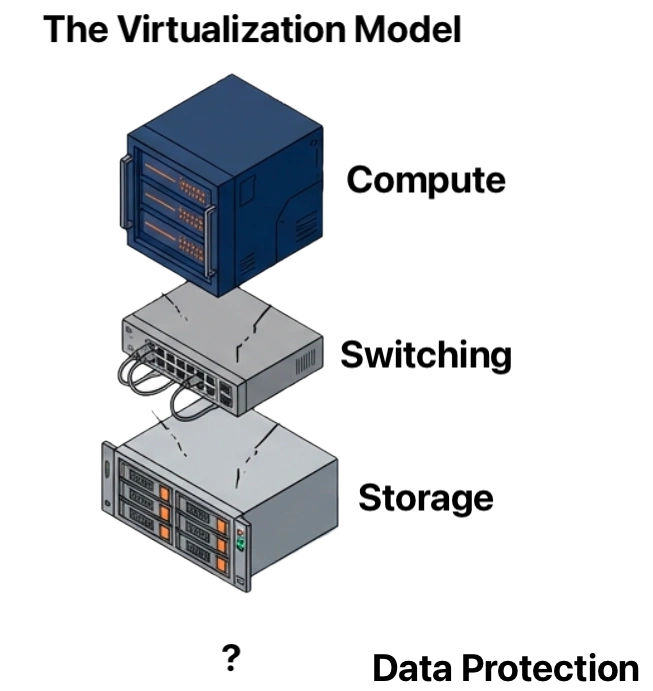
The distinction between virtualization and private cloud determines your operational model for the next decade. Virtualization abstracts servers. A hypervisor carves physical servers into virtual machines. Storage remains external, networking remains physical, and data protection requires separate products. Teams manage virtualization, but everything else stays traditional.
Private cloud extends abstraction to the entire infrastructure. Compute becomes virtualized. Storage becomes software-defined. Networking becomes virtualized. Data protection becomes infrastructure-aware. Hardware resources pool into a capacity managed through a single control plane.
The architectural difference matters for teams of any size. Virtualization creates expertise silos. Someone manages the hypervisor. Someone manages storage. Someone handles networking. Someone maintains backup infrastructure. Organizations with small teams spread individuals across multiple domains. Organizations with large teams build specialized groups that require coordination. The operational burden compounds as infrastructure grows.
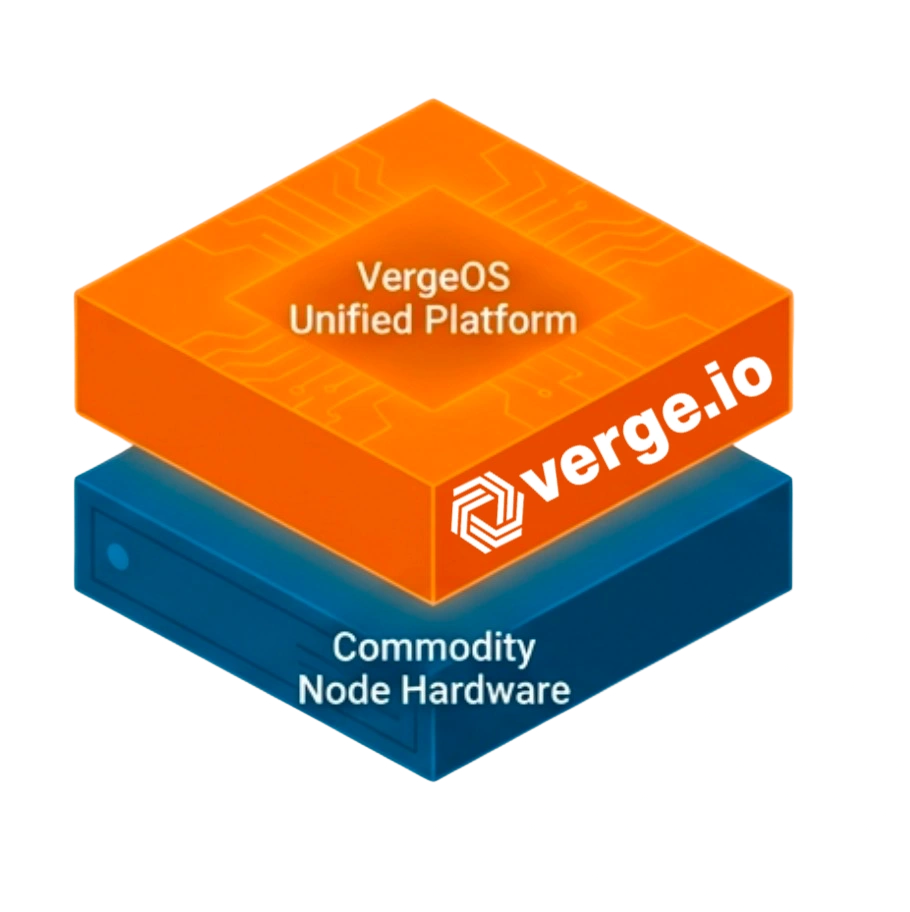
Private cloud consolidates these domains into one operational model. Teams provision workloads by allocating resources from a shared pool rather than coordinating across products. Data protection happens through platform policies rather than a separate backup infrastructure. Capacity expansion means adding servers rather than evaluating whether storage arrays can handle additional load. The consolidation reduces operational overhead regardless of team size.
Three Servers to Three Hundred: Private Cloud Scales Across the Range
Private cloud deployments start small and scale naturally. Organizations evaluating private cloud wonder about the minimum viable scale. The answer depends on platform architecture rather than organization size.
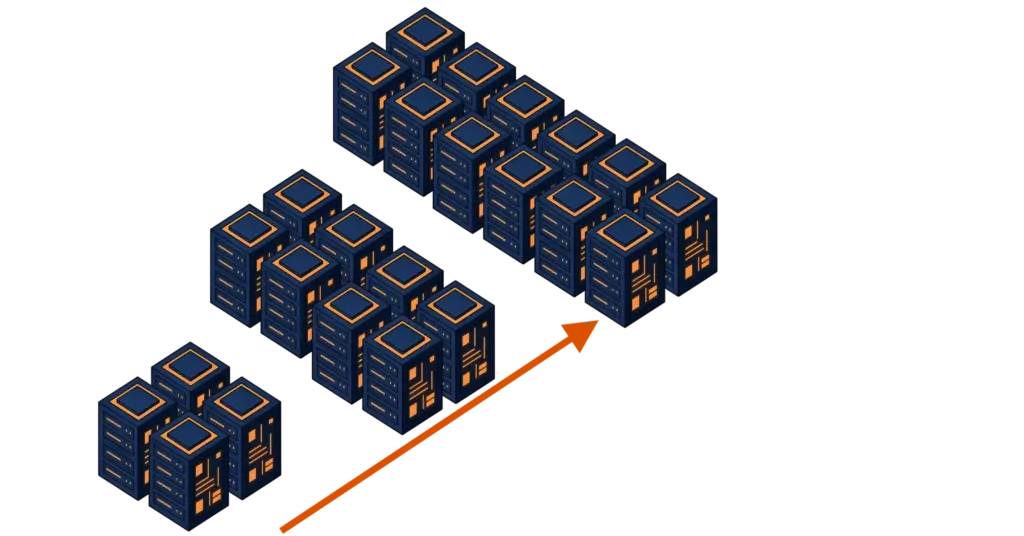
Private cloud platforms like VergeOS require at least two nodes for production deployments. Three nodes provide better fault tolerance. Four nodes create comfortable capacity headroom for growth. VergeOS efficiency enables growth well beyond four servers within a single instance. Small organizations start at this scale and remain there. Large enterprises start pilot deployments at this scale before expanding to hundreds of nodes.
The operational model remains constant as scale increases. Teams managing four nodes use the same interface, same procedures, and same troubleshooting approach as teams managing four hundred nodes. Operational knowledge compounds rather than fragments. Skills developed at a small scale remain valuable at a large scale. The platform handles workload distribution, data placement, and failure recovery automatically, regardless of node count.
Private Cloud Hardware Retention Changes the Economics
Most VMware alternatives assume a hardware refresh accompanies a hypervisor change. You buy new servers, deploy the new platform, migrate workloads, and decommission old hardware. Capital requirements double during migration. The financial burden delays projects or forces compromises in capacity. RAM and flash storage prices compound the problem.
Private cloud platforms supporting broad hardware compatibility change the economic equation. VergeOS runs on commodity x86 servers without vendor restrictions. Organizations install the platform on existing servers and continue using that hardware as the software layer modernizes. Capital requirements drop to near zero for organizations with serviceable hardware.
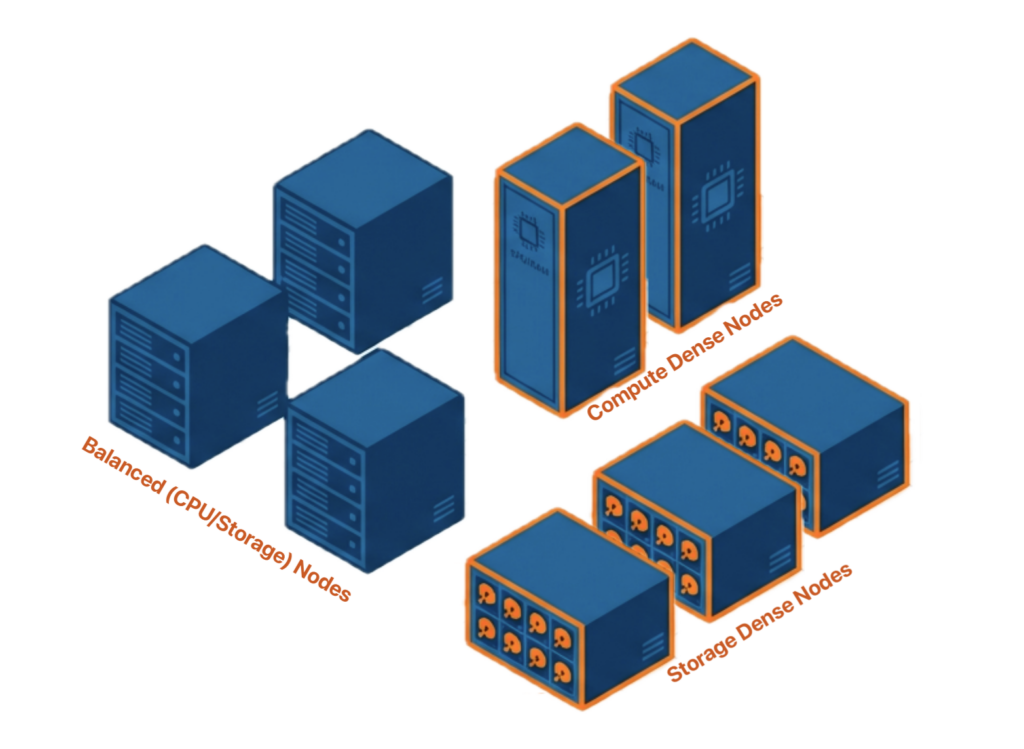
Hardware abstraction protects existing investments and creates procurement flexibility. Refresh decisions focus on capacity requirements and price performance rather than vendor certification matrices. Organizations buy hardware based on economics rather than platform mandates. The separation between software value and hardware cost clarifies total cost of ownership in ways vendor-locked platforms cannot match.
Private Cloud Efficiency Improvements
Efficiency gains determine whether the private cloud justifies the migration effort. Private cloud platforms deliver efficiency improvements that hypervisor swaps alone cannot match. VergeOS customers increase VM density per physical host compared to their previous VMware deployments. The improvement comes from how the platform manages resources, not just how it schedules workloads.
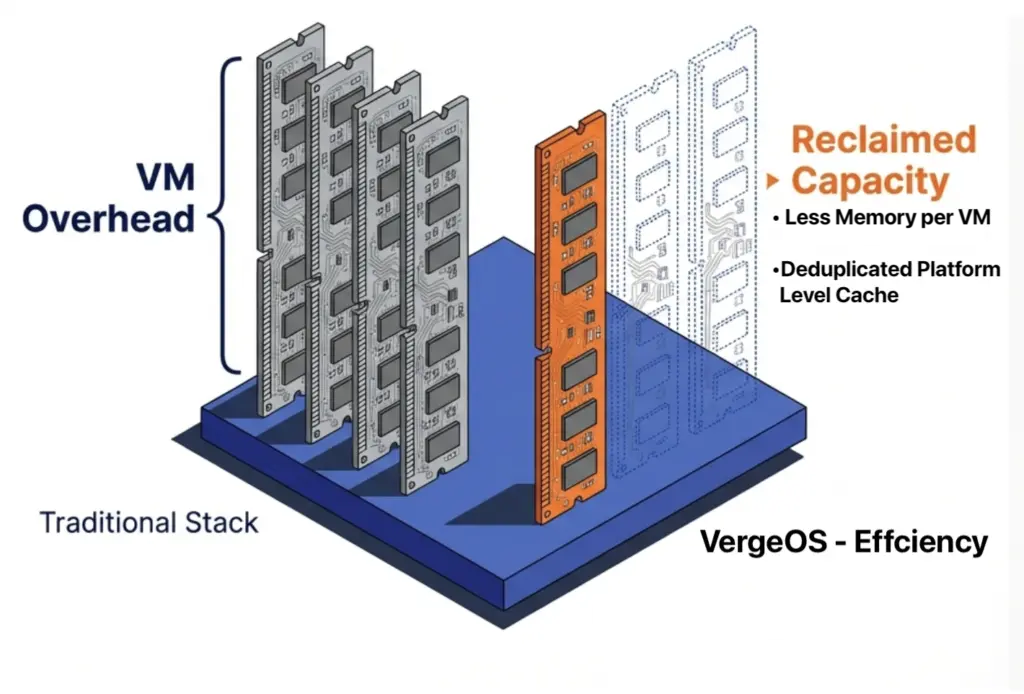
VergeOS includes platform-level caching that reduces VM-level RAM allocation requirements. Traditional virtualization requires each VM to carry its own cache allocation. Platforms must over-provision RAM to account for caching overhead across all VMs.
VergeOS handles caching at the platform level, so each VM requires less RAM but maintains performance. Platform-level caching participates in VergeOS global inline deduplication, making it 3X to 4X more effective.
The practical result is that the same physical servers support more VMs running on a private cloud platform than they did running traditional virtualization. Organizations need fewer servers than they planned. Teams that planned six-node deployments find four nodes sufficient. Teams running four nodes now have the capacity headroom they lacked before.
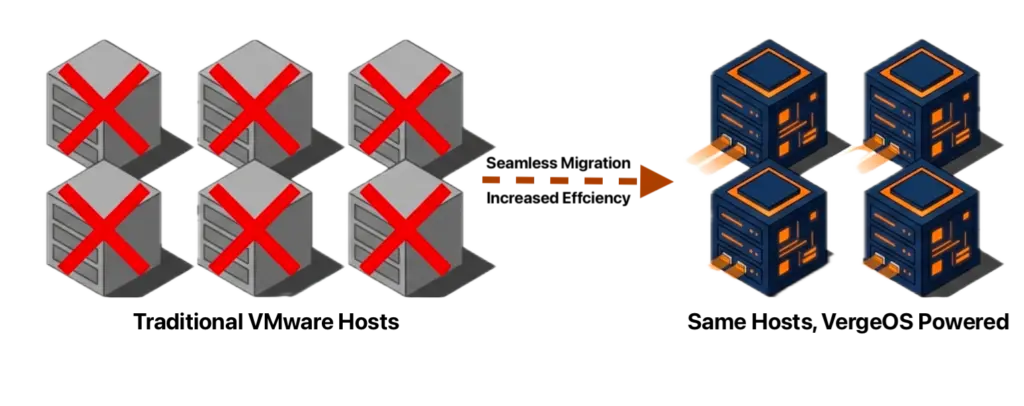
Processor requirements also decline. VergeOS integrates virtualization, storage, and networking into a single codebase. The integration eliminates the overhead of coordinating separate products. Traditional virtualization stacks dedicate CPU cycles to managing relationships between the hypervisor, storage arrays, and network infrastructure. Private cloud platforms reclaim those cycles for actual workloads.
Scaling Without Architectural Changes
Organizations evaluating private cloud need platforms that support growth trajectories. Three servers today become six servers next year. Six servers become twelve servers over three years. Platforms must accommodate growth without architectural changes or migration projects.
Private cloud platforms handle growth naturally. You add nodes to the system. Platforms automatically redistribute workloads, extend storage capacity, and increase network bandwidth.
There is no storage array that must be refreshed separately from servers. There is no SAN fabric to redesign. There is no separate backup infrastructure to scale independently. Growth means adding capacity rather than coordinating procurement across multiple products.
Large enterprises benefit from the same model. Adding 100 servers uses the same process as adding 1 server. The platform scales linearly without introducing new operational patterns or management tools. Complexity remains constant as capacity grows.
Not All Private Clouds Are the Same
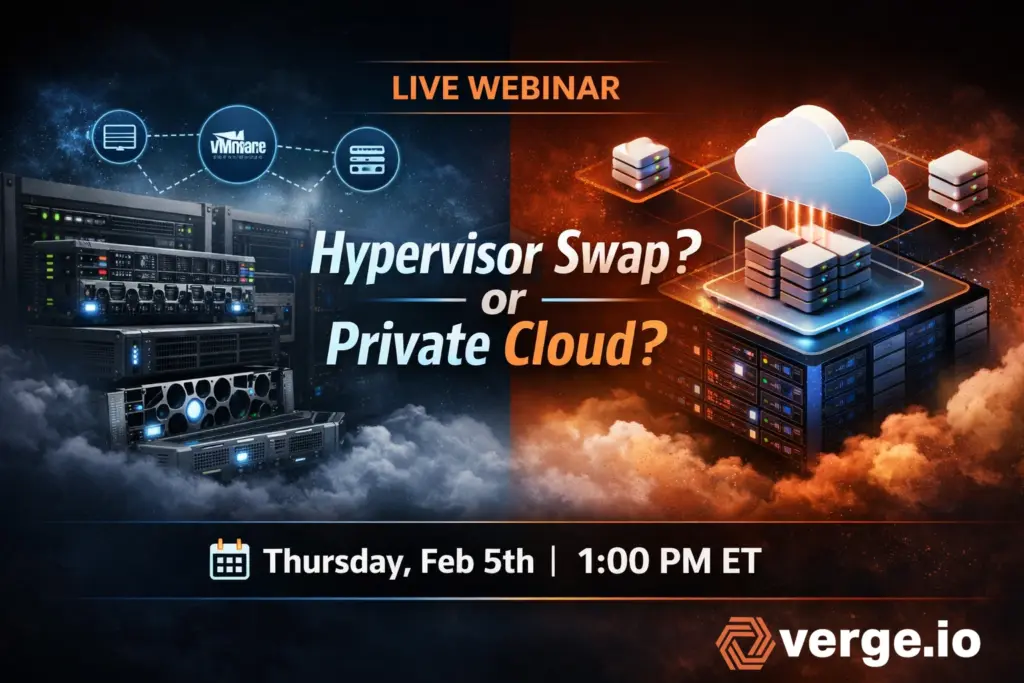
Understanding the architectural distinction between private cloud models prevents costly platform selection errors. The term “private cloud” gets applied to architectures that operate very differently. Learn more about the different types of Private Cloud in our upcoming webinar and demonstration.
Orchestrated Private Clouds
Orchestrated private clouds coordinate separate products through automation layers. Dell Private Cloud, its alternative to VxRail, exemplifies this approach. Platforms combine external storage arrays, separate hypervisors, and automation tooling to make disparate components act as one system.
Orchestration works until system interdependencies fail. Storage upgrades happen independently from compute refreshes. Hypervisor patches follow different schedules than storage firmware. Failures cascade across product boundaries. Automation masks complexity rather than eliminating it. Coordination overhead accumulates over time. The orchestrated model collapses under its own weight as scale increases.
Private Cloud Operating System
Private Cloud Operating Systems consolidate infrastructure functions into one platform. VergeOS represents this approach. Compute, storage, networking, and data protection run as native capabilities of a single operating platform.
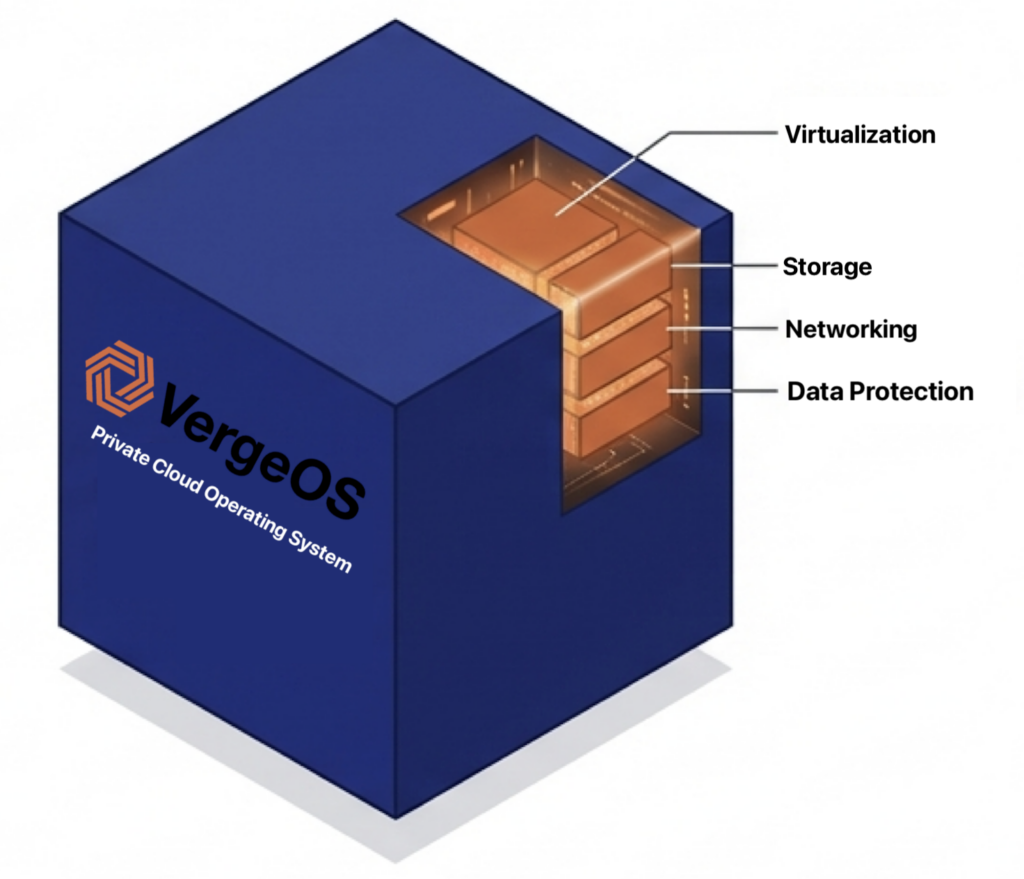
There are no separate products to coordinate. The integration allows organizations to migrate from VMware quickly and gradually expand into full private cloud capabilities. You start by replacing the hypervisor. You end up with a consolidated infrastructure that runs on fewer servers and is less complex. Integration delivers durability that orchestration cannot match.
The architectural difference determines operational reality. Orchestrated platforms require teams to understand and manage multiple products. Private Cloud Operating Systems consolidate operational knowledge into one system. Small teams eliminate expertise silos. Large teams reduce coordination overhead between specialized groups.
When to Make the Move
VMware licensing pressure creates the immediate forcing function. Organizations must decide whether to swap hypervisors or consolidate infrastructure. Several indicators suggest that private cloud delivers better outcomes than hypervisor replacement alone.
Your team manages multiple infrastructure silos. Storage teams operate independently from virtualization teams. Network teams coordinate separately. Backup teams run their own infrastructure. The coordination overhead consumes time and creates friction. Private cloud consolidates these silos into one operational model.
Hardware refresh cycles never align. Storage refreshes happen on different timelines than server refreshes. Network infrastructure updates independently. You coordinate procurement across multiple product families rather than managing one platform lifecycle. Private cloud unifies refresh cycles into platform expansion events.
Troubleshooting crosses product boundaries. Performance problems require investigating compute utilization, storage array metrics, network bandwidth, and hypervisor scheduling separately. You coordinate across vendor support organizations. Private cloud troubleshoots within one system with unified diagnostics.
Capacity planning requires multi-product coordination. You evaluate whether storage arrays can support additional load before adding compute capacity. You assess network bandwidth separately from storage performance. Private cloud treats capacity as pooled resources allocated through platform policies.
Migration projects consume months rather than days. Moving from one hypervisor to another requires extensive planning, compatibility testing, and risk mitigation. Private cloud platforms supporting broad hardware compatibility run on existing servers. Migration timelines compress from months to weeks.
Efficiency improvements could avoid hardware purchases. RAM and flash prices make capacity expansions expensive. Platform-level caching and deduplication reduce resource requirements per VM. Organizations avoid server purchases through efficiency gains rather than capital expenditure.
The Path Forward
The VMware disruption creates space for organizations to modernize infrastructure in ways that were not previously feasible. The change can be incremental, swapping VMware for another hypervisor and keeping everything else the same. Or the change can be structural, consolidating infrastructure into a platform that actually reduces complexity.
For organizations running four or more servers, private cloud delivers what virtualization promised but never quite achieved. One platform replaces multiple products. One interface replaces multiple management tools. One operational model replaces coordinated complexity. Hardware investments remain protected. Efficiency improves. Costs drop.
The question is not which hypervisor to choose next. The question is whether your infrastructure requirements demand architectural consolidation or just license renegotiation. Private cloud addresses the operational problem. Hypervisor swaps address the licensing problem. Choose based on which problem actually costs your organization more.
Frequently Asked Questions
Why is four servers the minimum for private cloud?
Private cloud platforms like VergeOS require at least two nodes for production deployments to provide fault tolerance. Three nodes improve resilience. Four nodes create comfortable capacity headroom for growth and maintain full operational capability during hardware maintenance or failures.
Can I run VergeOS on my existing VMware hardware?
Yes. VergeOS runs on commodity x86 servers without vendor restrictions. Organizations install the platform on existing servers and continue using that hardware as the software layer modernizes. Capital requirements drop to near zero for organizations with serviceable hardware.
What’s the difference between orchestrated and integrated private cloud?
Orchestrated private clouds (like Dell Private Cloud) coordinate separate products through automation layers. Each component retains its own lifecycle and management requirements. Integrated private clouds (like VergeOS) consolidate compute, storage, networking, and data protection as native capabilities of a single operating system without separate products.
How does platform-level caching reduce VM RAM requirements?
Traditional virtualization requires each VM to carry its own cache allocation. VergeOS handles caching at the platform level, so each VM requires less RAM but maintains performance. Platform-level caching also participates in global inline deduplication, making it 3X to 4X more effective than VM-level caching.
Will I need fewer servers than I currently run with VMware?
Organizations moving to VergeOS discover they need fewer servers than planned. Teams that planned six-node deployments find four nodes sufficient. Teams running four nodes gain capacity headroom they lacked before. The efficiency comes from platform-level caching, deduplication, and eliminating coordination overhead between separate products.
Does private cloud work for large enterprises or just SMEs?
Private cloud works across the range. Small organizations start at four nodes and remain there. Large enterprises start pilot deployments at four nodes before expanding to hundreds. The operational model remains constant as scale increases. Teams managing four nodes use the same interface and procedures as teams managing four hundred nodes.
How long does migration from VMware to VergeOS take?
Private cloud platforms supporting broad hardware compatibility run on existing servers. Migration timelines compress from months to weeks. VergeOS runs on current hardware, eliminating the need to purchase parallel infrastructure, deploy new platforms, and coordinate forklift migrations.
When should I choose private cloud over hypervisor replacement?
Choose private cloud over hypervisor replacement if your team manages multiple infrastructure silos, hardware refresh cycles never align, troubleshooting crosses product boundaries, capacity planning requires multi-product coordination, or efficiency improvements could avoid hardware purchases. Private cloud addresses operational problems. Hypervisor swaps address licensing problems.
No. Private cloud platforms like VergeOS require at least two nodes for production deployments to provide fault tolerance. Three nodes improve resilience. Four nodes create comfortable capacity headroom for growth and maintain full operational capability during hardware maintenance or failures.
Yes. VergeOS runs on commodity x86 servers without vendor restrictions. Organizations install the platform on existing servers and continue using that hardware as the software layer modernizes. Capital requirements drop to near zero for organizations with serviceable hardware.
Orchestrated private clouds (such as Dell Private Cloud) integrate separate products through automation layers. Each component retains its own lifecycle and management requirements. Integrated private clouds (such as VergeOS) consolidate compute, storage, networking, and data protection as native capabilities within a single operating system, without separate products.
Traditional virtualization requires each VM to carry its own cache allocation. VergeOS handles caching at the platform level, so each VM requires less RAM but maintains performance. Platform-level caching also participates in global inline deduplication, making it 3X to 4X more effective than VM-level caching.
Organizations moving to VergeOS discover they need fewer servers than planned. Teams that planned six-node deployments find four nodes sufficient. Teams running four nodes regain the capacity headroom they previously lacked. The efficiency comes from platform-level caching, deduplication, and the elimination of coordination overhead between separate products.
Private cloud works across the range. Small organizations start at four nodes and remain there. Large enterprises start pilot deployments at four nodes before expanding to hundreds. The operational model remains constant as scale increases. Teams managing four nodes use the same interface and procedures as teams managing four hundred nodes.
Private cloud platforms supporting broad hardware compatibility run on existing servers. Migration timelines compress from months to weeks. VergeOS runs on current hardware, eliminating the need to purchase parallel infrastructure, deploy new platforms, and coordinate forklift migrations.
Choose private cloud over hypervisor replacement if your team manages multiple infrastructure silos, hardware refresh cycles never align, troubleshooting crosses product boundaries, capacity planning requires multi-product coordination, or efficiency improvements could avoid hardware purchases. Private cloud addresses operational problems. Hypervisor swaps address licensing problems.