Data Confidence
The Most Valuable ROI of a VMware Exit
A VergeIO Digital White Paper
Introduction
The most valuable return from leaving VMware does not come from reduced licensing fees or even hardware consolidation. The most measurable return is data confidence. Confidence that no matter what goes wrong, you can recover quickly with minimal, if any, disruption. This confidence comes when you select an alternative that delivers unmatched data availability, protection, and recovery. Most organizations find that choosing the right alternative platform makes their infrastructure more resilient and less expensive.
In earlier articles, we explored the broader benefits that follow a VMware Exit. Infrastructure consolidation simplifies management and reduces footprint. VDI modernization improves performance and user experience. Cloud repatriation restores control and predictability. Private AI brings analytics and inference to the data itself. Each represents a significant step in modernization, but all of them depend on a stable and self-protecting foundation.
Listen to the Data Confidence Podcast (AI-generated)
Available in PDF
Download the PDF of this White Paper Today
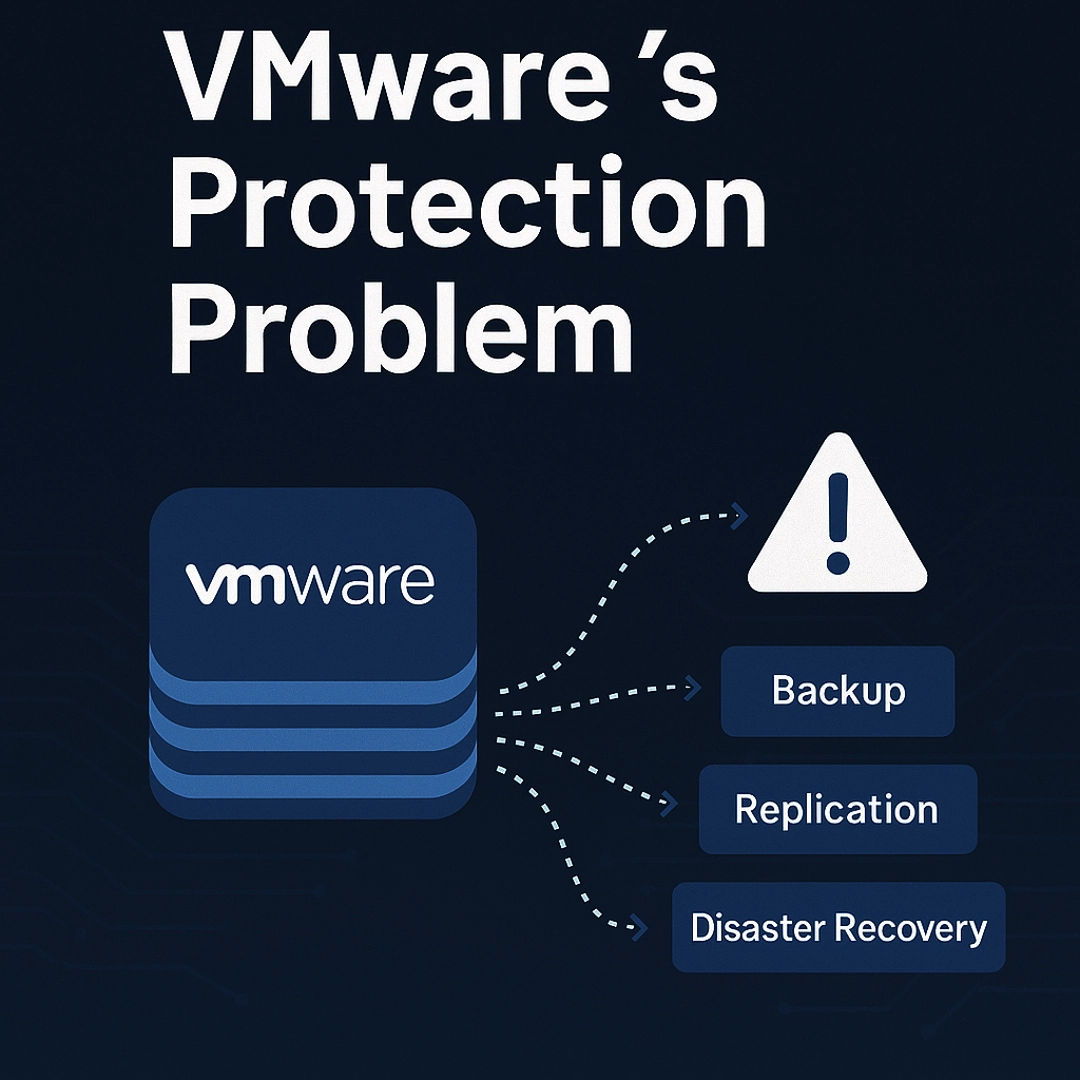
That foundation begins with integrated resilience. VMware abdicated much of its responsibility for resilience. Its architecture was built around third-party backup, replication, and disaster recovery tools. Over time, this fragmented model increased both cost and recovery time. Backup software and the dedicated storage that supports it are not free. In many environments, the backup ecosystem represents 30 to 40 percent of the total cost of the production infrastructure.
The transition away from VMware offers the opportunity to correct that imbalance. A new platform can embed protection directly into the same layer that runs workloads, eliminating redundant software, hardware, and operational overhead.
The payoff is immediate. Recovery times shrink from hours to minutes. Ransomware protection moves from a defensive tactic to an architectural capability. Disaster recovery becomes predictable and testable. The first VMware payoff is simple but powerful: confidence that data will always be available and recoverable.
The Weakest Link in VMware-Centric Environments
VMware abdicated much of its responsibility for resilience. Its architecture was built around third-party backup, replication, and disaster recovery tools. This approach created an ecosystem of adjacent products that each handled a portion of protection, but none of them managed it holistically.
Over time, the simplicity that virtualization once promised gave way to layers of complexity and rising operational cost. The financial impact is significant. Backup software, dedicated storage systems, and the staff required to maintain them often consume 30-40% of the total infrastructure budget. That investment buys data copies, not resilience.
In most environments, the backup application is managed by one team, replication by another, and DR orchestration by a third. The result is adjacent infrastructures leading to fragmentation and increased complexity. Each layer introduces its own interfaces, schedules, and maintenance cycles. Recovery becomes a coordination exercise rather than an automated response.
This fragmentation also creates risk. Backup systems protect data at rest, while replication tools copy it in motion. Neither guarantees that the protected copy is consistent or recoverable. None of these systems captures infrastructure metadata information, such as network mappings or storage configurations. Not having the latest IP addresses or VLAN settings during recovery can delay or even prevent workloads from coming back online. DR systems add another layer of abstraction that often depends on manual validation. Under pressure, these components rarely align perfectly, leaving organizations uncertain about recovery time and data integrity.
VMware Exit Is the Perfect Moment to Modernize Protection
Most IT teams approach the VMware Exit as a hypervisor swap. Their focus is on compatibility, migration tools, and the immediate goal of getting workloads to boot under a new platform. That narrow view, while important, misses the larger opportunity. A transition of this scale touches every workload, every piece of storage, and every network segment. It is the best moment in a decade to rethink how data protection and recovery are done.
The hypervisor is only one source of technical debt. The larger problem lies in the layers built around it—backup servers, replication appliances, and disaster recovery orchestration tools that operate independently of one another. These systems were necessary in a VMware world, but they carry enormous cost and complexity. Keeping them intact during migration only moves old inefficiencies onto new infrastructure.
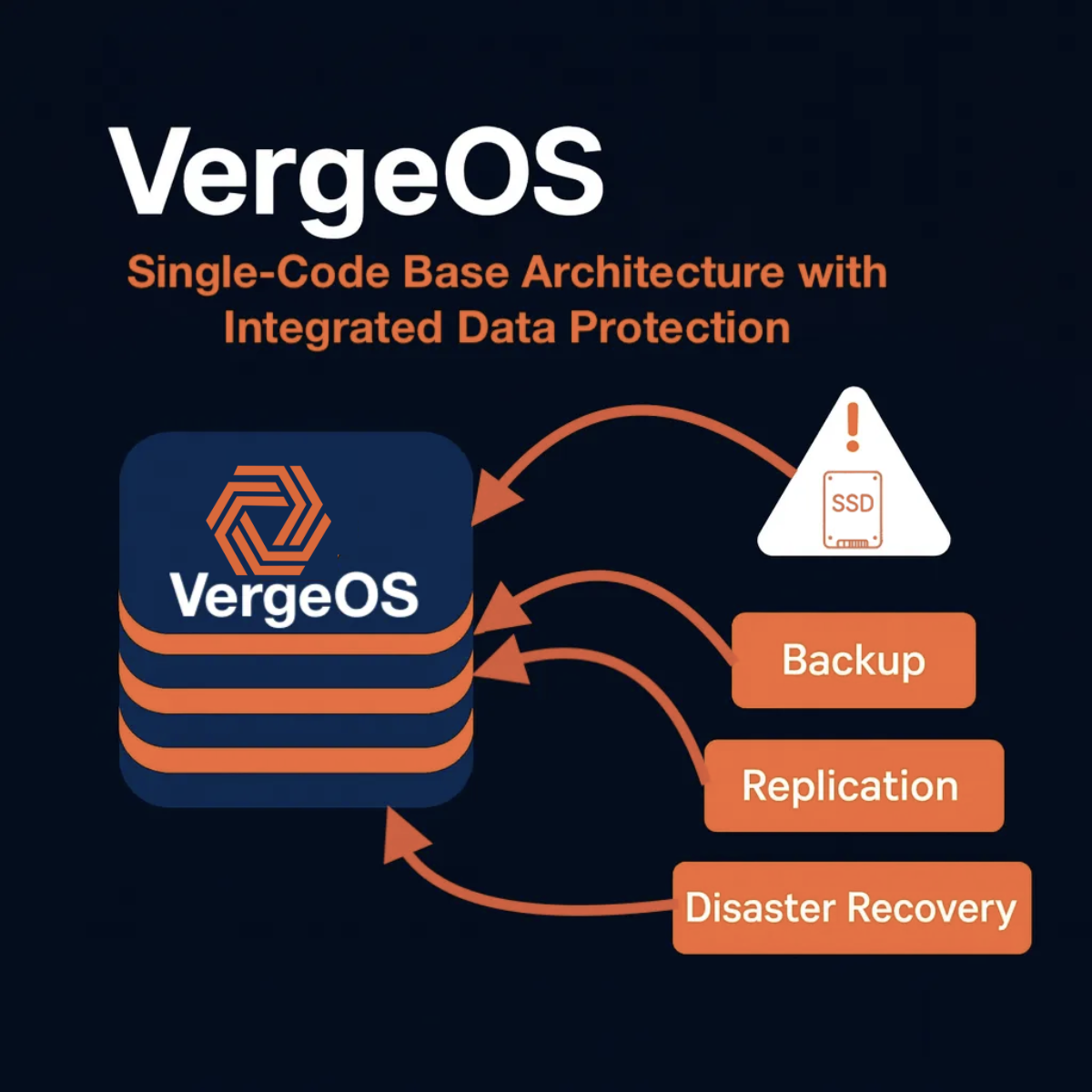
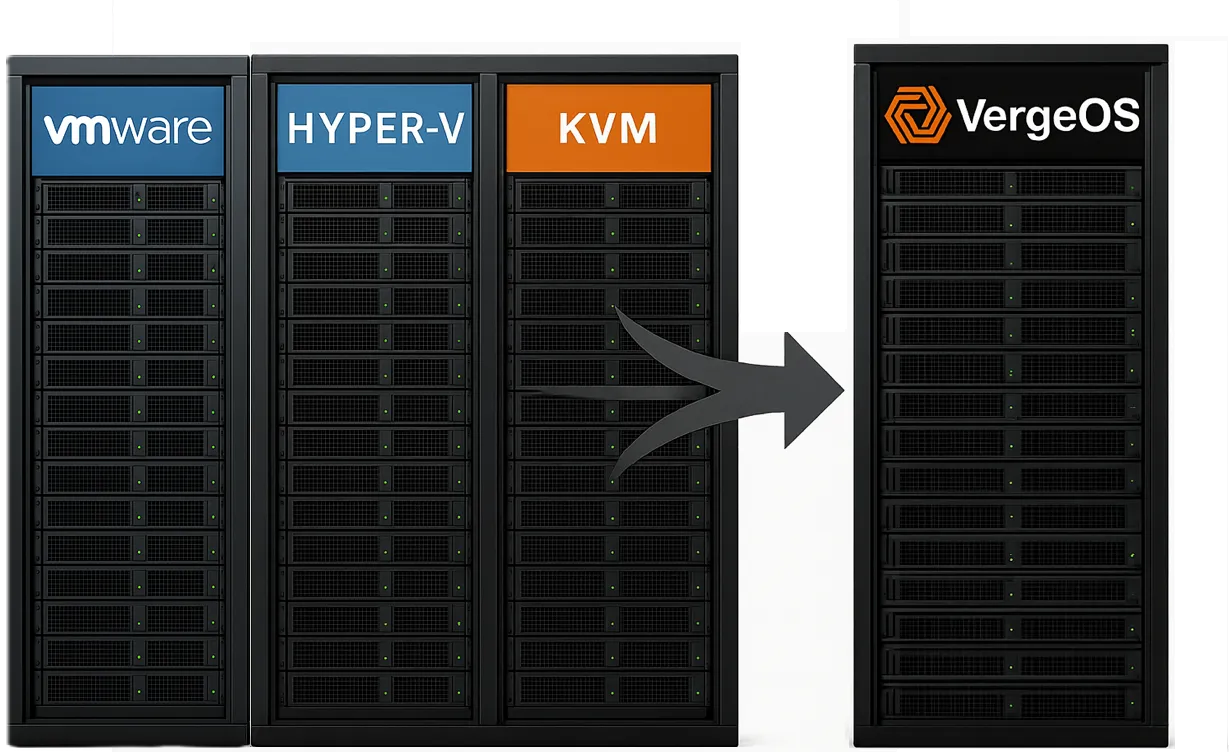
The act of migration itself forces an inventory of virtual machines, storage volumes, and interdependencies. Each workload has to be moved, validated, and reconnected. That same process can redefine how those workloads are protected. Instead of replicating the same external backup environment, organizations have an opportunity to adopt a platform that integrates protection into the production architecture.
Legacy models separate protection from production. Data is copied, stored, and later reconstructed, often without the network and storage metadata needed for a clean restart. Each step introduces lag and risk. By contrast, an integrated approach keeps data, configuration, and metadata synchronized within the same system. Recovery becomes a restart, not a rebuild.
This is why the VMware Exit should start with rethinking protection. It should not be an afterthought that follows migration. It is the first step that determines how resilient, efficient, and recoverable the next infrastructure will be.
Integrated Availability – Resilience Without Complexity
Integrated availability changes the role of infrastructure from something that must be protected to something that protects itself. Instead of relying on external backup servers or replication appliances, availability becomes a native function of the operating environment. Every write is automatically captured, deduplicated, and mirrored, creating a continuously recoverable state without manual intervention or scheduled backup jobs.
Traditional environments measure protection using recovery time and recovery point objectives, often defined in hours or days. These metrics exist because downtime and data loss are part of the design.
In an integrated architecture, those assumptions disappear. The system maintains a constant, synchronized copy of data, enabling immediate recovery. Failures are identified and corrected in real-time. Even when an outage is severe enough to interrupt operations, recovery is measured in minutes—or at worst, by a momentary increase in latency.
Complexity disappears when protection and production share the same platform. There are no agents to install, policies to align, or separate storage pools to manage. The same deduplication and replication engine that serves the production workload also maintains its protection state. This reduces management overhead and eliminates the risk of missed backup schedules or out-of-date replicas.
In-Line Data Restoration with ioGuardian
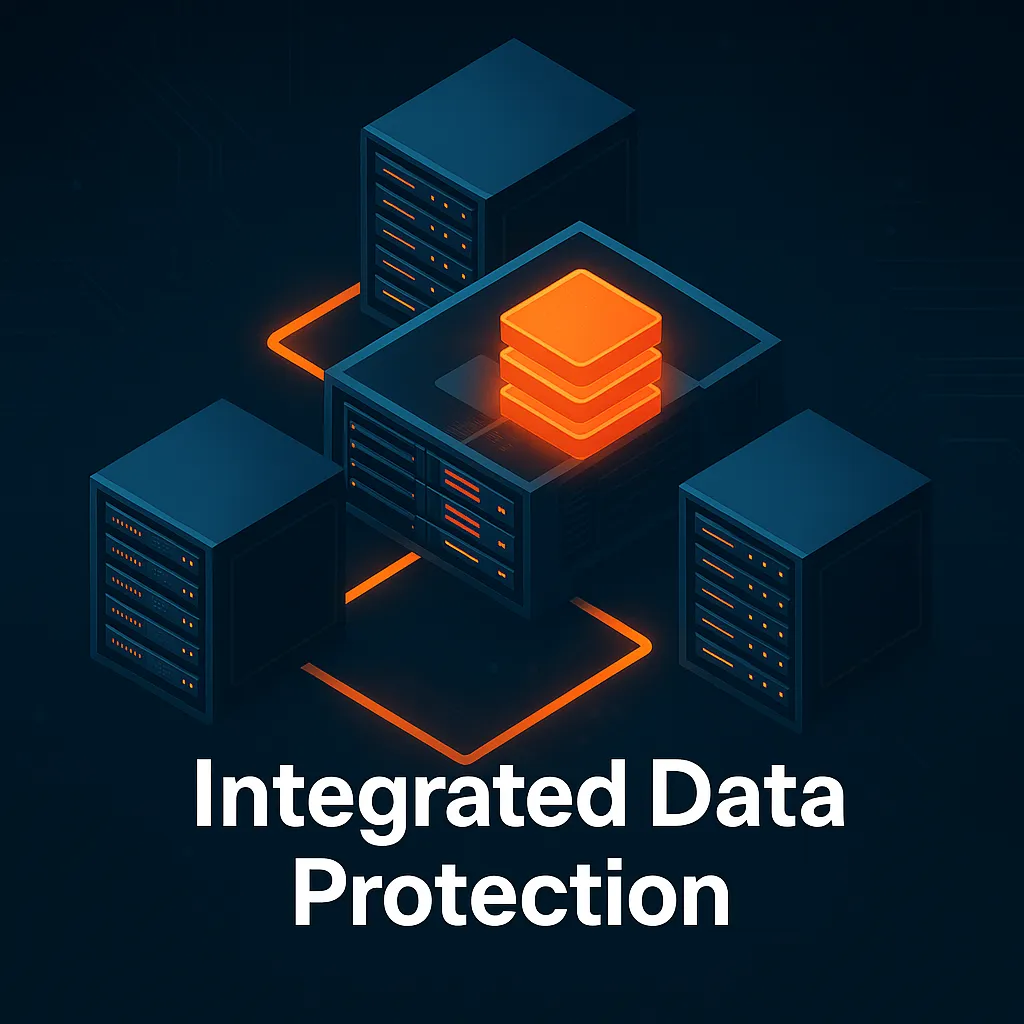
For IT teams transitioning away from VMware, this is the architectural pivot that delivers both operational and financial impact. Backup licensing, dedicated storage arrays, and replication gateways consume 30-40% of many infrastructure budgets. Moving to an integrated model recovers that spend while delivering stronger resilience. The infrastructure becomes simpler, faster, and inherently safer without requiring the addition of another tool or layer.
Integrated availability is not an incremental improvement. It redefines the boundary between production and protection. In a post-VMware environment, that boundary should no longer exist.
Rethinking Disaster Recovery – Continuity as a Core Feature
Traditional disaster recovery was built on the assumption that downtime was unavoidable. The objective was to minimize it, not eliminate it. Organizations purchased backup software, replication licenses, and orchestration tools in the hope of achieving faster failover. In practice, these tools rarely worked together cleanly. Failover testing was disruptive, failback was manual, and configuration drift between sites was a common occurrence. The result was a DR plan that looked good on paper but failed to deliver a predictable recovery.
Modern infrastructure changes that model by introducing the concept of a virtual data center—a self-contained construct that encapsulates compute, storage, networking, and configuration data into a portable unit. In the same way that a virtual machine abstracts and encapsulates a single physical server, a virtual data center encapsulates an entire data center. It packages every element of infrastructure—resources, policies, and topology—into a logical entity that can be replicated, cloned, or moved as one object.
ioReplicate Demo - DR in Three Clicks
Ready to find out more?
Request a Technical Deep Dive, A demonstration or get a quote
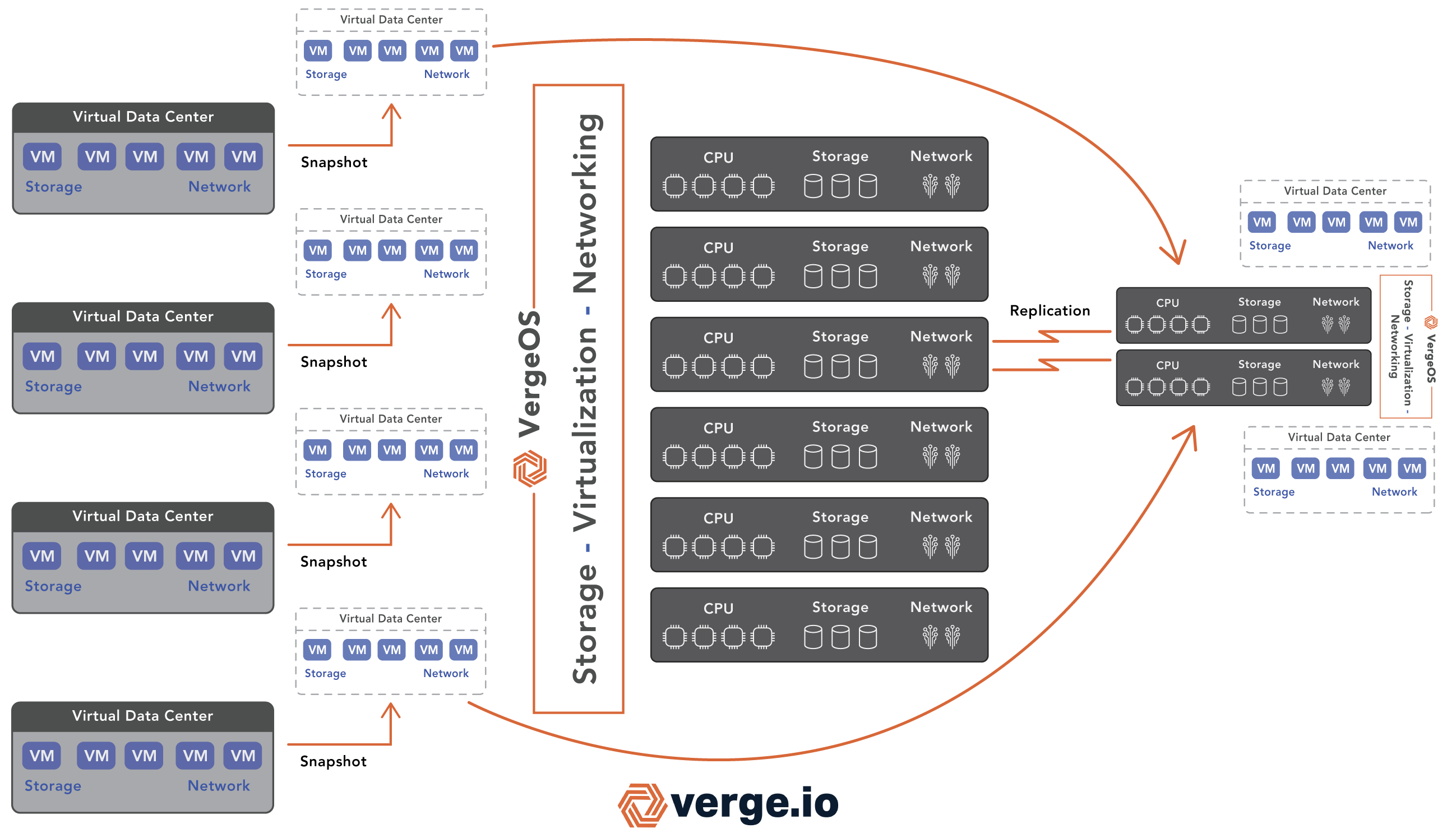
A virtual data center is not bound to a single cluster or physical location. It can be replicated or transferred between sites without reconfiguration or dependency mapping. Virtual data center portability turns disaster recovery into a matter of relocation rather than reconstruction. When a site fails, the virtual data center can be activated elsewhere, preserving its internal relationships, IP settings, and access controls.
Embedding disaster recovery capability into the core infrastructure software makes recovery both simpler and faster. Replication, failover logic, and metadata tracking occur within the same operating layer that runs workloads. Data, configuration, and policies remain synchronized across all locations. When a failure occurs, workloads restart as part of a consistent virtual data center image, not a piecemeal collection of restored systems.
With DR integrated directly into the core of the infrastructure operating system, disaster recovery evolves from a defensive process to a continuous operational state.. Testing can occur during production hours because each site maintains a near-live, ready copy of the virtual data center. Failover and failback take minutes instead of days, and both can be automated with confidence. Compliance audits shift from manual verification to automated certification.
Once disaster recovery becomes continuous, it gains new utility. The recovery environment is no longer idle capacity waiting for failure. It becomes an active part of operations. IT teams can use a virtual data center replica for patch testing, application updates, or performance tuning without disrupting production. It can also serve as a virtual lab for validating new releases or as overflow capacity when primary systems require additional bandwidth. The same infrastructure that protects the business can now contribute to its agility and productivity.
From a financial perspective, this model eliminates waste. Traditional DR requires a second site filled with idle infrastructure that mirrors production capacity but serves no daily purpose. A virtual data center allows those same resources to participate in both production and protection. Every node contributes value in normal operation and stands ready to recover another site if needed.
In a post-VMware environment, disaster recovery should no longer be viewed as a separate system or plan. It should exist as a set of portable, self-contained virtual data centers that can operate anywhere—continuously protected, easily tested, and always ready to move.
VergeOS – Infrastructure That Protects Itself
VergeFS Snapshots: Independent, Instant, and Durable
At the core of VergeOS is VergeFS, a global, deduplicated file system that unifies production and protection. Its snapshot technology, powered by ioClone, replaces the fragile and interdependent snapshot models found in traditional systems. Instead of chaining incremental deltas, VergeFS creates independent, deduplicated clones. Each snapshot stands on its own, independent of its parent, for integrity and recovery.
This design allows for thousands of snapshots to coexist without impacting performance or consuming excessive capacity. Administrators can retain them for months or even years, providing a complete history of recoverable states. Snapshots can be mounted instantly for testing, auditing, or recovery without disrupting production workloads. They protect against data corruption, ransomware, or human mistakes—offering a fast and precise way to return to a known-good point in time. Recovery can occur at varying levels of granularity, ranging from a whole VergeOS instance to an individual file. This flexibility lets administrators respond to both large-scale events and minor operational errors with equal speed.
ioGuardian: Continuous Protection from Hardware Failure
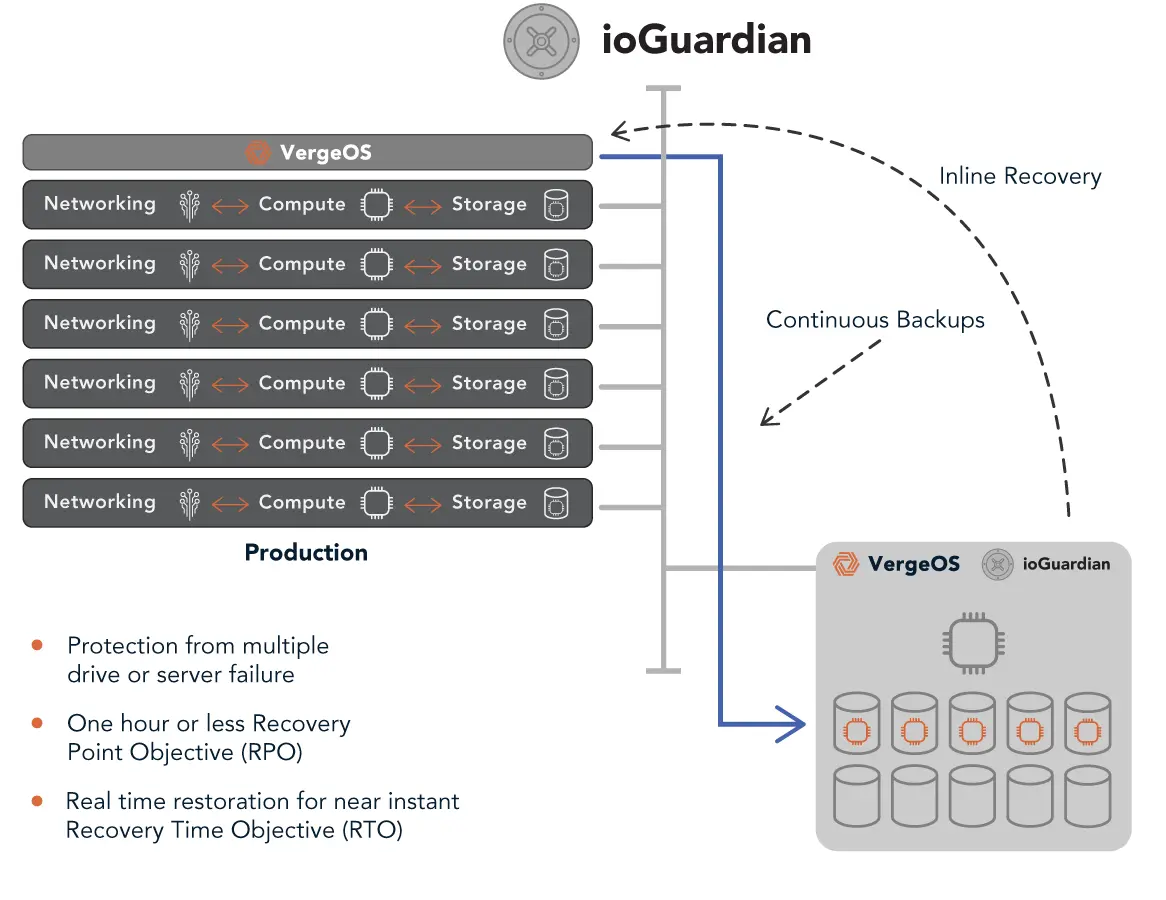
Recoveries in traditional environments are slow because they depend on full data reconstruction before applications can restart. ioGuardian removes that bottleneck. It streams data in real time, delivering only the specific blocks required for an active workload. Virtual machines continue operation while the rest of the data rebuilds in the background. Recovery becomes a live process rather than a waiting period.
Beyond recovery speed, ioGuardian provides constant protection against hardware failure. It can sustain multiple simultaneous drive or node outages without interrupting data access. When failed hardware is replaced, ioGuardian automatically rebuilds redundancy by streaming data directly from a dedicated target node. Unlike systems limited to two- or three-way mirrors, ioGuardian scales protection across multiple copies and nodes without consuming a proportional amount of storage capacity. Together, VergeFS and ioGuardian provide resilience across data integrity, availability, and performance, ensuring data is always both accessible and accurate.
ioReplicate and Virtual Data Centers: Protection Across Sites
While VergeFS and ioGuardian address failures inside a cluster, ioReplicate extends that protection across clusters and data centers. It delivers asynchronous or synchronous replication with full awareness of the VergeOS environment. Each replicated instance includes not just data, but configuration, policies, and metadata.
This is where virtual data centers redefine recovery at scale. A virtual data center encapsulates compute, storage, networking, and configuration into a portable, self-contained unit. It can be replicated, cloned, or moved between VergeOS environments without reconfiguration. Virtual data center portability enables disaster recovery to become a matter of relocation rather than reconstruction. In the event of a site failure, the replica can be activated elsewhere in minutes, preserving IP addresses, access controls, and internal relationships.
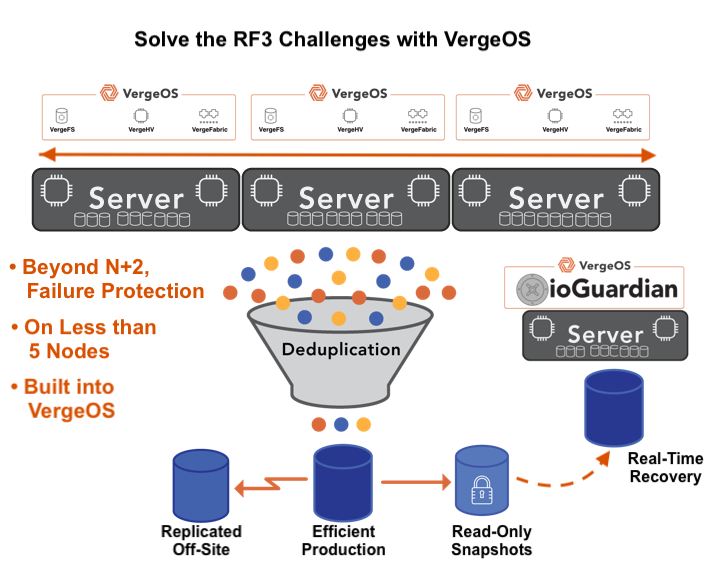
The combination of VergeFS snapshots, ioGuardian, and ioReplicate forms a complete protection hierarchy. Snapshots defend against data corruption and human mistakes. ioGuardian protects against hardware failure. ioReplicate and virtual data centers safeguard against site loss. Together, they create an infrastructure that protects itself at every level—from a single file to an entire data center.
Building on the Foundation
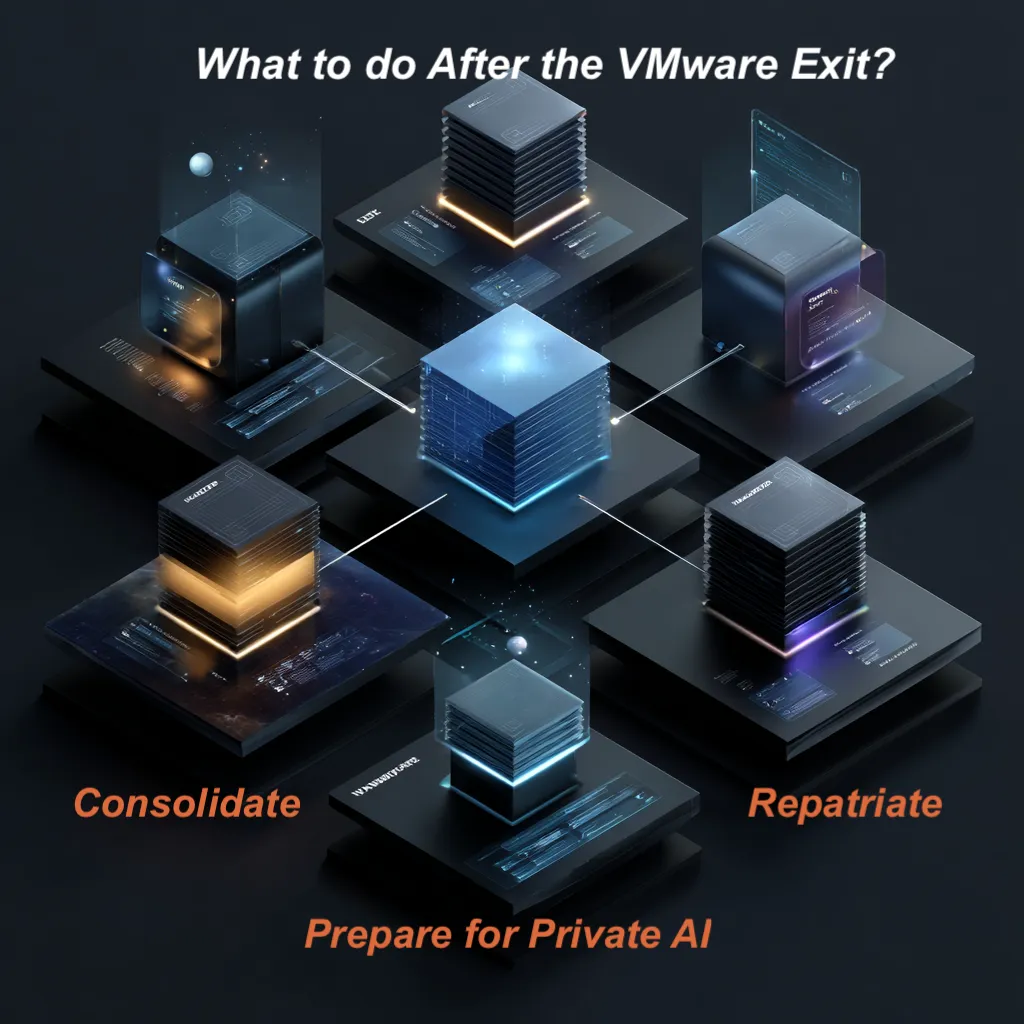
Modernizing data protection is not the end of the VMware Exit—it is the beginning. Once resilience is built into the infrastructure, the rest of modernization becomes easier and faster to achieve. Consolidation projects can proceed without fear of extended outages. VDI modernization achieves stability by integrating protection and performance within the same architecture. Cloud repatriation becomes practical because the infrastructure already delivers the availability and recovery that were once assumed to require a public cloud.
With a self-protecting foundation, IT can shift focus from maintenance to innovation. The same platform that safeguards production workloads can also support Private AI, analytics, and new digital services. The VMware Exit starts with resilience, but it ends with freedom—the ability to evolve without having to rebuild.
The Most Valuable VMware Payoff
The VMware Exit is more than a hypervisor replacement. It is the first step toward a broader modernization strategy that includes infrastructure consolidation, VDI modernization, cloud repatriation, and Private AI. Each of these goals depends on a stable, self-protecting foundation. VergeOS delivers that foundation through VergeFS snapshots for data integrity, ioGuardian for hardware resilience, and ioReplicate with virtual data centers for site protection. Together, they eliminate layers of backup software, replication tools, and manual recovery processes, replacing them with a single, integrated architecture.
The first VMware payoff is resilience—stronger availability, faster recovery, and lower cost. Once that foundation is in place, consolidation becomes practical, VDI performance improves, cloud workloads can be returned to on-premises, and Private AI can run securely alongside the data it depends on. The VMware Exit begins with protection, ultimately leading to transformation.